
About This Book
A set of essays offers a psychoanalytic account of human sexual life, arguing that sexual impulses appear in infancy, take varied forms that may be repressed or transformed, and influence later development and psychopathology. Relying on clinical observation and interpretation, the author examines sexual deviations, traces infantile sexual manifestations and their role in character formation, and describes how puberty reorganizes earlier libidinal impulses through repression and sublimation. The essays link perversions and many neurotic symptoms to disturbed sexual development, emphasize unconscious motives revealed in dreams and memory, and indicate therapeutic directions for addressing sexual and neurotic disorders.
About the Author

More Books by This Author
6 picks
 A General Introduction to Psychoanalysis
by Sigmund Freud
A General Introduction to Psychoanalysis
by Sigmund Freud
 Animismus, Magie und Allmacht der Gedanken / Über einige Übereinstimmungen im Seelenleben der Wilden und der Neurotiker III
by Sigmund Freud
Animismus, Magie und Allmacht der Gedanken / Über einige Übereinstimmungen im Seelenleben der Wilden und der Neurotiker III
by Sigmund Freud
 Beyond the pleasure principle
by Sigmund Freud
Beyond the pleasure principle
by Sigmund Freud
 Das Motiv der Kästchenwahl
by Sigmund Freud
Das Motiv der Kästchenwahl
by Sigmund Freud
 Das Tabu und die Ambivalenz der Gefühlsregungen / Über einige Übereinstimmungen im Seelenleben der Wilden und der Neurotiker II
by Sigmund Freud
Das Tabu und die Ambivalenz der Gefühlsregungen / Über einige Übereinstimmungen im Seelenleben der Wilden und der Neurotiker II
by Sigmund Freud
 Das Unheimliche
by Sigmund Freud
Das Unheimliche
by Sigmund Freud
You May Also Like
6 picks
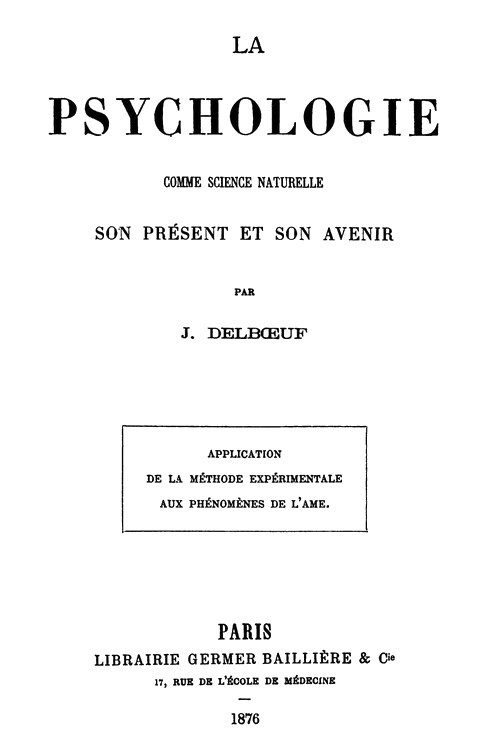 La psychologie comme science naturelle, son présent et son avenir / Application de la méthode expérimentale aux phénomènes de l'âme
by Joseph-Remi-Leopold Delboeuf
La psychologie comme science naturelle, son présent et son avenir / Application de la méthode expérimentale aux phénomènes de l'âme
by Joseph-Remi-Leopold Delboeuf
 Elements of Folk Psychology / Outline of a Psychological History of the Development of Mankind
by Wilhelm Max Wundt
Elements of Folk Psychology / Outline of a Psychological History of the Development of Mankind
by Wilhelm Max Wundt
 Cheerfulness as a Life Power
by Orison Swett Marden
Cheerfulness as a Life Power
by Orison Swett Marden
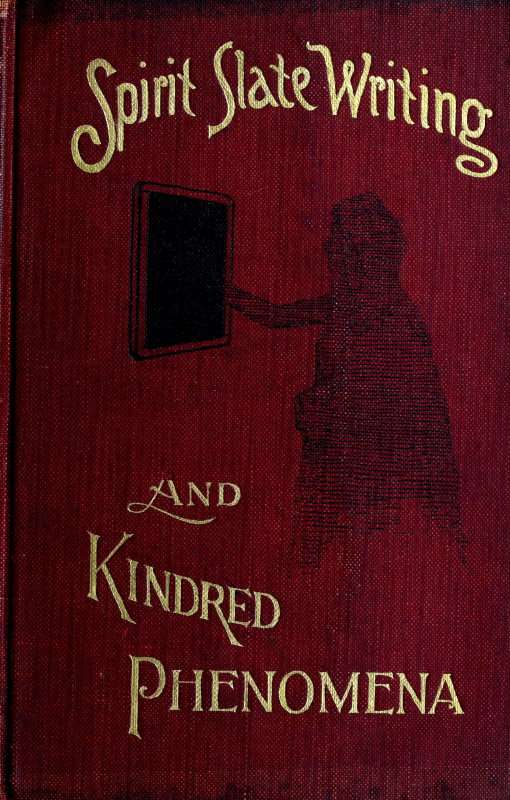 Spirit Slate Writing and Kindred Phenomena
by Chung Ling Soo
Spirit Slate Writing and Kindred Phenomena
by Chung Ling Soo
 Mind and Motion and Monism
by George John Romanes
Mind and Motion and Monism
by George John Romanes
 Three Thousand Years of Mental Healing
by George Barton Cutten
Three Thousand Years of Mental Healing
by George Barton Cutten