

About This Book
A series of clear, introductory lectures outlines the principles, techniques, and clinical applications of psychoanalysis. It examines seemingly trivial errors and dreams to reveal unconscious motives, describes dream-work, symbolism, and the role of a mental censor, and presents methods for interpreting latent thought. The lectures explore the origins and meanings of neurotic symptoms, mechanisms of repression, resistance, and fixation, and the development and organization of sexual life and libido. Case examples and sample analyses illustrate technique, while limitations, difficulties, and points of criticism are acknowledged.
About the Author

More Books by This Author
6 picks
 Animismus, Magie und Allmacht der Gedanken / Über einige Übereinstimmungen im Seelenleben der Wilden und der Neurotiker III
by Sigmund Freud
Animismus, Magie und Allmacht der Gedanken / Über einige Übereinstimmungen im Seelenleben der Wilden und der Neurotiker III
by Sigmund Freud
 Beyond the pleasure principle
by Sigmund Freud
Beyond the pleasure principle
by Sigmund Freud
 Das Motiv der Kästchenwahl
by Sigmund Freud
Das Motiv der Kästchenwahl
by Sigmund Freud
 Das Tabu und die Ambivalenz der Gefühlsregungen / Über einige Übereinstimmungen im Seelenleben der Wilden und der Neurotiker II
by Sigmund Freud
Das Tabu und die Ambivalenz der Gefühlsregungen / Über einige Übereinstimmungen im Seelenleben der Wilden und der Neurotiker II
by Sigmund Freud
 Das Unheimliche
by Sigmund Freud
Das Unheimliche
by Sigmund Freud
 Delusion and Dream : an Interpretation in the Light of Psychoanalysis of Gradiva
by Sigmund Freud
Delusion and Dream : an Interpretation in the Light of Psychoanalysis of Gradiva
by Sigmund Freud
You May Also Like
6 picks
 The Analysis of Mind
by Bertrand Russell
Das Tabu und die Ambivalenz der Gefühlsregungen / Über einige Übereinstimmungen im Seelenleben der Wilden und der Neurotiker II
by Sigmund Freud
The Analysis of Mind
by Bertrand Russell
Das Tabu und die Ambivalenz der Gefühlsregungen / Über einige Übereinstimmungen im Seelenleben der Wilden und der Neurotiker II
by Sigmund Freud
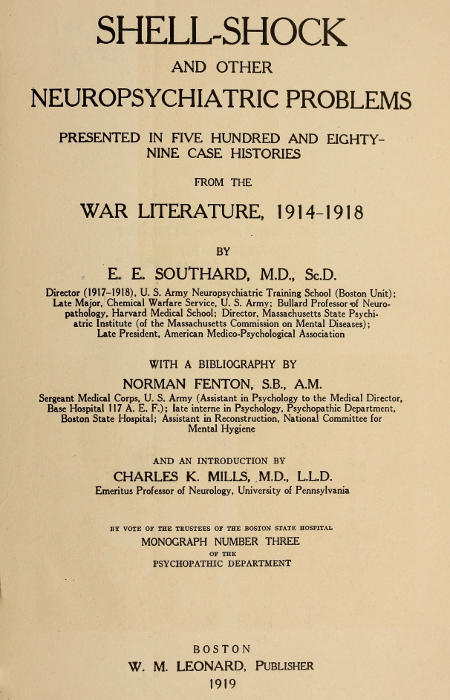 Shell-shock and other neuropsychiatric problems
by Elmer Ernest Southard
Shell-shock and other neuropsychiatric problems
by Elmer Ernest Southard
 Zeitgemäßes über Krieg und Tod
by Sigmund Freud
Zeitgemäßes über Krieg und Tod
by Sigmund Freud
 War and the Weird
by Forbes Phillips
War and the Weird
by Forbes Phillips
 Hindu Magic: An Expose of the Tricks of the Yogis and Fakirs of India
by Hereward Carrington
Hindu Magic: An Expose of the Tricks of the Yogis and Fakirs of India
by Hereward Carrington