

The Perpetuation of Living Beings, Hereditary Transmission and Variation / Lecture IV. (of VI.), "Lectures to Working Men", at the Museum of Practical Geology, 1863, on Darwin's Work: "Origin of Species"
Explore more books like this:
About This Book
The lecturer surveys contemporary knowledge of how organisms reproduce and vary, noting that origins of life remain obscure while mechanisms of perpetuation are well documented. He distinguishes asexual propagation—cuttings, bulbs, budding in polypes and infusoria, and parthenogenetic-like cycles in aphids—from sexual reproduction, in which egg and sperm or ovule and pollen combine to initiate development. He emphasizes that sexual union often re‑invigorates offspring, that progeny tend to resemble parents, and that sexual and asexual modes interact to shape heredity and variation, with practical examples and experimental demonstrations illustrating these principles.
About the Author
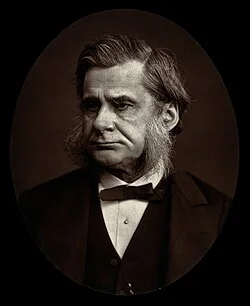
More Books by This Author
6 picks
 A Critical Examination of the Position of Mr. Darwin's Work, "On the Origin of Species," in Relation to the Complete Theory of the Causes of the Phenomena of Organic Nature / Lecture VI. (of VI.), "Lectures to Working Men", at the Museum of Practical Geology, 1863, on Darwin's Work: "Origin of Species"
by Thomas Henry Huxley
A Critical Examination of the Position of Mr. Darwin's Work, "On the Origin of Species," in Relation to the Complete Theory of the Causes of the Phenomena of Organic Nature / Lecture VI. (of VI.), "Lectures to Working Men", at the Museum of Practical Geology, 1863, on Darwin's Work: "Origin of Species"
by Thomas Henry Huxley
 American Addresses, with a Lecture on the Study of Biology
by Thomas Henry Huxley
American Addresses, with a Lecture on the Study of Biology
by Thomas Henry Huxley
 Aphorisms and Reflections from the works of T. H. Huxley
by Thomas Henry Huxley
Aphorisms and Reflections from the works of T. H. Huxley
by Thomas Henry Huxley
 Autobiography and Selected Essays
by Thomas Henry Huxley
Autobiography and Selected Essays
by Thomas Henry Huxley
 Collected Essays, Volume V / Science and Christian Tradition: Essays
by Thomas Henry Huxley
Collected Essays, Volume V / Science and Christian Tradition: Essays
by Thomas Henry Huxley
 Coral and Coral Reefs
by Thomas Henry Huxley
Coral and Coral Reefs
by Thomas Henry Huxley
You May Also Like
6 picks
 Outlines of Creation
by Elisha Noyce
Outlines of Creation
by Elisha Noyce
 An account of the manner of inoculating for the small pox in the East Indies / With some observations on the practice and mode of treating that disease in those parts
by J. Z. Holwell
An account of the manner of inoculating for the small pox in the East Indies / With some observations on the practice and mode of treating that disease in those parts
by J. Z. Holwell
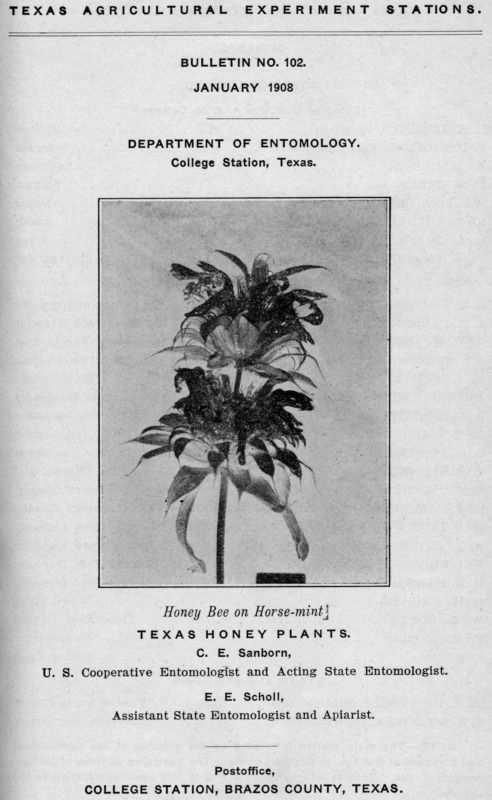 Texas Honey Plants
by Charles Emerson Sanborn
Texas Honey Plants
by Charles Emerson Sanborn
 Florulae Insularum Australium Prodromus
by Georg Forster
Florulae Insularum Australium Prodromus
by Georg Forster
 Birds in Flight
by W. P. Pycraft
Birds in Flight
by W. P. Pycraft
 More Hunting Wasps
by Jean-Henri Fabre
More Hunting Wasps
by Jean-Henri Fabre