
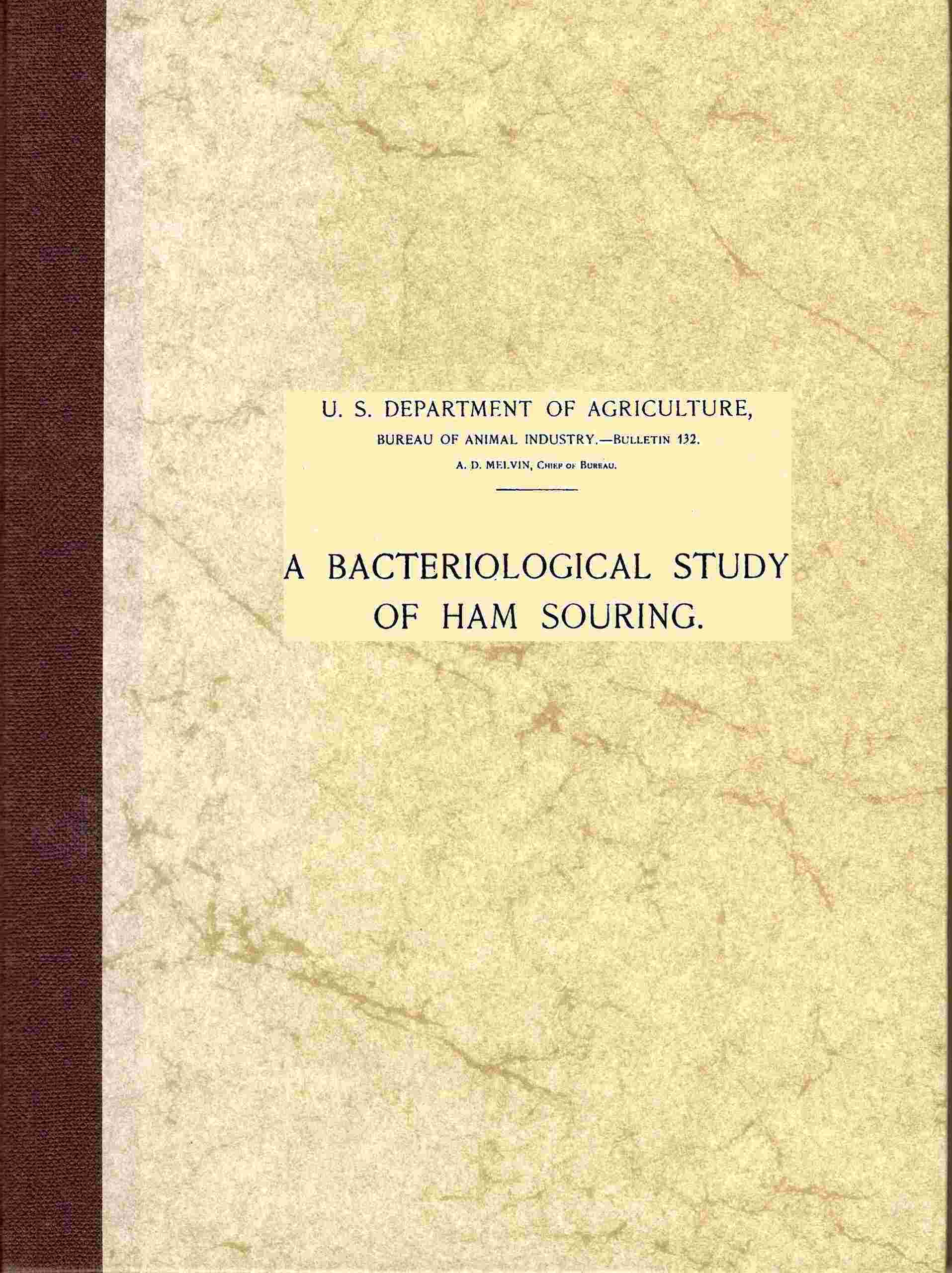
About This Book
The study investigates souring of hams cured by the wet method through bacteriological, chemical, and histological analyses. It classifies sour patterns, describes detection techniques, isolates and characterizes a specific bacillus responsible for acid and gas production, and reproduces souring by experimental inoculation. The report examines possible routes of contamination including pickling fluids, handling, thermometers, needles, and hooks, evaluates the organism’s growth requirements and resistance, and measures tissue changes and chemical alterations in affected meat. Practical recommendations for prevention, proper handling, disposal of spoiled hams, and curing practices are presented, followed by a concise summary of conclusions.
About the Author

You May Also Like
6 picks
 Essays Upon Heredity and Kindred Biological Problems / Authorised Translation
by August Weismann
Essays Upon Heredity and Kindred Biological Problems / Authorised Translation
by August Weismann
 Complete Treatise on the mare and foal at the time of delivery, with illustrations. / Also on cows and calves, with stallion and mare, when diseased by Gonorrhea (clap) or Pox, also Diarrhea and Costiveness in Colts.
by Conrad Mitchell
Complete Treatise on the mare and foal at the time of delivery, with illustrations. / Also on cows and calves, with stallion and mare, when diseased by Gonorrhea (clap) or Pox, also Diarrhea and Costiveness in Colts.
by Conrad Mitchell
 Rede, gehalten bei der Eröffnung der Versammlung deutscher Naturforscher und Ärzte in Berlin, am 18. September 1828
by Alexander von Humboldt
Rede, gehalten bei der Eröffnung der Versammlung deutscher Naturforscher und Ärzte in Berlin, am 18. September 1828
by Alexander von Humboldt
 Scurvy, Past and Present
by Alfred F. Hess
Scurvy, Past and Present
by Alfred F. Hess
 Coal and the coal mines
by Homer Greene
Coal and the coal mines
by Homer Greene
 Secrets of Wise Men, Chemists and Great Physicians
by Wm. K. David
Secrets of Wise Men, Chemists and Great Physicians
by Wm. K. David