

About This Book
This collection gathers the author's autobiographical reminiscences alongside representative essays that articulate why natural knowledge should be advanced, define liberal education, illustrate scientific method in accessible examples (notably an extended meditation on a piece of chalk), and discuss topics such as the physical basis of life and coral reefs. An editor's introduction, explanatory notes, and suggested studies accompany the texts, offering commentary and tools for classroom analysis of subject-matter, structure, sentence-level style, and vocabulary. Overall, the selections balance personal reflection with clear expositions of scientific thinking and educational principles.
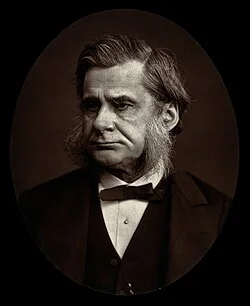
About the Author
More Books by This Author
6 picks
 A Critical Examination of the Position of Mr. Darwin's Work, "On the Origin of Species," in Relation to the Complete Theory of the Causes of the Phenomena of Organic Nature / Lecture VI. (of VI.), "Lectures to Working Men", at the Museum of Practical Geology, 1863, on Darwin's Work: "Origin of Species"
by Thomas Henry Huxley
A Critical Examination of the Position of Mr. Darwin's Work, "On the Origin of Species," in Relation to the Complete Theory of the Causes of the Phenomena of Organic Nature / Lecture VI. (of VI.), "Lectures to Working Men", at the Museum of Practical Geology, 1863, on Darwin's Work: "Origin of Species"
by Thomas Henry Huxley
 American Addresses, with a Lecture on the Study of Biology
by Thomas Henry Huxley
American Addresses, with a Lecture on the Study of Biology
by Thomas Henry Huxley
 Aphorisms and Reflections from the works of T. H. Huxley
by Thomas Henry Huxley
Aphorisms and Reflections from the works of T. H. Huxley
by Thomas Henry Huxley
 Collected Essays, Volume V / Science and Christian Tradition: Essays
by Thomas Henry Huxley
Collected Essays, Volume V / Science and Christian Tradition: Essays
by Thomas Henry Huxley
 Coral and Coral Reefs
by Thomas Henry Huxley
Coral and Coral Reefs
by Thomas Henry Huxley
 Criticisms on "The Origin of Species" / From 'The Natural History Review', 1864
by Thomas Henry Huxley
Criticisms on "The Origin of Species" / From 'The Natural History Review', 1864
by Thomas Henry Huxley
You May Also Like
6 picks
 Jean-Jacques Rousseau
by Jules Lemaître
Jean-Jacques Rousseau
by Jules Lemaître
 The Red River Colony / A Chronicle of the Beginnings of Manitoba
by Louis Aubrey Wood
The Red River Colony / A Chronicle of the Beginnings of Manitoba
by Louis Aubrey Wood
 Indian Heroes and Great Chieftains
by Charles A. Eastman
Indian Heroes and Great Chieftains
by Charles A. Eastman
 Semblanzas literarias
by Armando Palacio Valdés
Semblanzas literarias
by Armando Palacio Valdés
 Publications of the Scottish History Society, Volume 36 / Journals of Sir John Lauder Lord Fountainhall with His Observations on Public Affairs and Other Memoranda 1665-1676
by Lord John Lauder Fountainhall
Publications of the Scottish History Society, Volume 36 / Journals of Sir John Lauder Lord Fountainhall with His Observations on Public Affairs and Other Memoranda 1665-1676
by Lord John Lauder Fountainhall
 Youth and Life
by Randolph Silliman Bourne
Youth and Life
by Randolph Silliman Bourne