

About This Book
An account explains the structure and origin of corals and coral reefs, distinguishing the ornamental red coral from the more widespread white coral and showing that both are hard skeletons produced by simple polyp animals. It describes polyp anatomy—cylindrical bodies with a mouth ringed by tentacles—and feeding behavior, and details modes of reproduction including fission, budding, and free-swimming larval stages with cilia that enable dispersal. The narrative explains how polyps secrete calcium carbonate from seawater to build internal skeletons, how connected colonies function cooperatively, and how the accumulation and growth of these skeletons produce extensive reef structures over time.
About the Author
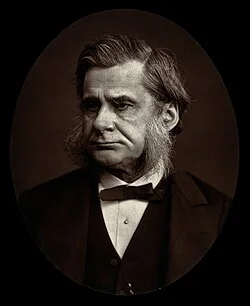
More Books by This Author
6 picks
 A Critical Examination of the Position of Mr. Darwin's Work, "On the Origin of Species," in Relation to the Complete Theory of the Causes of the Phenomena of Organic Nature / Lecture VI. (of VI.), "Lectures to Working Men", at the Museum of Practical Geology, 1863, on Darwin's Work: "Origin of Species"
by Thomas Henry Huxley
A Critical Examination of the Position of Mr. Darwin's Work, "On the Origin of Species," in Relation to the Complete Theory of the Causes of the Phenomena of Organic Nature / Lecture VI. (of VI.), "Lectures to Working Men", at the Museum of Practical Geology, 1863, on Darwin's Work: "Origin of Species"
by Thomas Henry Huxley
 American Addresses, with a Lecture on the Study of Biology
by Thomas Henry Huxley
American Addresses, with a Lecture on the Study of Biology
by Thomas Henry Huxley
 Aphorisms and Reflections from the works of T. H. Huxley
by Thomas Henry Huxley
Aphorisms and Reflections from the works of T. H. Huxley
by Thomas Henry Huxley
 Autobiography and Selected Essays
by Thomas Henry Huxley
Autobiography and Selected Essays
by Thomas Henry Huxley
 Collected Essays, Volume V / Science and Christian Tradition: Essays
by Thomas Henry Huxley
Collected Essays, Volume V / Science and Christian Tradition: Essays
by Thomas Henry Huxley
 Criticisms on "The Origin of Species" / From 'The Natural History Review', 1864
by Thomas Henry Huxley
Criticisms on "The Origin of Species" / From 'The Natural History Review', 1864
by Thomas Henry Huxley
You May Also Like
6 picks
 Biology
by Edmund B. Wilson
Biology
by Edmund B. Wilson
 Lay Sermons, Addresses and Reviews
by Thomas Henry Huxley
Lay Sermons, Addresses and Reviews
by Thomas Henry Huxley
 Pleasures of the telescope / An Illustrated Guide for Amateur Astronomers and a Popular Description of the Chief Wonders of the Heavens for General Readers
by Garrett Putman Serviss
Pleasures of the telescope / An Illustrated Guide for Amateur Astronomers and a Popular Description of the Chief Wonders of the Heavens for General Readers
by Garrett Putman Serviss
 A Guide for the Study of Animals
by Worrallo Whitney
A Guide for the Study of Animals
by Worrallo Whitney
 Our Common Land (and Other Short Essays)
by Octavia Hill
Our Common Land (and Other Short Essays)
by Octavia Hill
 Felicidade pela Agricultura (Vol. I)
by Antonio Feliciano de Castilho
Felicidade pela Agricultura (Vol. I)
by Antonio Feliciano de Castilho