

Lectures on Evolution / Essay #3 from "Science and Hebrew Tradition"
Explore more books like this:
About This Book
The essay surveys competing hypotheses about the history of nature and defends evolution as a lawful, causal process. It sets out the expectation that living forms should be linked by gradations, then addresses the apparent absence of intermediate forms and the distinct breaks between major groups. Drawing on geological and fossil evidence — such as extensive track impressions and missing skeletal remains — it examines how preservation biases and taphonomic processes can erase or obscure evidence. The author concludes that imperfections in the geological record explain many apparent difficulties while distinguishing between evidence that supports evolution and evidence that would be demonstrative.
About the Author
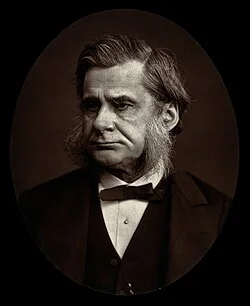
More Books by This Author
6 picks
 A Critical Examination of the Position of Mr. Darwin's Work, "On the Origin of Species," in Relation to the Complete Theory of the Causes of the Phenomena of Organic Nature / Lecture VI. (of VI.), "Lectures to Working Men", at the Museum of Practical Geology, 1863, on Darwin's Work: "Origin of Species"
by Thomas Henry Huxley
A Critical Examination of the Position of Mr. Darwin's Work, "On the Origin of Species," in Relation to the Complete Theory of the Causes of the Phenomena of Organic Nature / Lecture VI. (of VI.), "Lectures to Working Men", at the Museum of Practical Geology, 1863, on Darwin's Work: "Origin of Species"
by Thomas Henry Huxley
 American Addresses, with a Lecture on the Study of Biology
by Thomas Henry Huxley
American Addresses, with a Lecture on the Study of Biology
by Thomas Henry Huxley
 Aphorisms and Reflections from the works of T. H. Huxley
by Thomas Henry Huxley
Aphorisms and Reflections from the works of T. H. Huxley
by Thomas Henry Huxley
 Autobiography and Selected Essays
by Thomas Henry Huxley
Autobiography and Selected Essays
by Thomas Henry Huxley
 Collected Essays, Volume V / Science and Christian Tradition: Essays
by Thomas Henry Huxley
Collected Essays, Volume V / Science and Christian Tradition: Essays
by Thomas Henry Huxley
 Coral and Coral Reefs
by Thomas Henry Huxley
Coral and Coral Reefs
by Thomas Henry Huxley
You May Also Like
6 picks
 Die Naturwissenschaften in ihrer Entwicklung und in ihrem Zusammenhange, III. Band / Das Emporblühen der modernen Naturwissenschaften bis zur Entdeckung des Energieprinzipes
by Friedrich Dannemann
Die Naturwissenschaften in ihrer Entwicklung und in ihrem Zusammenhange, III. Band / Das Emporblühen der modernen Naturwissenschaften bis zur Entdeckung des Energieprinzipes
by Friedrich Dannemann
 The Story of Creation as Told By Theology and By Science
by T. S. Ackland
The Story of Creation as Told By Theology and By Science
by T. S. Ackland
 Physiological Researches on Life and Death
by Xavier Bichat
Physiological Researches on Life and Death
by Xavier Bichat
 A Dissertation on Horses / Wherein It is Demonstrated, by Matters of Fact, as Well as from the Principles of Philosophy, That Innate Qualities Do Not Exist, and That the Excellence of This Animal is Altogether Mechanical and Not in the Blood
by William Osmer
A Dissertation on Horses / Wherein It is Demonstrated, by Matters of Fact, as Well as from the Principles of Philosophy, That Innate Qualities Do Not Exist, and That the Excellence of This Animal is Altogether Mechanical and Not in the Blood
by William Osmer
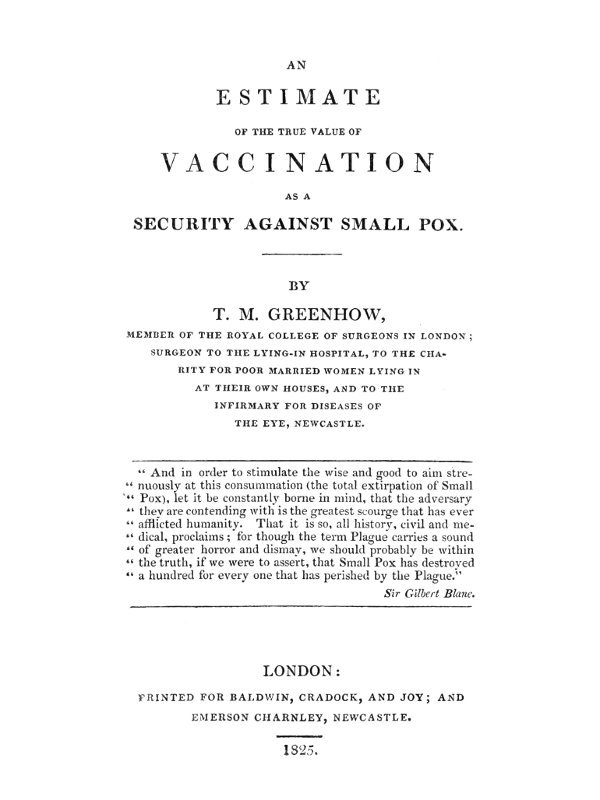 An Estimate of the True Value of Vaccination as a Security Against Small Pox
by T. M. Greenhow
An Estimate of the True Value of Vaccination as a Security Against Small Pox
by T. M. Greenhow
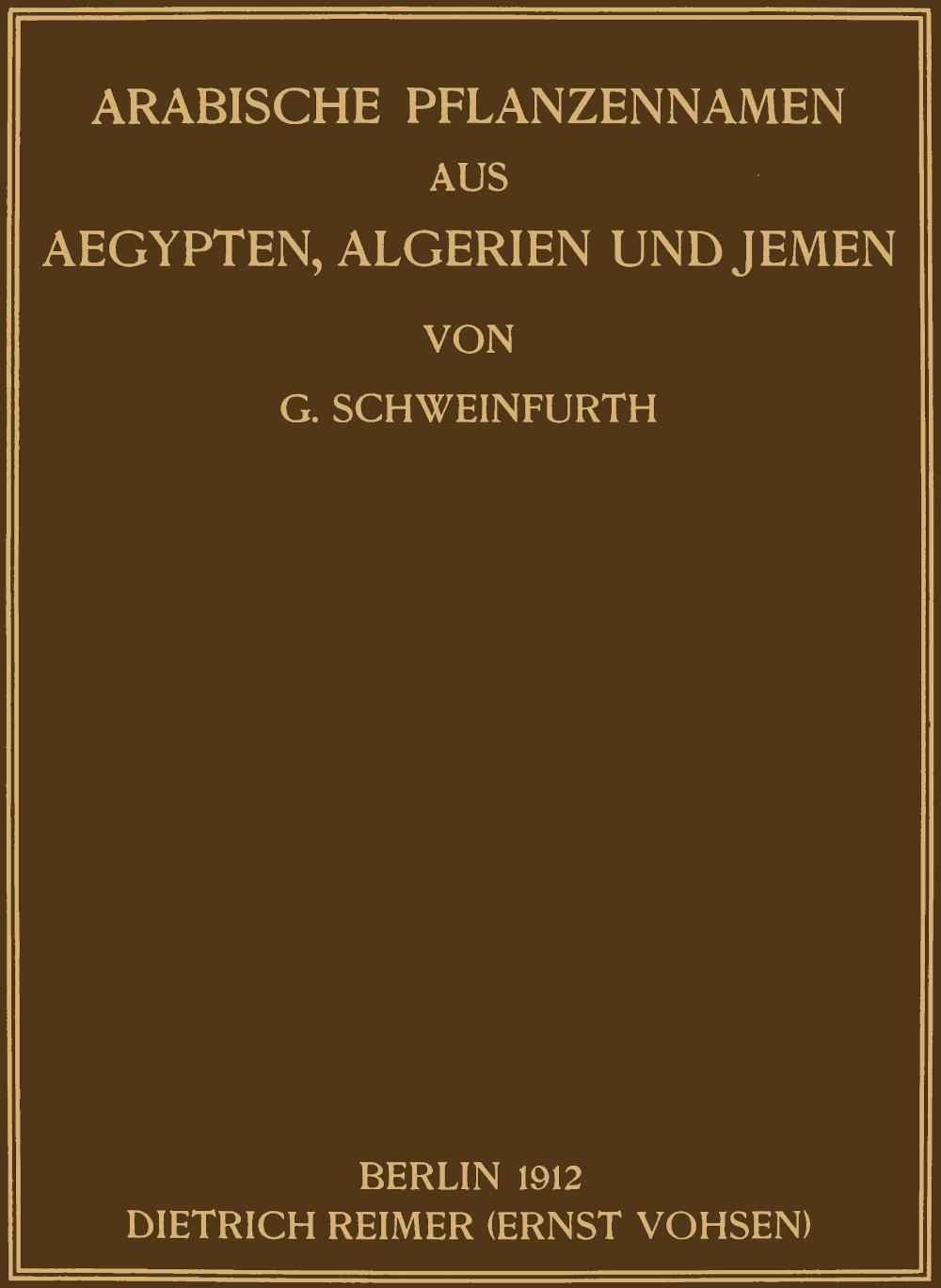 Arabische Pflanzennamen aus Aegypten, Algerien und Jemen
by Georg August Schweinfurth
Arabische Pflanzennamen aus Aegypten, Algerien und Jemen
by Georg August Schweinfurth