

About This Book
An analytic study of the psychological mechanisms that bind individuals into groups, examining how libidinal ties and identification replace direct sexual aims to produce collective cohesion. It critiques earlier descriptions of the group mind, analyzes suggestion, love and identification processes, and considers institutional examples such as churches and armies. Themes include the herd instinct, the role of leaders and substitutes for parental figures, the regression to primitive group structures like the primal horde, and how group life affects ego differentiation and individual subjectivity. The work combines theory, clinical observation, and psychoanalytic metapsychology to map collective mental life.
About the Author

More Books by This Author
6 picks
 A General Introduction to Psychoanalysis
by Sigmund Freud
A General Introduction to Psychoanalysis
by Sigmund Freud
 Animismus, Magie und Allmacht der Gedanken / Über einige Übereinstimmungen im Seelenleben der Wilden und der Neurotiker III
by Sigmund Freud
Animismus, Magie und Allmacht der Gedanken / Über einige Übereinstimmungen im Seelenleben der Wilden und der Neurotiker III
by Sigmund Freud
 Beyond the pleasure principle
by Sigmund Freud
Beyond the pleasure principle
by Sigmund Freud
 Das Motiv der Kästchenwahl
by Sigmund Freud
Das Motiv der Kästchenwahl
by Sigmund Freud
 Das Tabu und die Ambivalenz der Gefühlsregungen / Über einige Übereinstimmungen im Seelenleben der Wilden und der Neurotiker II
by Sigmund Freud
Das Tabu und die Ambivalenz der Gefühlsregungen / Über einige Übereinstimmungen im Seelenleben der Wilden und der Neurotiker II
by Sigmund Freud
 Das Unheimliche
by Sigmund Freud
Das Unheimliche
by Sigmund Freud
You May Also Like
6 picks
 Salvation Syrup; Or, Light On Darkest England
by G. W. Foote
Salvation Syrup; Or, Light On Darkest England
by G. W. Foote
 Kansallista itsetutkistelua: Suomalaisia kulttuuri-ääriviivoja
by Volter Kilpi
Kansallista itsetutkistelua: Suomalaisia kulttuuri-ääriviivoja
by Volter Kilpi
 Is civilization a disease?
by Stanton Coit
Is civilization a disease?
by Stanton Coit
 The Myth of the Birth of the Hero: A psychological interpretation of mythology
by Otto Rank
The Myth of the Birth of the Hero: A psychological interpretation of mythology
by Otto Rank
 Health Through Will Power
by James J. Walsh
Health Through Will Power
by James J. Walsh
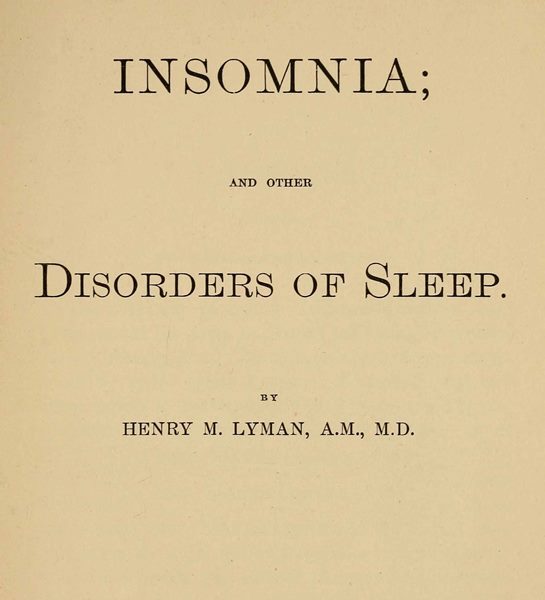 Insomnia; and Other Disorders of Sleep
by Henry M. Lyman
Insomnia; and Other Disorders of Sleep
by Henry M. Lyman