
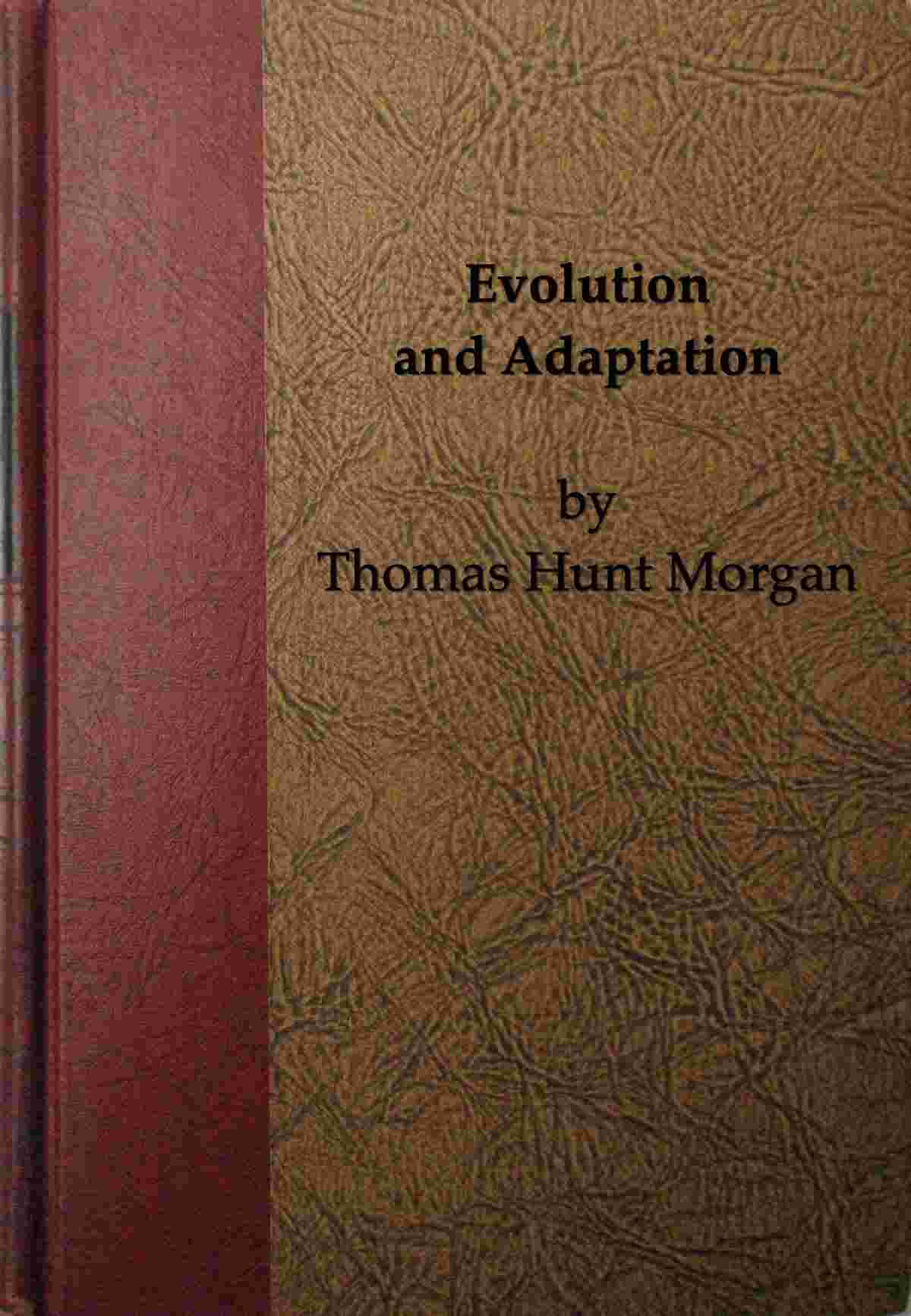
About This Book
The work examines how organisms become fitted to their environments by surveying evidence for evolution and scrutinizing natural and sexual selection. It evaluates comparative anatomy, embryology, the fossil record, and experimental observations, and considers variation, competition, and heredity alongside objections such as sterility between species and limits of selection. Special attention is given to regenerative abilities and internal developmental factors as possible alternatives or complements to selection. The author distinguishes well-supported conclusions from unresolved problems and suggests directions for further empirical investigation into the mechanisms that produce adaptive form and function.
About the Author
More Books by This Author
5 picks
 A Critique of the Theory of Evolution
by Thomas Hunt Morgan
A Critique of the Theory of Evolution
by Thomas Hunt Morgan
 Regeneration
by Thomas Hunt Morgan
Regeneration
by Thomas Hunt Morgan
 Sex-linked Inheritance in Drosophila
by Thomas Hunt Morgan
Sex-linked Inheritance in Drosophila
by Thomas Hunt Morgan
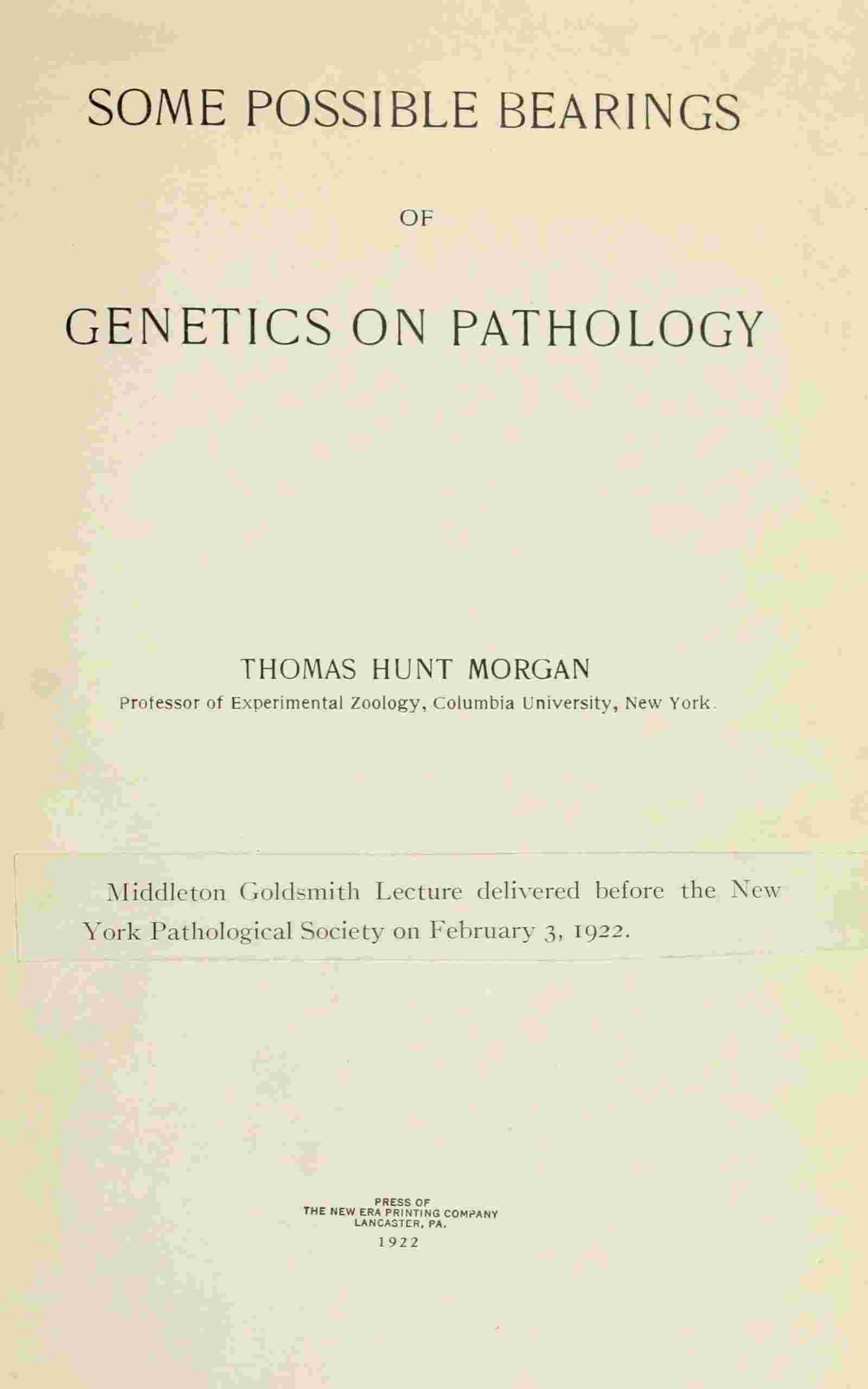 Some possible bearings of genetics on pathology
by Thomas Hunt Morgan
Some possible bearings of genetics on pathology
by Thomas Hunt Morgan
 The genetic and the operative evidence relating to secondary sexual characters
by Thomas Hunt Morgan
The genetic and the operative evidence relating to secondary sexual characters
by Thomas Hunt Morgan
You May Also Like
6 picks
 Die krankheiterregenden Bakterien / Entstehung, Heilung und Bekämpfung der bakteriellen Infektionskrankheiten des Menschen
by Max Löhlein
Die krankheiterregenden Bakterien / Entstehung, Heilung und Bekämpfung der bakteriellen Infektionskrankheiten des Menschen
by Max Löhlein
 Het Leven der Dieren, Deel 3, Hoofdstuk 6: De Wormen
by Alfred Edmund Brehm
Het Leven der Dieren, Deel 3, Hoofdstuk 6: De Wormen
by Alfred Edmund Brehm
 Blonde duinen
by Jac. P. Thijsse
Blonde duinen
by Jac. P. Thijsse
 La vérité sur le prétendu Silphion de la Cyrénaïque
by F. Hérincq
La vérité sur le prétendu Silphion de la Cyrénaïque
by F. Hérincq
 The Tropical World / Aspects of man and nature in the equatorial regions of the globe.
by G. Hartwig
The Tropical World / Aspects of man and nature in the equatorial regions of the globe.
by G. Hartwig
 Bee Keeping
by Frank Benton
Bee Keeping
by Frank Benton