
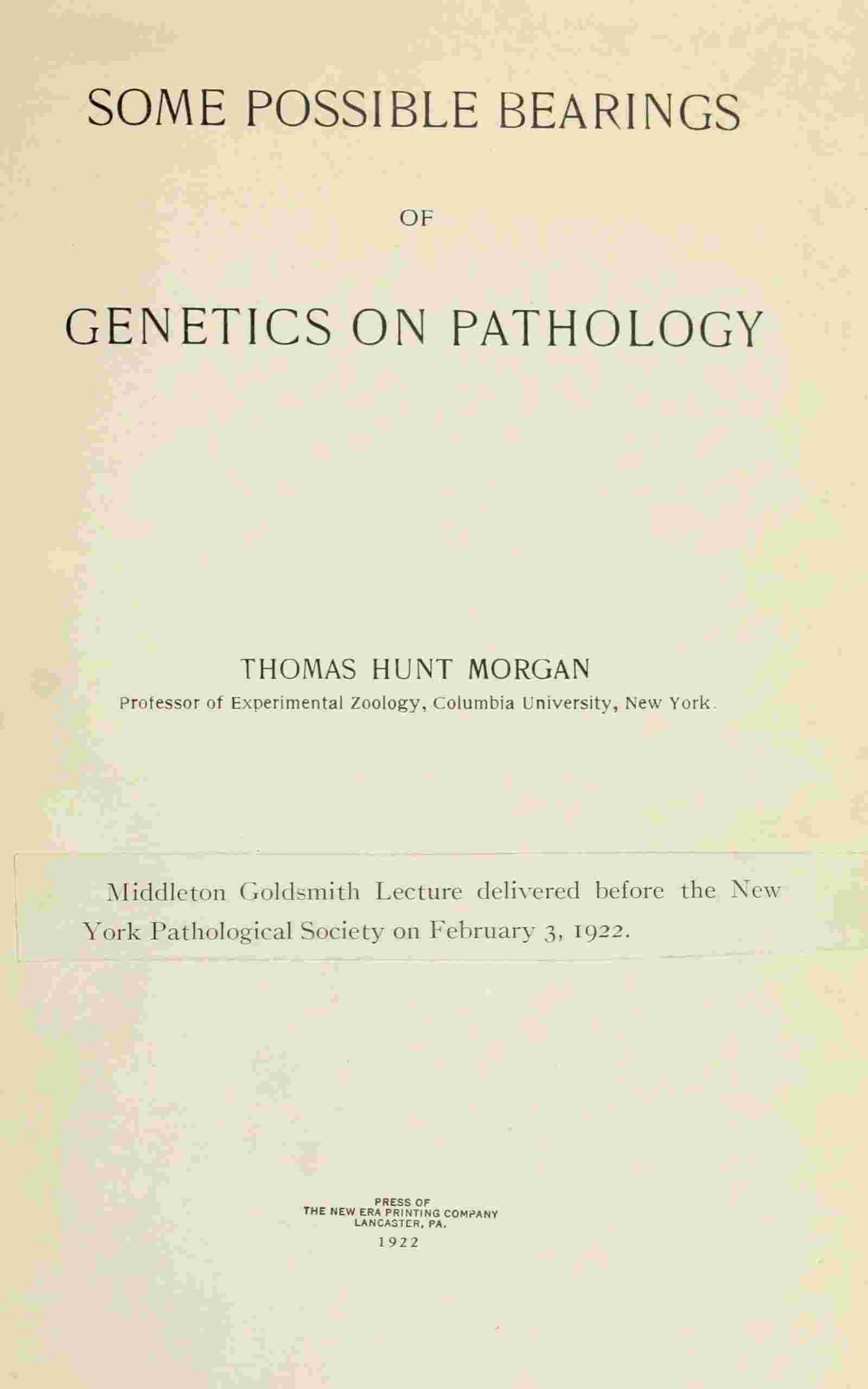
About This Book
The lecture examines how Mendelian genetics illuminates hereditary disorders by explaining inheritance mechanisms and their population consequences. Through experimental crosses, including fruit-fly examples, it shows how recessive mutations can persist hidden in carriers and later reappear, and how dominant and recessive variants differ in their probabilities of spread depending on selection and mating patterns. The discussion considers the effects of out-breeding, natural selection, and chance on the retention or loss of defective genes and draws implications for understanding the appearance and distribution of human malformations and hereditary conditions.
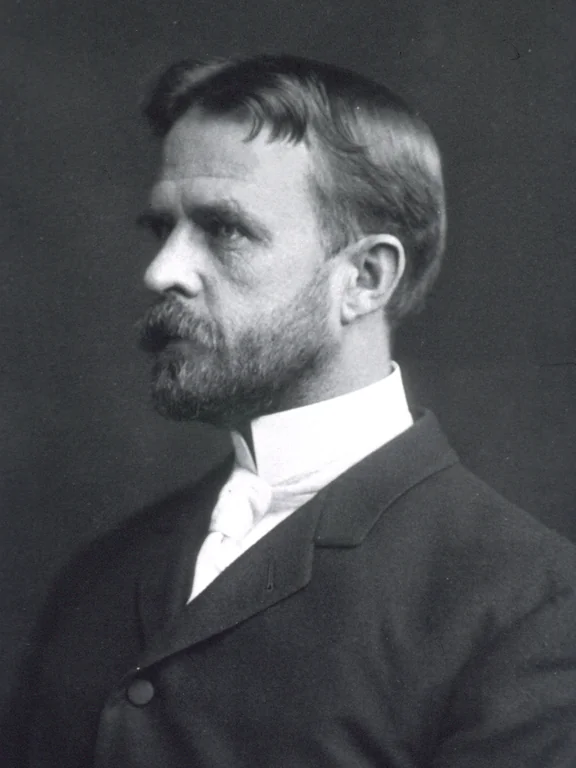
About the Author
More Books by This Author
5 picks
 A Critique of the Theory of Evolution
by Thomas Hunt Morgan
A Critique of the Theory of Evolution
by Thomas Hunt Morgan
 Evolution and Adaptation
by Thomas Hunt Morgan
Evolution and Adaptation
by Thomas Hunt Morgan
 Regeneration
by Thomas Hunt Morgan
Regeneration
by Thomas Hunt Morgan
 Sex-linked Inheritance in Drosophila
by Thomas Hunt Morgan
Sex-linked Inheritance in Drosophila
by Thomas Hunt Morgan
 The genetic and the operative evidence relating to secondary sexual characters
by Thomas Hunt Morgan
The genetic and the operative evidence relating to secondary sexual characters
by Thomas Hunt Morgan
You May Also Like
6 picks
 What Every Girl Should Know
by Margaret Sanger
What Every Girl Should Know
by Margaret Sanger
 On the origin of inflammation of the veins / and of the causes, consequences, and treatment of purulent deposits
by M.D. Henry Lee
On the origin of inflammation of the veins / and of the causes, consequences, and treatment of purulent deposits
by M.D. Henry Lee
 Insect Architecture
by James Rennie
Insect Architecture
by James Rennie
 The Natural Food of Man / Being an attempt to prove from comparative anatomy, physiology, chemistry and hygiene, that the original, best and natural diet of man is fruit and nuts
by Hereward Carrington
The Natural Food of Man / Being an attempt to prove from comparative anatomy, physiology, chemistry and hygiene, that the original, best and natural diet of man is fruit and nuts
by Hereward Carrington
 How to Add Ten Years to your Life and to Double Its Satisfactions
by S. S. Curry
How to Add Ten Years to your Life and to Double Its Satisfactions
by S. S. Curry
 Primitive Psycho-Therapy and Quackery
by Robert Means Lawrence
Primitive Psycho-Therapy and Quackery
by Robert Means Lawrence