

A New Banking System / The Needful Capital for Rebuilding the Burnt District
Explore more books like this:
About This Book
The pamphlet proposes a banking system that would issue paper currency secured primarily by real-estate values, arguing that Massachusetts real estate could underwrite vastly more loanable capital than existing national banks. It explains how such currency could maintain specie payments without inflating prices, analyzes security and credit mechanics, and estimates the amount of currency needed to support manufacturing and reconstruction. The argument emphasizes money as indispensable capital for industry, claims restrictions on lending amount to violations of economic freedom, and contrasts the proposal with the prevailing national banking arrangements.
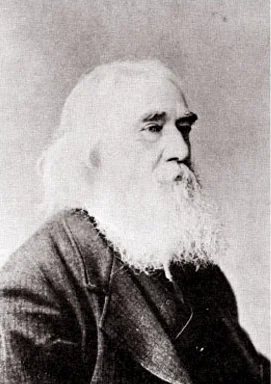
About the Author
More Books by This Author
5 picks
 A Letter to Grover Cleveland / On His False Inaugural Address, The Usurpations and Crimes of Lawmakers and Judges, and the Consequent Poverty, Ignorance, and Servitude Of The People
by Lysander Spooner
A Letter to Grover Cleveland / On His False Inaugural Address, The Usurpations and Crimes of Lawmakers and Judges, and the Consequent Poverty, Ignorance, and Servitude Of The People
by Lysander Spooner
 A Letter to Thomas F. Bayard
by Lysander Spooner
A Letter to Thomas F. Bayard
by Lysander Spooner
 An Essay on the Trial by Jury
by Lysander Spooner
An Essay on the Trial by Jury
by Lysander Spooner
 No Treason, Vol. VI.: The Constitution of No Authority
by Lysander Spooner
No Treason, Vol. VI.: The Constitution of No Authority
by Lysander Spooner
 The Unconstitutionality of Slavery
by Lysander Spooner
The Unconstitutionality of Slavery
by Lysander Spooner
You May Also Like
6 picks
 Tea room business
by Ida Lee Cary
Tea room business
by Ida Lee Cary
 Arbetets Herravälde
by Andrew Carnegie
Arbetets Herravälde
by Andrew Carnegie
 The International Development of China
by Yat-sen Sun
The International Development of China
by Yat-sen Sun
 French and German Socialism in Modern Times
by Richard T. Ely
French and German Socialism in Modern Times
by Richard T. Ely
 British Canals: Is their resuscitation practicable?
by Edwin A. Pratt
British Canals: Is their resuscitation practicable?
by Edwin A. Pratt
 How Department Stores Are Carried On
by W. B. Phillips
How Department Stores Are Carried On
by W. B. Phillips