
About This Book
The author compares Christian doctrine with Herbert Spencer's scientific account of immortality, which defines perpetual life as perfect correspondence between organism and environment. He surveys biological principles—degrees of life, complexity and longevity—to show how scientific criteria for unending existence can illuminate spiritual claims; he examines whether those who profess spiritual continuance meet the conditions proposed by biology and explores the moral and practical consequences for faith and hope. The text combines scientific explanation, theological reflection, and illustrative examples to argue for a reconciliation between biological ideas of continuity and religious views of enduring spiritual life.
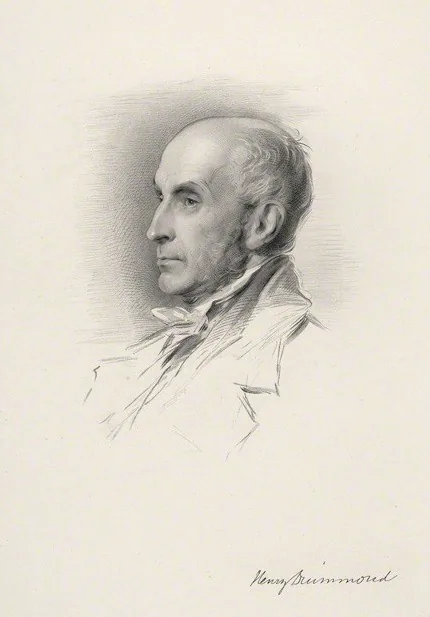
About the Author
More Books by This Author
6 picks




You May Also Like
6 picks
 Studies in Judaism, First Series
by S. Schechter
Studies in Judaism, First Series
by S. Schechter
 Monism as Connecting Religion and Science / A Man of Science
by Ernst Haeckel
Monism as Connecting Religion and Science / A Man of Science
by Ernst Haeckel
 The Lay-Man's Sermon upon the Late Storm / Held forth at an Honest Coffee-House-Conventicle
by Daniel Defoe
The Lay-Man's Sermon upon the Late Storm / Held forth at an Honest Coffee-House-Conventicle
by Daniel Defoe
 Consolation in Life and Death, Derived from the Life of Christ / Being the substance of a sermon on the death of Mrs. Turner, preached at the Surrey Tabernacle, on Sunday evening, the 15th of August, 1824
by J. Church
Consolation in Life and Death, Derived from the Life of Christ / Being the substance of a sermon on the death of Mrs. Turner, preached at the Surrey Tabernacle, on Sunday evening, the 15th of August, 1824
by J. Church
 A short history of a long travel from Babylon to Bethel
by Stephen Crisp
A short history of a long travel from Babylon to Bethel
by Stephen Crisp
 Fancy's Show-Box (From "Twice Told Tales")
by Nathaniel Hawthorne
Fancy's Show-Box (From "Twice Told Tales")
by Nathaniel Hawthorne