
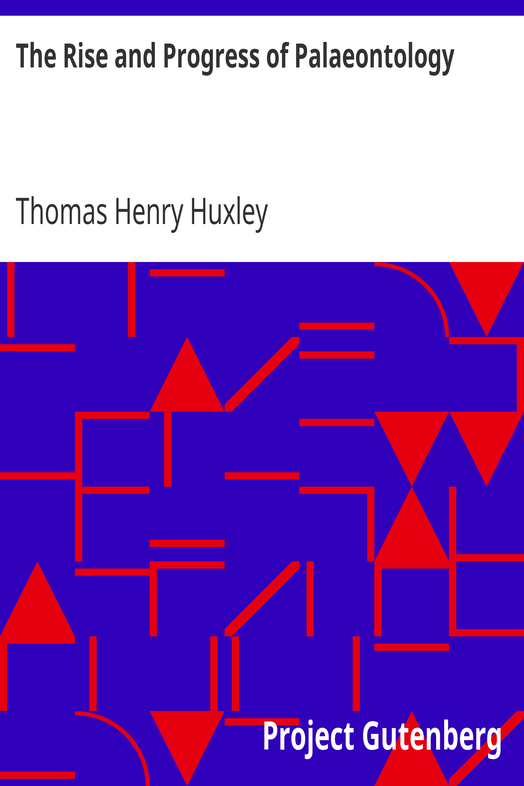
The Rise and Progress of Palaeontology / Essay #2 from "Science and Hebrew Tradition"
Explore more books like this:
About This Book
The essay traces the development of palaeontology from early conjectures about shells and bones found in rock to its establishment as a disciplined science. It reviews competing explanations—fossils as remains of organisms, as mineral imitations, or as abortive growths—and explains how stratigraphical reasoning and comparative anatomy settled the question. It surveys the work of key investigators who organized fossil evidence and the rapid multiplication of known fossil forms, including entire groups recorded only in stone. Finally, it highlights the chemical and geological processes involved in fossilization and emphasizes that many discoveries and open questions remain as exploration continues.
About the Author
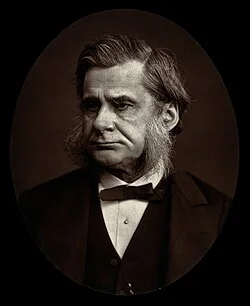
More Books by This Author
6 picks
 A Critical Examination of the Position of Mr. Darwin's Work, "On the Origin of Species," in Relation to the Complete Theory of the Causes of the Phenomena of Organic Nature / Lecture VI. (of VI.), "Lectures to Working Men", at the Museum of Practical Geology, 1863, on Darwin's Work: "Origin of Species"
by Thomas Henry Huxley
A Critical Examination of the Position of Mr. Darwin's Work, "On the Origin of Species," in Relation to the Complete Theory of the Causes of the Phenomena of Organic Nature / Lecture VI. (of VI.), "Lectures to Working Men", at the Museum of Practical Geology, 1863, on Darwin's Work: "Origin of Species"
by Thomas Henry Huxley
 American Addresses, with a Lecture on the Study of Biology
by Thomas Henry Huxley
American Addresses, with a Lecture on the Study of Biology
by Thomas Henry Huxley
 Aphorisms and Reflections from the works of T. H. Huxley
by Thomas Henry Huxley
Aphorisms and Reflections from the works of T. H. Huxley
by Thomas Henry Huxley
 Autobiography and Selected Essays
by Thomas Henry Huxley
Autobiography and Selected Essays
by Thomas Henry Huxley
 Collected Essays, Volume V / Science and Christian Tradition: Essays
by Thomas Henry Huxley
Collected Essays, Volume V / Science and Christian Tradition: Essays
by Thomas Henry Huxley
 Coral and Coral Reefs
by Thomas Henry Huxley
Coral and Coral Reefs
by Thomas Henry Huxley
You May Also Like
6 picks
 Estatuto de la L. F. (Liga Filipina)
by José Rizal
Estatuto de la L. F. (Liga Filipina)
by José Rizal
 History of Phosphorus
by Eduard Farber
Aphorisms and Reflections from the works of T. H. Huxley
by Thomas Henry Huxley
History of Phosphorus
by Eduard Farber
Aphorisms and Reflections from the works of T. H. Huxley
by Thomas Henry Huxley
 A History of Epidemic Pestilences / From the Earliest Ages, 1495 Years Before the Birth of our Saviour to 1848: With Researches into Their Nature, Causes, and Prophylaxis
by Edward Bascome
A History of Epidemic Pestilences / From the Earliest Ages, 1495 Years Before the Birth of our Saviour to 1848: With Researches into Their Nature, Causes, and Prophylaxis
by Edward Bascome
 Carlo Darwin
by Michele Lessona
Carlo Darwin
by Michele Lessona
 Evolution: An Investigation and a Critique
by Theodore Graebner
Evolution: An Investigation and a Critique
by Theodore Graebner