
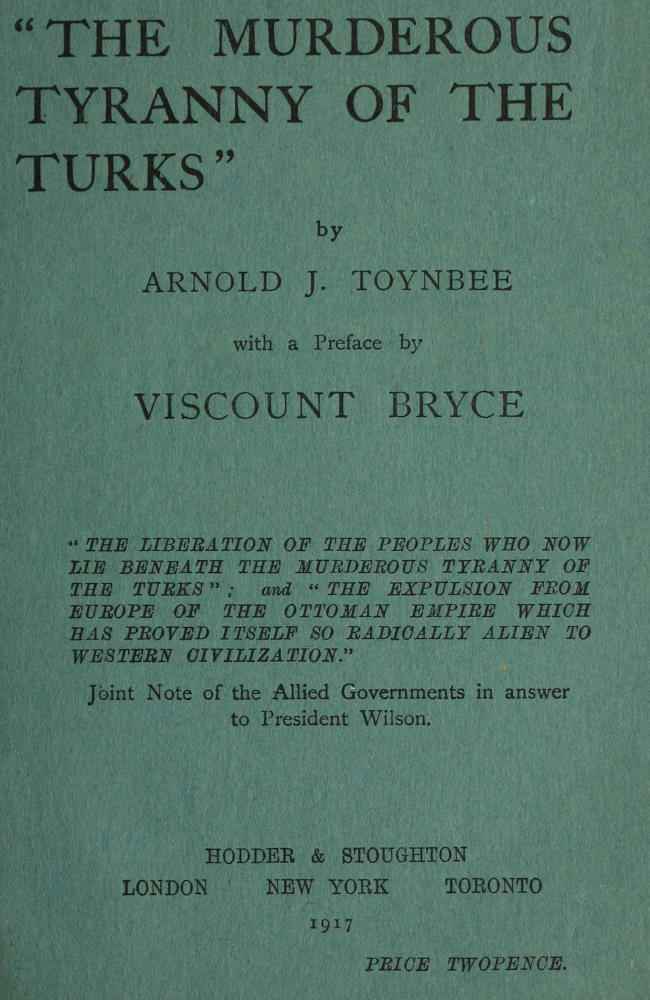
About This Book
The essay argues that Ottoman rule has been corrupt, cruel, and incapable of administering subject peoples, and supports Allied demands to liberate Christians and remove Ottoman authority from Europe. It surveys the empire's diverse populations, condemns recent massacres and forced expulsions, criticizes the Young Turk leadership for broken promises and increased brutality, and rejects the idea that Ottoman governance can be reformed. The author suggests that if any Turkish polity were to remain, it should be limited to a predominantly Muslim interior region, while coastal and Christian-majority areas require new arrangements to secure justice and order.
About the Author

More Books by This Author
2 picks


You May Also Like
6 picks
 Above the French Lines / Letters of Stuart Walcott, American Aviator: July 4, 1917, to December 8, 1917
by Stuart Walcott
Above the French Lines / Letters of Stuart Walcott, American Aviator: July 4, 1917, to December 8, 1917
by Stuart Walcott
 A Footnote to History: Eight Years of Trouble in Samoa
by Robert Louis Stevenson
A Footnote to History: Eight Years of Trouble in Samoa
by Robert Louis Stevenson
 Sir George Etienne Cartier: His Work for Canada and His Services to Montreal
by John Boyd
Sir George Etienne Cartier: His Work for Canada and His Services to Montreal
by John Boyd
 History of the United Netherlands, 1587a
by John Lothrop Motley
History of the United Netherlands, 1587a
by John Lothrop Motley
 The Fight for a Free Sea: A Chronicle of the War of 1812 / The Chronicles of America Series, Volume 17
by Ralph Delahaye Paine
The Fight for a Free Sea: A Chronicle of the War of 1812 / The Chronicles of America Series, Volume 17
by Ralph Delahaye Paine
 The Age of Erasmus / Lectures Delivered in the Universities of Oxford and London
by P. S. Allen
The Age of Erasmus / Lectures Delivered in the Universities of Oxford and London
by P. S. Allen