
About This Book
The work examines a distinct Neotropical lineage of hylid frogs, arguing for recognition as a phyllomedusine subfamily and presenting diagnostic characters including a vertical pupil, a haploid chromosome number of 13, distinctive skin peptides, and reproductive behavior of depositing egg masses on vegetation above water while tadpoles possess a sinistral ventral spiracle. It outlines the group's low- to mid-elevation distribution in Central and South America, revises generic boundaries, and supplies genus-level definitions and species inventories for Agalychnis, a monotypic Pachymedusa, and a broadly circumscribed Phyllomedusa, with comparative notes on skull, limb, and integumentary morphology.
About the Author

More Books by This Author
6 picks
 A Distributional Study of the Amphibians of the Isthmus of Tehuantepec, México
by William Edward Duellman
A Distributional Study of the Amphibians of the Isthmus of Tehuantepec, México
by William Edward Duellman
 A New Subspecies of Lizard, Cnemidophorus sacki, from Michoacán, México
by William Edward Duellman
A New Subspecies of Lizard, Cnemidophorus sacki, from Michoacán, México
by William Edward Duellman
 A Review of the Frogs of the Hyla bistincta Group
by William Edward Duellman
A Review of the Frogs of the Hyla bistincta Group
by William Edward Duellman
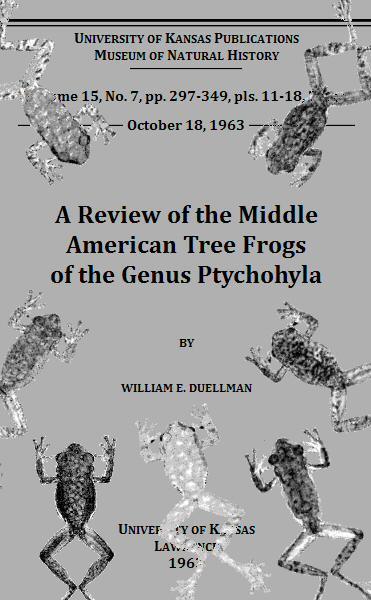 A Review of the Middle American Tree Frogs of the Genus Ptychohyla
by William Edward Duellman
A Review of the Middle American Tree Frogs of the Genus Ptychohyla
by William Edward Duellman
 A Taxonomic Study of the Middle American Snake, Pituophis deppei
by William Edward Duellman
A Taxonomic Study of the Middle American Snake, Pituophis deppei
by William Edward Duellman
 Amphibians and Reptiles of the Rainforests of Southern El Petén, Guatemala
by William Edward Duellman
Amphibians and Reptiles of the Rainforests of Southern El Petén, Guatemala
by William Edward Duellman
You May Also Like
6 picks
 Μικρά Φυσικά, Τόμος Δεύτερος
by Aristotle
Μικρά Φυσικά, Τόμος Δεύτερος
by Aristotle
 Parallel Paths: A Study in Biology, Ethics, and Art
by T. W. Rolleston
Parallel Paths: A Study in Biology, Ethics, and Art
by T. W. Rolleston
 Rudiments of Conchology / Intended as a familiar introduction to the science.
by Mary Anne Venning
Rudiments of Conchology / Intended as a familiar introduction to the science.
by Mary Anne Venning
 The Brain, A Decoded Enigma
by Dorin Teodor Moisa
The Brain, A Decoded Enigma
by Dorin Teodor Moisa
 Dans la Haute-Gambie
by A. Rançon
Dans la Haute-Gambie
by A. Rançon
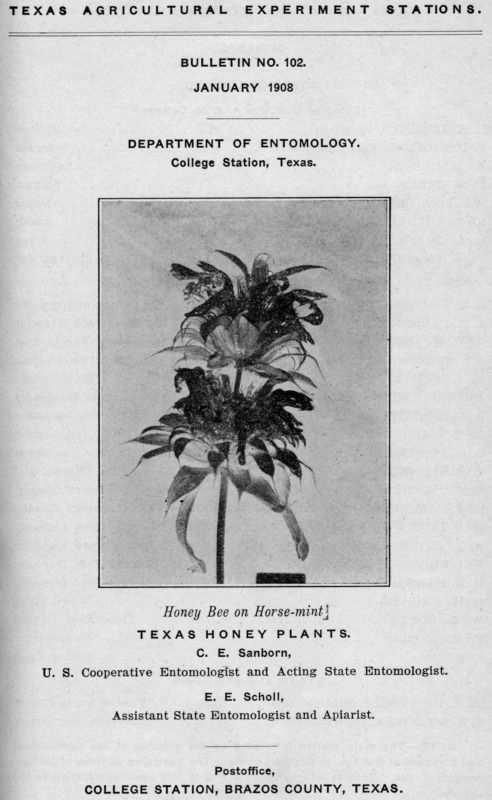 Texas Honey Plants
by Charles Emerson Sanborn
Texas Honey Plants
by Charles Emerson Sanborn