
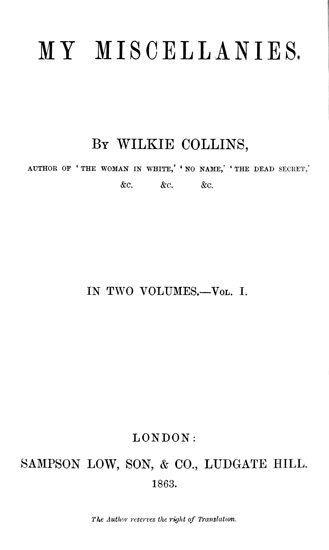
My Miscellanies, Vol. 1 (of 2)
This collection assembles brief, conversational pieces that range from witty sketches of manners and character to light social criticism, short historical curiosities, reflections on literary and publishing life, and personal anecdotes. The tone shifts between playful satire and calm observation, favoring the ease of friendly address over formal argument. Individual essays probe everyday eccentricities, social annoyances, and the habits of readers and writers with anecdotal detail, while other fragments offer travel-like digressions and personal reminiscence. Together the pieces form a varied miscellany of short prose intended to amuse and prompt modest reflection.
About This Book
This collection assembles brief, conversational pieces that range from witty sketches of manners and character to light social criticism, short historical curiosities, reflections on literary and publishing life, and personal anecdotes. The tone shifts between playful satire and calm observation, favoring the ease of friendly address over formal argument. Individual essays probe everyday eccentricities, social annoyances, and the habits of readers and writers with anecdotal detail, while other fragments offer travel-like digressions and personal reminiscence. Together the pieces form a varied miscellany of short prose intended to amuse and prompt modest reflection.
About the Author
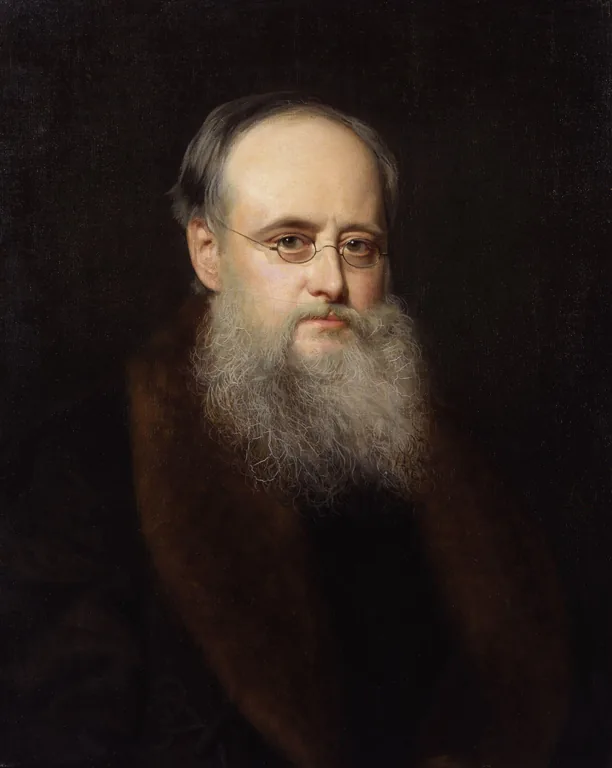
More Books by This Author






You May Also Like
 "'Tis Sixty Years Since" / Address of Charles Francis Adams; Founders' Day, January 16, 1913
by Charles Francis Adams
"'Tis Sixty Years Since" / Address of Charles Francis Adams; Founders' Day, January 16, 1913
by Charles Francis Adams
 "... és a felelősségtől való rettegés"
by Émile Faguet
"... és a felelősségtől való rettegés"
by Émile Faguet
 "A Most Unholy Trade," Being Letters on the Drama by Henry James
by Henry James
"A Most Unholy Trade," Being Letters on the Drama by Henry James
by Henry James
 "About My Father's Business": Work Amidst the Sick, the Sad, and the Sorrowing
by Thomas Archer
"About My Father's Business": Work Amidst the Sick, the Sad, and the Sorrowing
by Thomas Archer
 "America for Americans!" / The Typical American, Thanksgiving Sermon
by John Philip Newman
"America for Americans!" / The Typical American, Thanksgiving Sermon
by John Philip Newman
 "Bethink Yourselves!"
by graf Leo Tolstoy
"Bethink Yourselves!"
by graf Leo Tolstoy