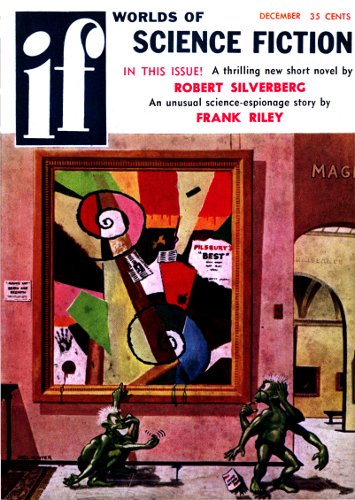
Learning Theory
The narrator awakens in a small, windowless chamber, unclothed and without memory of the transition, and records attempts to determine who placed him there and why. He documents the room's neutral illumination, rough paper and graphite implements, protein-like food, an artificial nipple dispensing water, and a vibrating floor that disposes waste, and notes loss of normal time cues. Suspicion alternates with scientific curiosity as he considers whether colleagues are conducting an experiment and applies perceptual reasoning about dust and motion to infer the room's properties. The account mixes pragmatic problem-solving, observational detail, and reflection on the human response to isolation.
About This Book
The narrator awakens in a small, windowless chamber, unclothed and without memory of the transition, and records attempts to determine who placed him there and why. He documents the room's neutral illumination, rough paper and graphite implements, protein-like food, an artificial nipple dispensing water, and a vibrating floor that disposes waste, and notes loss of normal time cues. Suspicion alternates with scientific curiosity as he considers whether colleagues are conducting an experiment and applies perceptual reasoning about dust and motion to infer the room's properties. The account mixes pragmatic problem-solving, observational detail, and reflection on the human response to isolation.
About the Author
More Books by This Author
You May Also Like
A Beginner's Psychology
by Edward Bradford Titchener
A Compendium on the Soul
by Avicenna
A Defence of the Inquiry into Mesmerism & Phrenology / chiefly in relation to recent events in Lynn
by William Armes
A Dominie in Doubt
by Alexander Sutherland Neill
A General Introduction to Psychoanalysis
by Sigmund Freud
A Letter to the Right Honorable the Lord Chancellor, on the Nature and Interpretation of Unsoundness of Mind, and Imbecility of Intellect
by John Haslam