
About This Book
A concise, guided survey traces Western philosophical thought from its origins in pre-Socratic natural philosophers through classical Athens, Hellenistic schools, and Christian and medieval scholastic developments, then onto early modern thinkers and nineteenth-century movements in Germany, England, and France. It emphasizes moral philosophy's prominence after Socrates, contrasts major schools such as Epicureanism and Stoicism, and explains key doctrines and intellectual lineages while offering interpretive overviews of figures like Plato, Aristotle, and Kant. Organized chronologically into antiquity, the Middle Ages, and modern times, it aims to orient beginners, highlight continuities and shifts, and encourage further study and reflection.
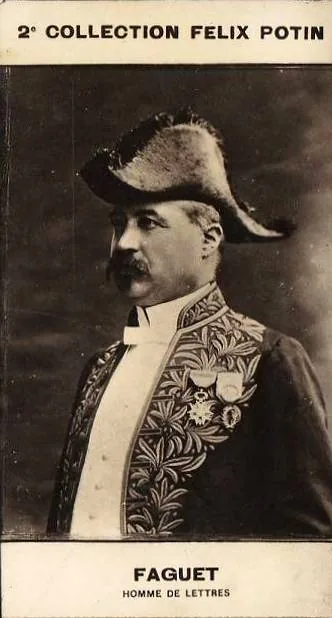
About the Author
More Books by This Author
 "... és a felelősségtől való rettegés"
by Émile Faguet
"... és a felelősségtől való rettegés"
by Émile Faguet
 ... Et l'horreur des responsabilités (suite au Culte de l'incompétence)
by Émile Faguet
... Et l'horreur des responsabilités (suite au Culte de l'incompétence)
by Émile Faguet
 A kontárság kultusza
by Émile Faguet
A kontárság kultusza
by Émile Faguet
 Corneille expliqué aux enfants
by Émile Faguet
Corneille expliqué aux enfants
by Émile Faguet
 Initiation into Literature
by Émile Faguet
Initiation into Literature
by Émile Faguet
 Initiation philosophique
by Émile Faguet
Initiation philosophique
by Émile Faguet
You May Also Like
 Le féminisme français II: L'émancipation politique et familiale de la femme
by Charles Marie Joseph Turgeon
Le féminisme français II: L'émancipation politique et familiale de la femme
by Charles Marie Joseph Turgeon
 Religion and Science from Galileo to Bergson
by J. C. Hardwick
Religion and Science from Galileo to Bergson
by J. C. Hardwick
 Evergreens
by Jerome K. Jerome
Evergreens
by Jerome K. Jerome
 A sermon preach'd before the Right Honourable the Lord-Mayor : the aldermen and citizens of London / at the Cathedral-Church of St. Paul on Monday the 30th of Jan. 1709/10 being the anniversary fast for the Martyrdom of King Charles
by Andrew Snape
A sermon preach'd before the Right Honourable the Lord-Mayor : the aldermen and citizens of London / at the Cathedral-Church of St. Paul on Monday the 30th of Jan. 1709/10 being the anniversary fast for the Martyrdom of King Charles
by Andrew Snape
 Heinrich von Kleist und die Kantische Philosophie
by Ernst Cassirer
Heinrich von Kleist und die Kantische Philosophie
by Ernst Cassirer
 The Unfinished Programme of Democracy
by Richard Roberts
The Unfinished Programme of Democracy
by Richard Roberts