

About This Book
The work offers a concise, panoramic guide to the development of literature from ancient origins to modern national schools, presenting chapter-length surveys of major cultures and eras — ancient India, Hebrew writings, Greek and Latin classical literature, medieval literatures across France, England, Germany, Italy, Spain and Portugal, the Renaissance and the sixteenth to nineteenth centuries in major European nations, plus Russian and Polish literatures. It explains predominant genres (epic, lyric, drama, prose, criticism), sketches representative authors and movements, and aims to orient beginners and stimulate further study.
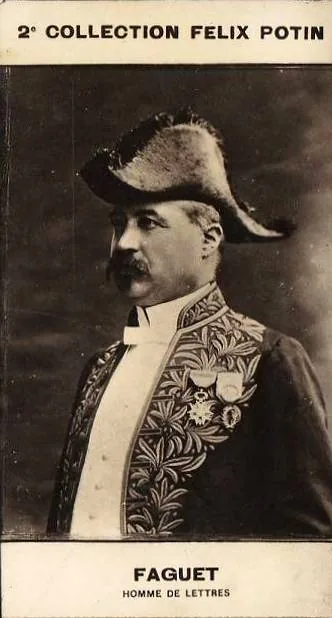
About the Author
More Books by This Author
6 picks
 "... és a felelősségtől való rettegés"
by Émile Faguet
"... és a felelősségtől való rettegés"
by Émile Faguet
 ... Et l'horreur des responsabilités (suite au Culte de l'incompétence)
by Émile Faguet
... Et l'horreur des responsabilités (suite au Culte de l'incompétence)
by Émile Faguet
 A kontárság kultusza
by Émile Faguet
A kontárság kultusza
by Émile Faguet
 Corneille expliqué aux enfants
by Émile Faguet
Corneille expliqué aux enfants
by Émile Faguet
 Initiation into Philosophy
by Émile Faguet
Initiation into Philosophy
by Émile Faguet
 Initiation philosophique
by Émile Faguet
Initiation philosophique
by Émile Faguet
You May Also Like
6 picks
 The Peril and the Preservation of the Home / Being the William L. Bull Lectures for the Year 1903
by Jacob A. Riis
The Peril and the Preservation of the Home / Being the William L. Bull Lectures for the Year 1903
by Jacob A. Riis
 Love Conquers All
by Robert Benchley
Love Conquers All
by Robert Benchley
 Pencillings by the Way / Written During Some Years of Residence and Travel in Europe
by Nathaniel Parker Willis
Pencillings by the Way / Written During Some Years of Residence and Travel in Europe
by Nathaniel Parker Willis
 Vanishing Roads and Other Essays
by Richard Le Gallienne
Vanishing Roads and Other Essays
by Richard Le Gallienne
 Thoughts of Saint Thérèse of the Child Jesus
by Saint de Lisieux Thérèse
Thoughts of Saint Thérèse of the Child Jesus
by Saint de Lisieux Thérèse
 State of the Union Addresses
by Richard M. Nixon
State of the Union Addresses
by Richard M. Nixon