
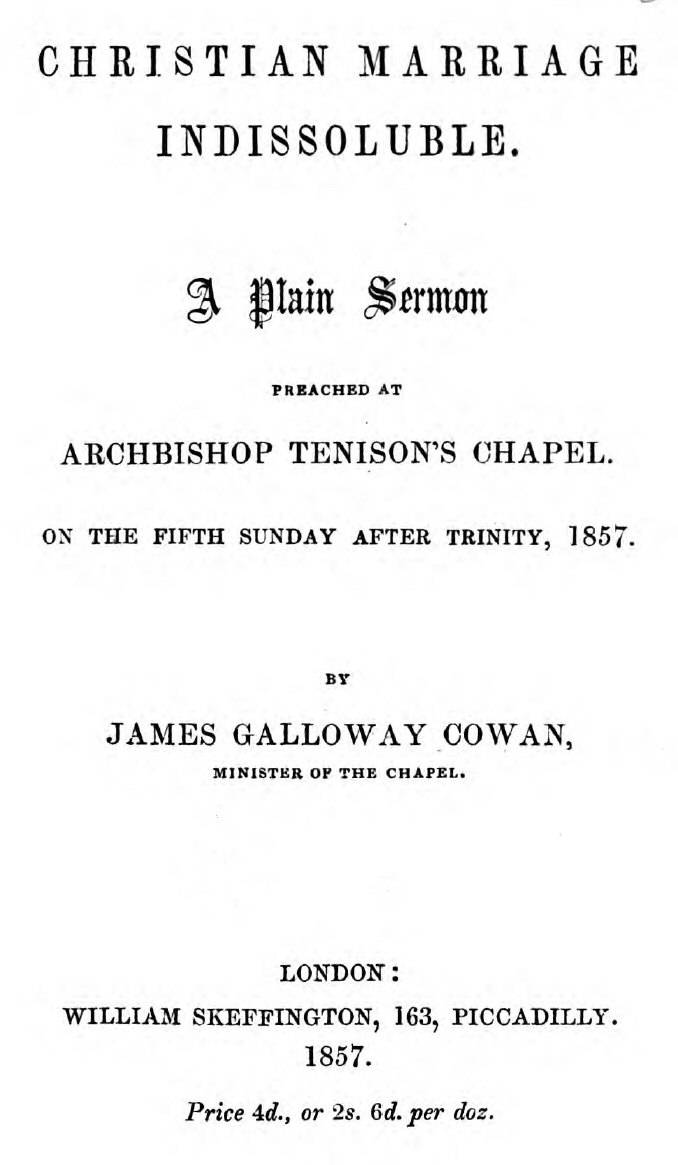
Christian Marriage Indissoluble: A Plain Sermon / Preached at Archbishop Tenison's chapel, on the fifth Sunday after Trinity, 1857
Explore more books like this:
About This Book
A clerical sermon defending the indissolubility of Christian marriage, confronting a contemporary legislative proposal to permit divorce and remarriage. It reviews biblical foundations, recalls marriage's origin and its portrayal as the union of Christ and the Church, contends that Christ's teaching intends marriage to be permanent except by death, contrasts Mosaic divorce provisions with Christ's stricter standard, and calls clergy and laity to study Scripture, awaken to moral danger, and oppose or delay the bill on religious grounds.
About the Author

More Books by This Author
5 picks
 "Bear ye one another's burdens." A Plain Sermon on the Lancashire Distress
by James Galloway Cowan
"Bear ye one another's burdens." A Plain Sermon on the Lancashire Distress
by James Galloway Cowan
 "Hear Ye the Rod, and Who Hath Appointed It" / A Sermon for the Fast Day, October 7, 1857
by James Galloway Cowan
"Hear Ye the Rod, and Who Hath Appointed It" / A Sermon for the Fast Day, October 7, 1857
by James Galloway Cowan
 Plain Sermons, preached at Archbishop Tenison's Chapel, Regent Street. Second Series
by James Galloway Cowan
Plain Sermons, preached at Archbishop Tenison's Chapel, Regent Street. Second Series
by James Galloway Cowan
 The Cause and Cure of the Cattle Plague: A Plain Sermon
by James Galloway Cowan
The Cause and Cure of the Cattle Plague: A Plain Sermon
by James Galloway Cowan
 The Ritual Movement / Three plain sermons preached at St. John the Evangelist's, Hammersmith
by James Galloway Cowan
The Ritual Movement / Three plain sermons preached at St. John the Evangelist's, Hammersmith
by James Galloway Cowan
You May Also Like
6 picks
 Theological Essays
by Charles Bradlaugh
Theological Essays
by Charles Bradlaugh
 Hours with the Mystics: A Contribution to the History of Religious Opinion
by Robert Alfred Vaughan
Hours with the Mystics: A Contribution to the History of Religious Opinion
by Robert Alfred Vaughan
 Introduction to the Old Testament
by John Edgar McFadyen
Introduction to the Old Testament
by John Edgar McFadyen
 Telling fortunes by cards
by Mohammed Ali
Telling fortunes by cards
by Mohammed Ali
 The Theology of Holiness
by Dougan Clark
The Theology of Holiness
by Dougan Clark
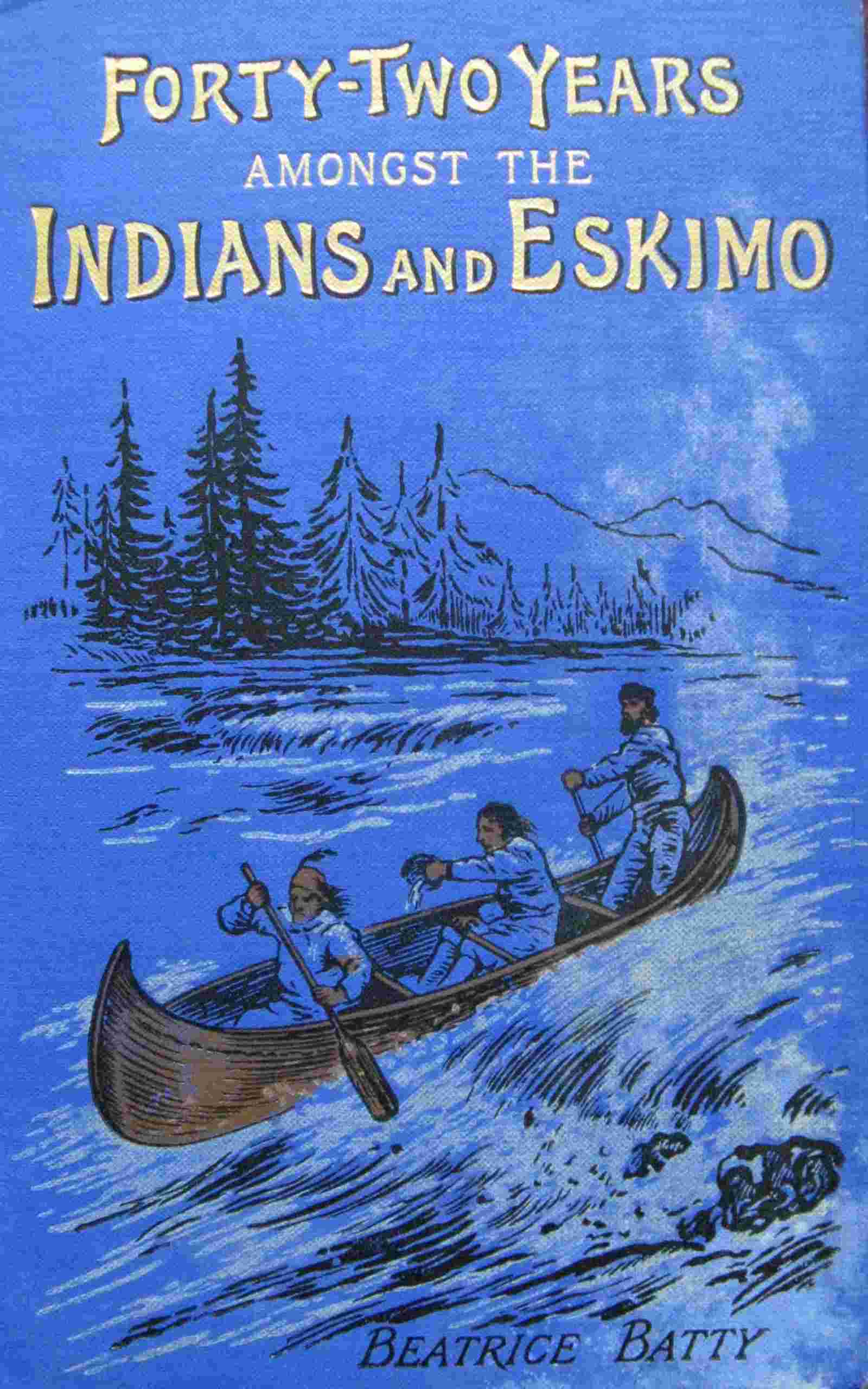 Forty-two years amongst the Indians and Eskimo
by Beatrice Batty
Forty-two years amongst the Indians and Eskimo
by Beatrice Batty