

About This Book
A collection of three essays that use comparative anatomy and fossil evidence to place humans within the natural order. The first essay surveys the morphology and natural history of humanlike apes, the second traces anatomical and physiological affinities between humans and lower animals, and the third examines fossil human remains and their anatomical implications. The author emphasizes careful empirical comparison, marshals anatomical detail to argue for biological continuity between humans and other animals, and highlights unresolved questions raised by evolutionary theory while avoiding speculation beyond the observed facts.
About the Author
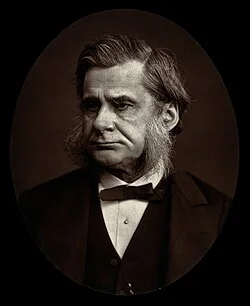
More Books by This Author
6 picks
 A Critical Examination of the Position of Mr. Darwin's Work, "On the Origin of Species," in Relation to the Complete Theory of the Causes of the Phenomena of Organic Nature / Lecture VI. (of VI.), "Lectures to Working Men", at the Museum of Practical Geology, 1863, on Darwin's Work: "Origin of Species"
by Thomas Henry Huxley
A Critical Examination of the Position of Mr. Darwin's Work, "On the Origin of Species," in Relation to the Complete Theory of the Causes of the Phenomena of Organic Nature / Lecture VI. (of VI.), "Lectures to Working Men", at the Museum of Practical Geology, 1863, on Darwin's Work: "Origin of Species"
by Thomas Henry Huxley
 American Addresses, with a Lecture on the Study of Biology
by Thomas Henry Huxley
American Addresses, with a Lecture on the Study of Biology
by Thomas Henry Huxley
 Aphorisms and Reflections from the works of T. H. Huxley
by Thomas Henry Huxley
Aphorisms and Reflections from the works of T. H. Huxley
by Thomas Henry Huxley
 Autobiography and Selected Essays
by Thomas Henry Huxley
Autobiography and Selected Essays
by Thomas Henry Huxley
 Collected Essays, Volume V / Science and Christian Tradition: Essays
by Thomas Henry Huxley
Collected Essays, Volume V / Science and Christian Tradition: Essays
by Thomas Henry Huxley
 Coral and Coral Reefs
by Thomas Henry Huxley
Coral and Coral Reefs
by Thomas Henry Huxley
You May Also Like
6 picks
 Phallic Miscellanies / Facts and Phases of Ancient and Modern Sex Worship, as Illustrated Chiefly in the Religions of India
by Hargrave Jennings
Phallic Miscellanies / Facts and Phases of Ancient and Modern Sex Worship, as Illustrated Chiefly in the Religions of India
by Hargrave Jennings
 Tirol
by Max Haushofer
Tirol
by Max Haushofer
 The Sex Worship and Symbolism of Primitive Races: An Interpretation
by Sanger Brown
The Sex Worship and Symbolism of Primitive Races: An Interpretation
by Sanger Brown
 Comments on the Taxonomy and Geographic Distribution of Some North American Rabbits
by E. Raymond Hall
Comments on the Taxonomy and Geographic Distribution of Some North American Rabbits
by E. Raymond Hall
 Three Years on the Plains: Observations of Indians, 1867-1870
by Edmund B. Tuttle
Three Years on the Plains: Observations of Indians, 1867-1870
by Edmund B. Tuttle
 An Introduction to Nature-study
by E. Stenhouse
An Introduction to Nature-study
by E. Stenhouse