

William Harvey and the Discovery of the Circulation of the Blood
Explore more books like this:
About This Book
The lecture traces William Harvey's background and training, his anatomical investigations at Cambridge and Padua under Fabricius, and his experiments that demonstrated how the heart propels blood in a closed circulation. It outlines his professional career, including academic posts and a court appointment, and emphasizes the small volume of published work that nonetheless contained discoveries foundational for physiology and embryology. The account describes Harvey's empirical methods, the loss of many manuscript observations during political turmoil, and the lasting methodological shift his precise observation and experiment introduced to biological science.
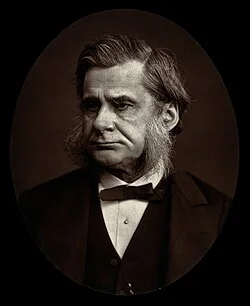
About the Author
More Books by This Author
6 picks
 A Critical Examination of the Position of Mr. Darwin's Work, "On the Origin of Species," in Relation to the Complete Theory of the Causes of the Phenomena of Organic Nature / Lecture VI. (of VI.), "Lectures to Working Men", at the Museum of Practical Geology, 1863, on Darwin's Work: "Origin of Species"
by Thomas Henry Huxley
A Critical Examination of the Position of Mr. Darwin's Work, "On the Origin of Species," in Relation to the Complete Theory of the Causes of the Phenomena of Organic Nature / Lecture VI. (of VI.), "Lectures to Working Men", at the Museum of Practical Geology, 1863, on Darwin's Work: "Origin of Species"
by Thomas Henry Huxley
 American Addresses, with a Lecture on the Study of Biology
by Thomas Henry Huxley
American Addresses, with a Lecture on the Study of Biology
by Thomas Henry Huxley
 Aphorisms and Reflections from the works of T. H. Huxley
by Thomas Henry Huxley
Aphorisms and Reflections from the works of T. H. Huxley
by Thomas Henry Huxley
 Autobiography and Selected Essays
by Thomas Henry Huxley
Autobiography and Selected Essays
by Thomas Henry Huxley
 Collected Essays, Volume V / Science and Christian Tradition: Essays
by Thomas Henry Huxley
Collected Essays, Volume V / Science and Christian Tradition: Essays
by Thomas Henry Huxley
 Coral and Coral Reefs
by Thomas Henry Huxley
Coral and Coral Reefs
by Thomas Henry Huxley
You May Also Like
6 picks
 Evolution, Old & New / Or, the Theories of Buffon, Dr. Erasmus Darwin and Lamarck, / as compared with that of Charles Darwin
by Samuel Butler
Evolution, Old & New / Or, the Theories of Buffon, Dr. Erasmus Darwin and Lamarck, / as compared with that of Charles Darwin
by Samuel Butler
 The Life of Sir Isaac Newton
by David Brewster
The Life of Sir Isaac Newton
by David Brewster
 Our Girls
by Dio Lewis
Our Girls
by Dio Lewis
 An Account of the Insects Noxious to Agriculture and Plants in New Zealand / The Scale Insects (Coccididae)
by William Miles Maskell
An Account of the Insects Noxious to Agriculture and Plants in New Zealand / The Scale Insects (Coccididae)
by William Miles Maskell
 The Confessions of a Collector
by William Carew Hazlitt
The Confessions of a Collector
by William Carew Hazlitt
 Historical Record of the Fourth, or Royal Irish Regiment of Dragoon Guards. / Containing an Account of the Formation of the Regiment in 1685; and of Its Subsequent Services to 1838
by Richard Cannon
Historical Record of the Fourth, or Royal Irish Regiment of Dragoon Guards. / Containing an Account of the Formation of the Regiment in 1685; and of Its Subsequent Services to 1838
by Richard Cannon