
About This Book
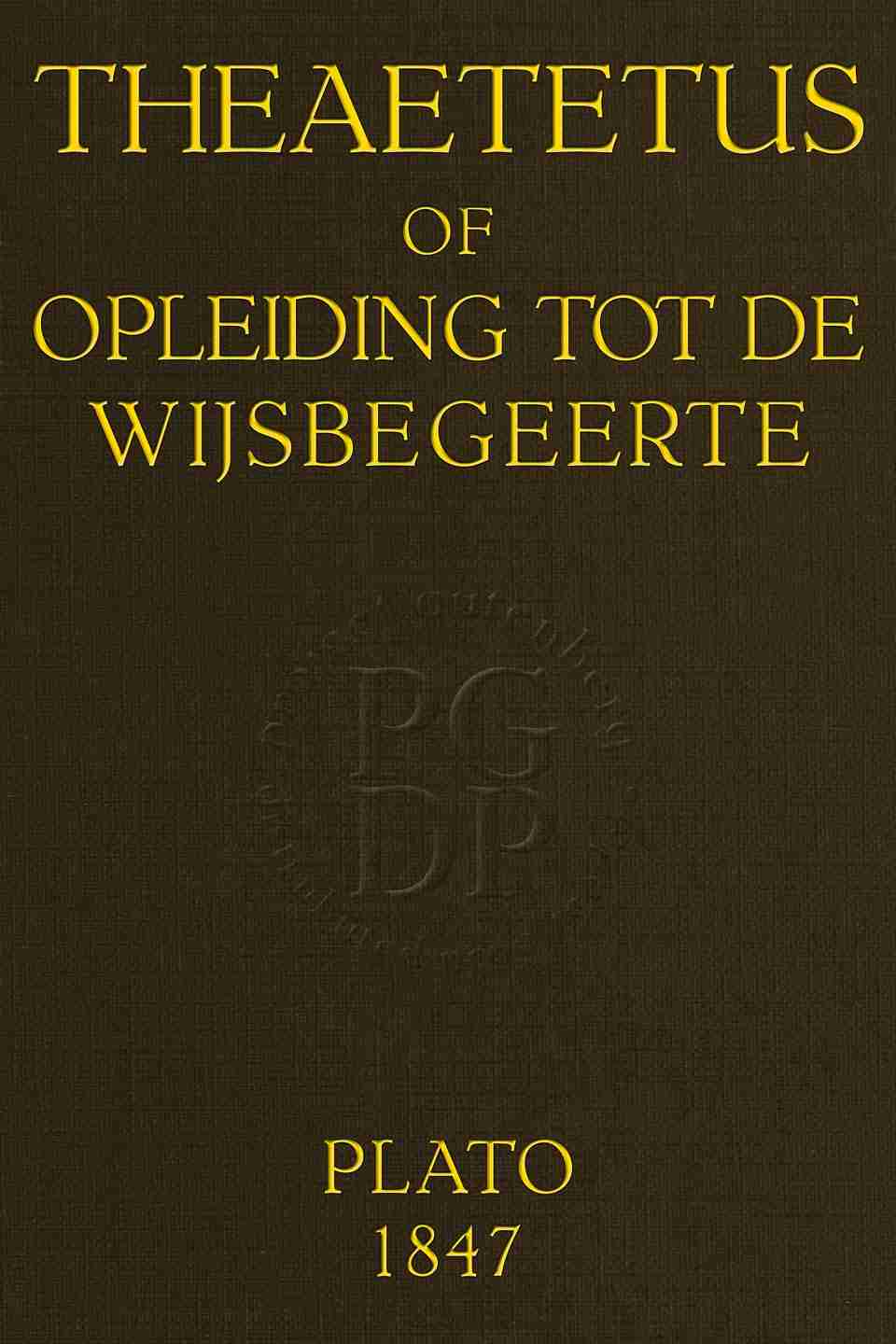
The dialogue stages a systematic inquiry into the nature of human knowledge, opening with debates over whether knowledge reduces to perceptual experience and testing the consequences of perceptual relativism. The discussants then consider knowledge as true belief and subsequently as true belief accompanied by an account, probing what additional element would secure epistemic status. Mathematical examples and skeptical puzzles are deployed to expose problems about false judgment, the objectivity of definitions, and the demands of explanation. The interrogation proceeds by careful questioning and refutation, and it concludes inconclusively, underscoring the persistent conceptual difficulties in formulating a satisfactory theory of knowledge.
About the Author
More Books by This Author
6 picks


You May Also Like
6 picks
 War Inconsistent with the Religion of Jesus Christ
by David Low Dodge
War Inconsistent with the Religion of Jesus Christ
by David Low Dodge
 Socrate
by Antonio Labriola
Socrate
by Antonio Labriola
 The True Citizen: How to Become One
by William Fisher Markwick
The True Citizen: How to Become One
by William Fisher Markwick
 Leçons d'histoire, / prononcées à l'École normale; en l'an III de la République Française; Histoire de Samuel, inventeur du sacre des rois; État physique de la Corse.
by C.-F. Volney
Leçons d'histoire, / prononcées à l'École normale; en l'an III de la République Française; Histoire de Samuel, inventeur du sacre des rois; État physique de la Corse.
by C.-F. Volney
 Dictatorship vs. Democracy (Terrorism and Communism): a reply to Karl Kantsky
by Leon Trotsky
Dictatorship vs. Democracy (Terrorism and Communism): a reply to Karl Kantsky
by Leon Trotsky
![Two Dyaloges (c. 1549) / Wrytten in laten by the famous clerke, D. Erasm[us] of Roterodame, one called Polyphemus or the gospeller, the other dysposyng of thynges and names, translated in to Englyshe by Edmonde Becke. cover](/books/content/14500/OEBPS/2505839255930553770_titlepage.jpg) Two Dyaloges (c. 1549) / Wrytten in laten by the famous clerke, D. Erasm[us] of Roterodame, one called Polyphemus or the gospeller, the other dysposyng of thynges and names, translated in to Englyshe by Edmonde Becke.
by Desiderius Erasmus
Two Dyaloges (c. 1549) / Wrytten in laten by the famous clerke, D. Erasm[us] of Roterodame, one called Polyphemus or the gospeller, the other dysposyng of thynges and names, translated in to Englyshe by Edmonde Becke.
by Desiderius Erasmus