
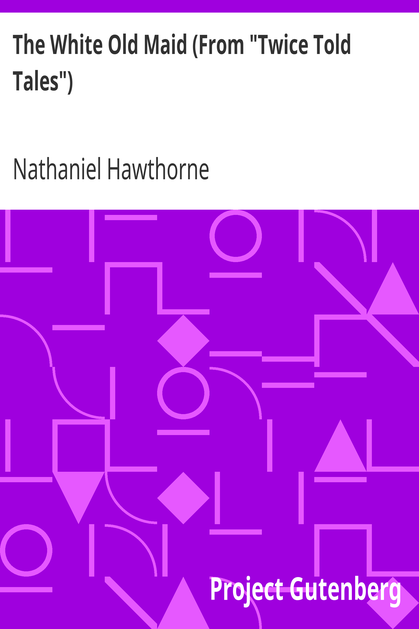
About This Book
A moonlit scene introduces two young women who mourn over a corpse and bind themselves by a vow and a lock of hair as token of a future meeting. Years later one of them lives in seclusion as an eccentric figure who wears a white, shroud-like gown and habitually follows funeral processions, tending graves believed to be favored by her visits and scattering flowers through the seasons. Townspeople treat her presence as an omen and incorporate her into funeral rituals, while her solitary practices and gentle madness make her both a comfort to mourning families and a source of unease when she unexpectedly appears in daylight.
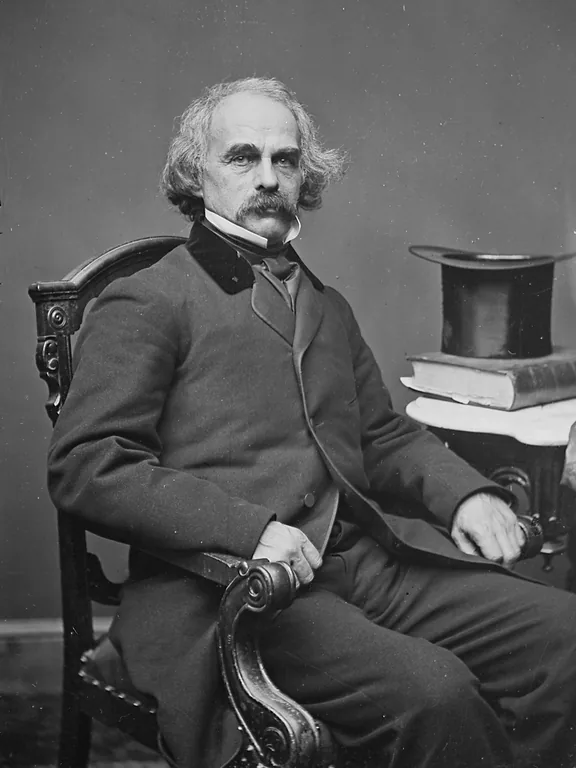
About the Author
More Books by This Author
6 picks
 "Browne's Folly" / (From: "The Doliver Romance and Other Pieces: Tales and Sketches")
by Nathaniel Hawthorne
"Browne's Folly" / (From: "The Doliver Romance and Other Pieces: Tales and Sketches")
by Nathaniel Hawthorne
 A Bell's Biography
by Nathaniel Hawthorne
A Bell's Biography
by Nathaniel Hawthorne
 A Book of Autographs
by Nathaniel Hawthorne
A Book of Autographs
by Nathaniel Hawthorne
 A Rill from the Town Pump
by Nathaniel Hawthorne
A Rill from the Town Pump
by Nathaniel Hawthorne
 A Select Party
by Nathaniel Hawthorne
A Select Party
by Nathaniel Hawthorne
 A Virtuoso's Collection (From "Mosses from an Old Manse")
by Nathaniel Hawthorne
A Virtuoso's Collection (From "Mosses from an Old Manse")
by Nathaniel Hawthorne
You May Also Like
6 picks
 Transplanted
by Gertrude Franklin Horn Atherton
Transplanted
by Gertrude Franklin Horn Atherton
 Chit-Chat; Nirvana; The Searchlight
by Mathew Joseph Holt
Chit-Chat; Nirvana; The Searchlight
by Mathew Joseph Holt
 Cane
by Jean Toomer
Cane
by Jean Toomer
 Time's Portraiture / (From: "The Doliver Romance and Other Pieces: Tales and Sketches")
by Nathaniel Hawthorne
Time's Portraiture / (From: "The Doliver Romance and Other Pieces: Tales and Sketches")
by Nathaniel Hawthorne
 Vital Ingredient
by Gerald Vance
Vital Ingredient
by Gerald Vance
 Hänen viimeinen tervehdyksensä
by Arthur Conan Doyle
Hänen viimeinen tervehdyksensä
by Arthur Conan Doyle