

About This Book
The essay presents a curated collection of manuscript letters—chiefly from Revolutionary-era soldiers and statesmen addressed to General Palmer—and offers close readings that emphasize the material presence of handwriting and paper. The author reflects on how blots, erasures, and an author's hand confer intimacy and character, while excerpted letters serve as portals into debates at the Continental Congress, wartime anxieties, and leaders' temperaments. Extended commentary focuses on correspondence by figures such as John Adams and George Washington, analyzing tone, political sentiment, and decisions about military strategy, and situates the letters as documents that reveal personal feeling alongside public duty.
About the Author
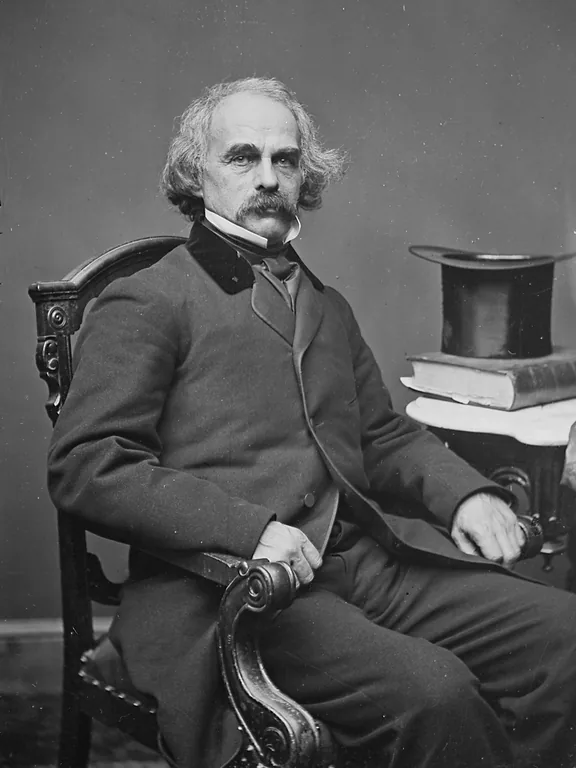
More Books by This Author
6 picks
 "Browne's Folly" / (From: "The Doliver Romance and Other Pieces: Tales and Sketches")
by Nathaniel Hawthorne
"Browne's Folly" / (From: "The Doliver Romance and Other Pieces: Tales and Sketches")
by Nathaniel Hawthorne
 A Bell's Biography
by Nathaniel Hawthorne
A Bell's Biography
by Nathaniel Hawthorne
 A Rill from the Town Pump
by Nathaniel Hawthorne
A Rill from the Town Pump
by Nathaniel Hawthorne
 A Select Party
by Nathaniel Hawthorne
A Select Party
by Nathaniel Hawthorne
 A Virtuoso's Collection (From "Mosses from an Old Manse")
by Nathaniel Hawthorne
A Virtuoso's Collection (From "Mosses from an Old Manse")
by Nathaniel Hawthorne
 An Old Woman's Tale / (From: "The Doliver Romance and Other Pieces: Tales and Sketches")
by Nathaniel Hawthorne
An Old Woman's Tale / (From: "The Doliver Romance and Other Pieces: Tales and Sketches")
by Nathaniel Hawthorne
You May Also Like
6 picks
 Life and writings of Amelia Bloomer
by D. C. Bloomer
Life and writings of Amelia Bloomer
by D. C. Bloomer
 Address of President Roosevelt at Cairo, Illinois, October 3, 1907
by Theodore Roosevelt
Address of President Roosevelt at Cairo, Illinois, October 3, 1907
by Theodore Roosevelt
 People of Africa
by Edith A. How
People of Africa
by Edith A. How
 Children's Literature / A Textbook of Sources for Teachers and Teacher-Training Classes
by Charles Madison Curry
Children's Literature / A Textbook of Sources for Teachers and Teacher-Training Classes
by Charles Madison Curry
 The History of the City of Fredericksburg, Virginia
by S. J. Quinn
The History of the City of Fredericksburg, Virginia
by S. J. Quinn
 Fulton's "Steam Battery": Blockship and Catamaran
by Howard Irving Chapelle
Fulton's "Steam Battery": Blockship and Catamaran
by Howard Irving Chapelle