

About This Book
The work argues that inefficiency wastes human effort and proposes scientific management principles—systematic study of tasks, time-and-motion analysis, standardization, careful selection and training, and clear division between planning and execution—to raise productivity and align employer and employee interests. It offers practical illustrations from industrial operations to show how measurement, piece-rate incentives, and managerial responsibility for planning can increase output, reduce waste, and develop skilled workers. It emphasizes management as a science built on rules and experimentation, and recommends organizational reforms to achieve lasting prosperity for both firms and labor.
About the Author

More Books by This Author
1 picks

You May Also Like
6 picks
 Henry Ford's Own Story / How a Farmer Boy Rose to the Power that goes with Many Millions, Yet Never Lost Touch with Humanity
by Rose Wilder Lane
Henry Ford's Own Story / How a Farmer Boy Rose to the Power that goes with Many Millions, Yet Never Lost Touch with Humanity
by Rose Wilder Lane
 Mr. Honey's Large Business Dictionary (German-English)
by Winfried Honig
Mr. Honey's Large Business Dictionary (German-English)
by Winfried Honig
 A New Banking System / The Needful Capital for Rebuilding the Burnt District
by Lysander Spooner
A New Banking System / The Needful Capital for Rebuilding the Burnt District
by Lysander Spooner
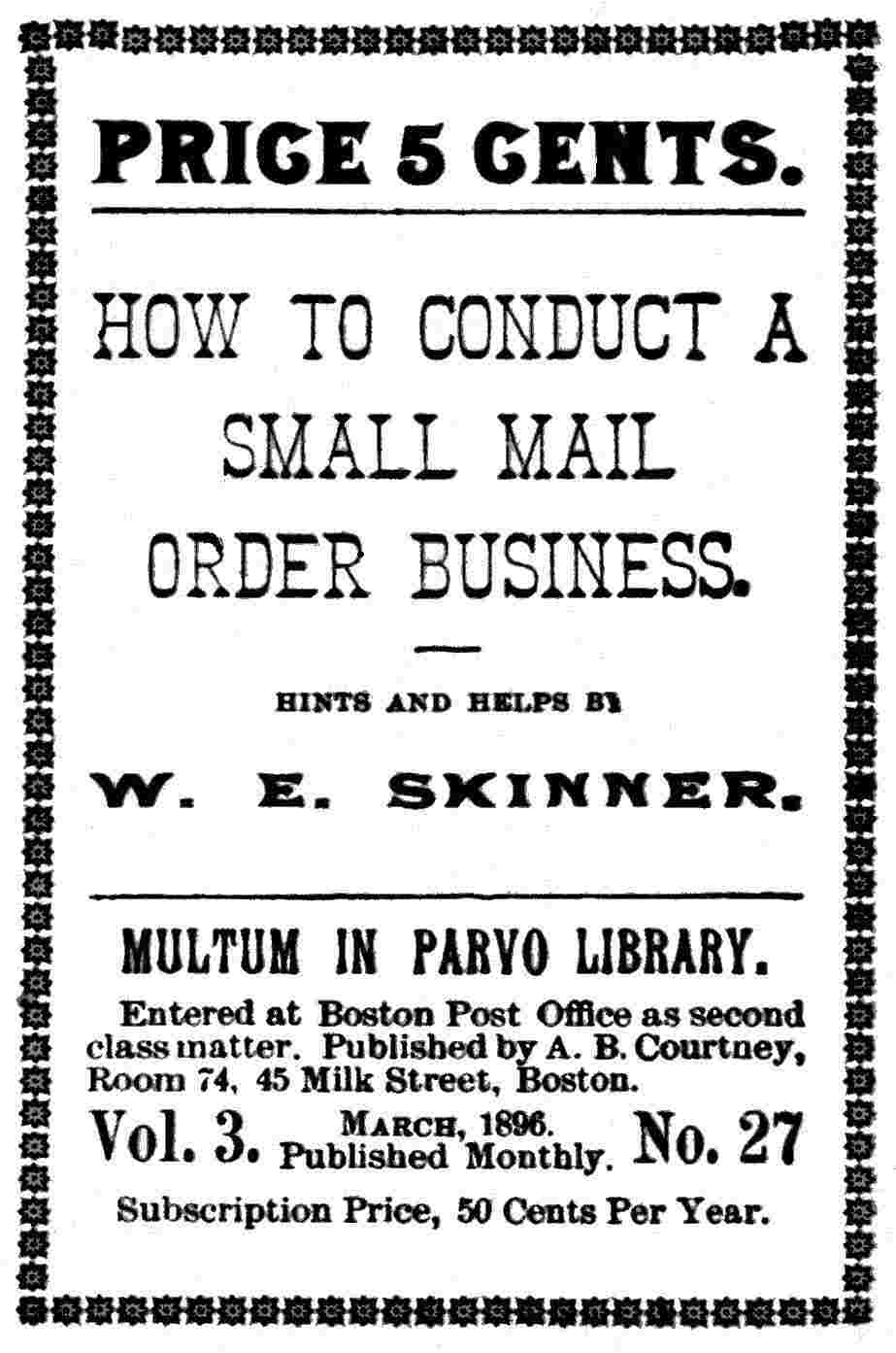 How to conduct a small mail order business
by W. E. Skinner
How to conduct a small mail order business
by W. E. Skinner
 Old Gorgon Graham / More Letters from a Self-Made Merchant to His Son
by George Horace Lorimer
Old Gorgon Graham / More Letters from a Self-Made Merchant to His Son
by George Horace Lorimer
 Financial Crime and Corruption
by Samuel Vaknin
Financial Crime and Corruption
by Samuel Vaknin