
The Origin of Species / From 'The Westminster Review', April 1860
Explore more books like this:
About This Book
A critical exposition explains Darwin's central claim that species arise from the gradual development of varieties by a selection process analogous to artificial breeding, with the struggle for existence performing the selective role in nature. It surveys intense public and scientific reactions, observes that the original presentation is heavy with empirical detail and can be hard for non-specialists to follow, and aims to separate established facts from theoretical inference. The essay clarifies key concepts, including morphological and physiological senses of species, evaluates evidentiary strengths and gaps, and offers a concise restatement of the problems the theory addresses.
About the Author
More Books by This Author
6 picks
 A Critical Examination of the Position of Mr. Darwin's Work, "On the Origin of Species," in Relation to the Complete Theory of the Causes of the Phenomena of Organic Nature / Lecture VI. (of VI.), "Lectures to Working Men", at the Museum of Practical Geology, 1863, on Darwin's Work: "Origin of Species"
by Thomas Henry Huxley
A Critical Examination of the Position of Mr. Darwin's Work, "On the Origin of Species," in Relation to the Complete Theory of the Causes of the Phenomena of Organic Nature / Lecture VI. (of VI.), "Lectures to Working Men", at the Museum of Practical Geology, 1863, on Darwin's Work: "Origin of Species"
by Thomas Henry Huxley
 American Addresses, with a Lecture on the Study of Biology
by Thomas Henry Huxley
American Addresses, with a Lecture on the Study of Biology
by Thomas Henry Huxley
 Aphorisms and Reflections from the works of T. H. Huxley
by Thomas Henry Huxley
Aphorisms and Reflections from the works of T. H. Huxley
by Thomas Henry Huxley
 Autobiography and Selected Essays
by Thomas Henry Huxley
Autobiography and Selected Essays
by Thomas Henry Huxley
 Collected Essays, Volume V / Science and Christian Tradition: Essays
by Thomas Henry Huxley
Collected Essays, Volume V / Science and Christian Tradition: Essays
by Thomas Henry Huxley
 Coral and Coral Reefs
by Thomas Henry Huxley
Coral and Coral Reefs
by Thomas Henry Huxley
You May Also Like
6 picks
 The Naturalist on the River Amazons
by Henry Walter Bates
The Naturalist on the River Amazons
by Henry Walter Bates
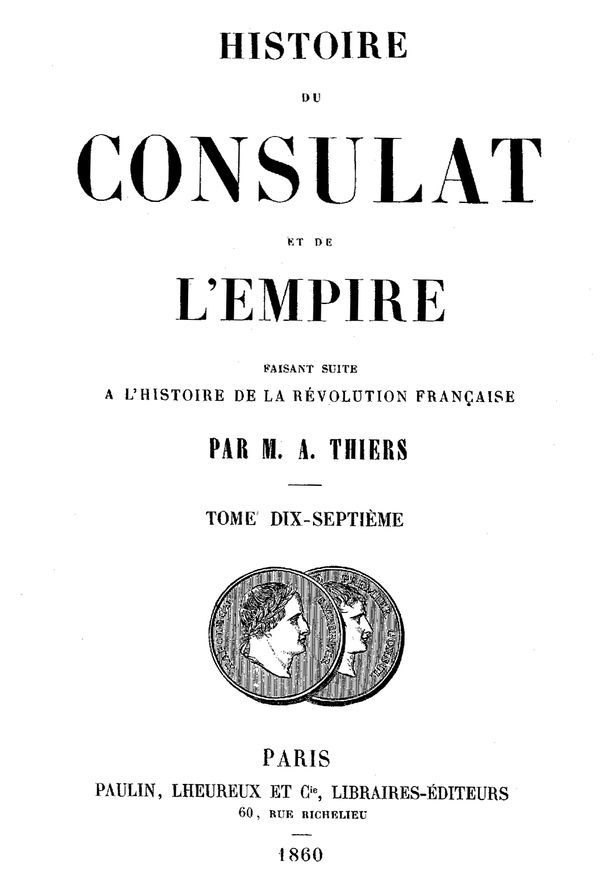 Histoire du Consulat et de l'Empire, (Vol. 17/20) / faisant suite à l'Histoire de la Révolution Française
by Adolphe Thiers
Histoire du Consulat et de l'Empire, (Vol. 17/20) / faisant suite à l'Histoire de la Révolution Française
by Adolphe Thiers
 The White Eagle of Poland
by E. F. Benson
The White Eagle of Poland
by E. F. Benson
 On Some Fossil Remains of Man
by Thomas Henry Huxley
On Some Fossil Remains of Man
by Thomas Henry Huxley
 Vienna 1683 / The History and Consequences of the Defeat of the Turks before Vienna, September 12, 1683, by John Sobieski, King of Poland, and Charles Leopold, Duke of Lorraine
by Henry Elliot Malden
Vienna 1683 / The History and Consequences of the Defeat of the Turks before Vienna, September 12, 1683, by John Sobieski, King of Poland, and Charles Leopold, Duke of Lorraine
by Henry Elliot Malden
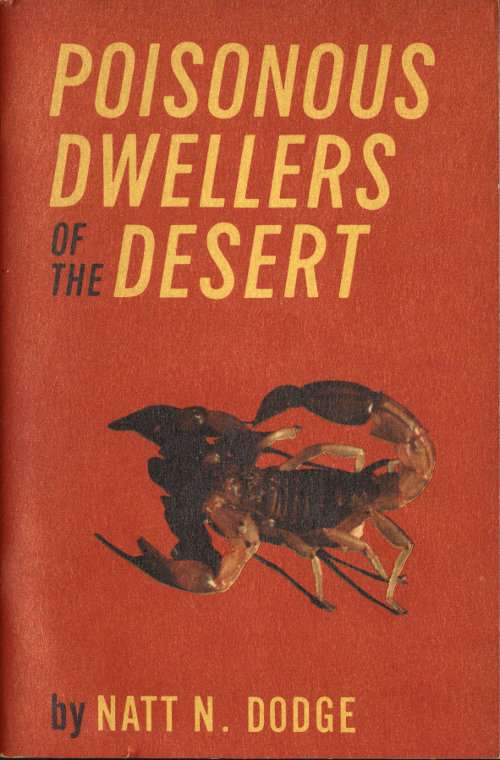 Poisonous Dwellers of the Desert
by Natt N. Dodge
Poisonous Dwellers of the Desert
by Natt N. Dodge