

The Method by Which the Causes of the Present and Past Conditions of Organic Nature Are to Be Discovered; the Origination of Living Beings / Lecture III. (of VI.), "Lectures to Working Men", at the Museum of Practical Geology, 1863, on Darwin's Work: "Origin of Species"
Explore more books like this:
About This Book
The speaker argues that the origin and development of living beings belong to normal scientific investigation and rejects the view that vital phenomena are exempt from natural explanation. He explains that the same inductive method—careful observation, classification, and comparison—applies to morphology, development, and distribution of organisms. He addresses both sincere and ill-intentioned objections, rebukes misused appeals to Baconian philosophy, and emphasizes that scientific reasoning extends ordinary mental processes and rests on empirical facts. The overall claim is that inquiry into the causes of organic phenomena should proceed without arbitrary limits.
About the Author
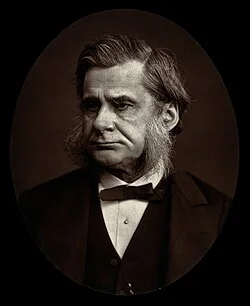
More Books by This Author
6 picks
 A Critical Examination of the Position of Mr. Darwin's Work, "On the Origin of Species," in Relation to the Complete Theory of the Causes of the Phenomena of Organic Nature / Lecture VI. (of VI.), "Lectures to Working Men", at the Museum of Practical Geology, 1863, on Darwin's Work: "Origin of Species"
by Thomas Henry Huxley
A Critical Examination of the Position of Mr. Darwin's Work, "On the Origin of Species," in Relation to the Complete Theory of the Causes of the Phenomena of Organic Nature / Lecture VI. (of VI.), "Lectures to Working Men", at the Museum of Practical Geology, 1863, on Darwin's Work: "Origin of Species"
by Thomas Henry Huxley
 American Addresses, with a Lecture on the Study of Biology
by Thomas Henry Huxley
American Addresses, with a Lecture on the Study of Biology
by Thomas Henry Huxley
 Aphorisms and Reflections from the works of T. H. Huxley
by Thomas Henry Huxley
Aphorisms and Reflections from the works of T. H. Huxley
by Thomas Henry Huxley
 Autobiography and Selected Essays
by Thomas Henry Huxley
Autobiography and Selected Essays
by Thomas Henry Huxley
 Collected Essays, Volume V / Science and Christian Tradition: Essays
by Thomas Henry Huxley
Collected Essays, Volume V / Science and Christian Tradition: Essays
by Thomas Henry Huxley
 Coral and Coral Reefs
by Thomas Henry Huxley
Coral and Coral Reefs
by Thomas Henry Huxley
You May Also Like
6 picks
 Théologie hindoue. Le Kama soutra.
by Vatsyayana
Théologie hindoue. Le Kama soutra.
by Vatsyayana
![The zoology of the voyage of H.M.S. Beagle [vol. 3 of 5] cover](/books/content/74261/OEBPS/5016236029889180784_cover.jpg) The zoology of the voyage of H.M.S. Beagle [vol. 3 of 5]
by John Gould
The zoology of the voyage of H.M.S. Beagle [vol. 3 of 5]
by John Gould
 Birds from Coahuila, Mexico
by Emil K. Urban
Birds from Coahuila, Mexico
by Emil K. Urban
 The history of the psychoanalytic movement
by Sigmund Freud
The history of the psychoanalytic movement
by Sigmund Freud
 Natural history of intellect, and other papers
by Ralph Waldo Emerson
Natural history of intellect, and other papers
by Ralph Waldo Emerson
 Das Mikroskop und seine Anwendung / Ein Leitfaden bei mikroskopischen Untersuchungen
by Hermann Hager
Das Mikroskop und seine Anwendung / Ein Leitfaden bei mikroskopischen Untersuchungen
by Hermann Hager