
The Interpreters of Genesis and the Interpreters of Nature / Essay #4 from "Science and Hebrew Tradition"
Explore more books like this:
About This Book
An essay intervenes in a dispute over whether the Biblical account of creation accords with contemporary natural science, defending a measured comparative reading against the claim that scripture and geology present the same fourfold sequence of aquatic, aerial, and terrestrial animals followed by humans. The author assesses palaeontological and geological evidence, contends that modern fossil data do not support that strict succession, and criticizes reliance on outdated authorities. The argument emphasizes that empirical methods and current data, rather than rhetorical appeal, should govern conclusions about the historical appearance of life, while delineating the proper limits of theological and scientific interpretation.
About the Author
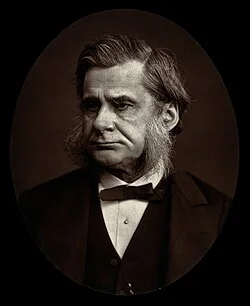
More Books by This Author
 A Critical Examination of the Position of Mr. Darwin's Work, "On the Origin of Species," in Relation to the Complete Theory of the Causes of the Phenomena of Organic Nature / Lecture VI. (of VI.), "Lectures to Working Men", at the Museum of Practical Geology, 1863, on Darwin's Work: "Origin of Species"
by Thomas Henry Huxley
A Critical Examination of the Position of Mr. Darwin's Work, "On the Origin of Species," in Relation to the Complete Theory of the Causes of the Phenomena of Organic Nature / Lecture VI. (of VI.), "Lectures to Working Men", at the Museum of Practical Geology, 1863, on Darwin's Work: "Origin of Species"
by Thomas Henry Huxley
 American Addresses, with a Lecture on the Study of Biology
by Thomas Henry Huxley
American Addresses, with a Lecture on the Study of Biology
by Thomas Henry Huxley
 Aphorisms and Reflections from the works of T. H. Huxley
by Thomas Henry Huxley
Aphorisms and Reflections from the works of T. H. Huxley
by Thomas Henry Huxley
 Autobiography and Selected Essays
by Thomas Henry Huxley
Autobiography and Selected Essays
by Thomas Henry Huxley
 Collected Essays, Volume V / Science and Christian Tradition: Essays
by Thomas Henry Huxley
Collected Essays, Volume V / Science and Christian Tradition: Essays
by Thomas Henry Huxley
 Coral and Coral Reefs
by Thomas Henry Huxley
Coral and Coral Reefs
by Thomas Henry Huxley
You May Also Like
 A Sermon preached at Christ Church, Kensington, on May 1, 1859 / being the day appointed for a general thanksgiving to Almighty God, for the success granted to our arms in suppressing the rebellion and restoring tranquillity in Her Majesty's Indian Dominions.
by William Wright
A Sermon preached at Christ Church, Kensington, on May 1, 1859 / being the day appointed for a general thanksgiving to Almighty God, for the success granted to our arms in suppressing the rebellion and restoring tranquillity in Her Majesty's Indian Dominions.
by William Wright
 When the Word is Given... / A Report on Elijah Muhammad, Malcolm X, and the Black Muslim World
by Louis E. Lomax
When the Word is Given... / A Report on Elijah Muhammad, Malcolm X, and the Black Muslim World
by Louis E. Lomax
 New Treasure Seekers; Or, The Bastable Children in Search of a Fortune
by E. Nesbit
New Treasure Seekers; Or, The Bastable Children in Search of a Fortune
by E. Nesbit
 Bees
by Everett Franklin Phillips
Bees
by Everett Franklin Phillips
 Boys and Girls from Thackeray
by Kate Dickinson Sweetser
Boys and Girls from Thackeray
by Kate Dickinson Sweetser
 Deep Moat Grange
by S. R. Crockett
Deep Moat Grange
by S. R. Crockett