

The Intelligence Office (From "Mosses from an Old Manse")
Explore more books like this:
About This Book
The narrative depicts a mysterious metropolitan office where a bespectacled Intelligencer records and attempts to broker intangible human losses and longings. Visitants include a man unable to find his proper place, a young suitor who wishes to exchange his burning heart, a timid girl who brings cheer, and a mourner seeking a vanished jewel. The officer negotiates petitions and reflects on how often fine or inexhaustible affections are squandered on unworthy or unequal recipients, while acknowledging the rare occasions when a pure nature meets a fitting response. The piece explores identity, longing, and the limits of any bureaucratic remedy for inward need.
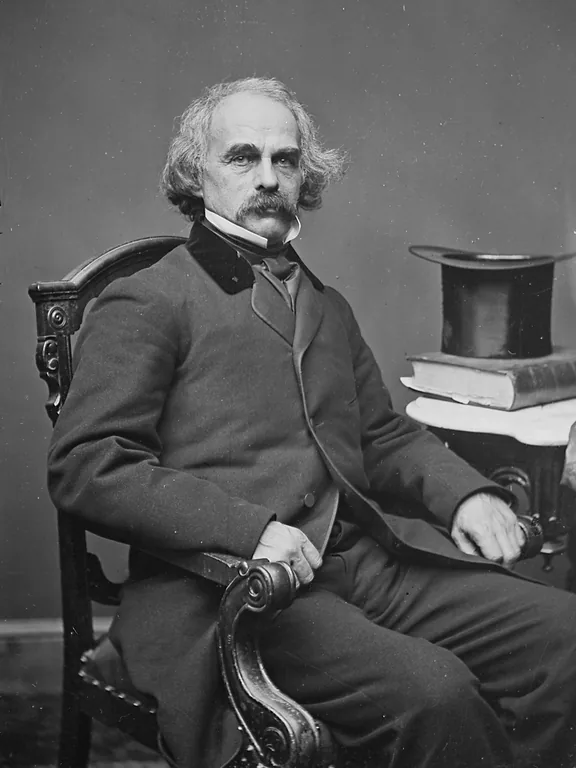
About the Author
More Books by This Author
6 picks
 "Browne's Folly" / (From: "The Doliver Romance and Other Pieces: Tales and Sketches")
by Nathaniel Hawthorne
"Browne's Folly" / (From: "The Doliver Romance and Other Pieces: Tales and Sketches")
by Nathaniel Hawthorne
 A Bell's Biography
by Nathaniel Hawthorne
A Bell's Biography
by Nathaniel Hawthorne
 A Book of Autographs
by Nathaniel Hawthorne
A Book of Autographs
by Nathaniel Hawthorne
 A Rill from the Town Pump
by Nathaniel Hawthorne
A Rill from the Town Pump
by Nathaniel Hawthorne
 A Select Party
by Nathaniel Hawthorne
A Select Party
by Nathaniel Hawthorne
 A Virtuoso's Collection (From "Mosses from an Old Manse")
by Nathaniel Hawthorne
A Virtuoso's Collection (From "Mosses from an Old Manse")
by Nathaniel Hawthorne
You May Also Like
6 picks
 Tales of the Sea, and of Our Jack Tars
by William Henry Giles Kingston
Tales of the Sea, and of Our Jack Tars
by William Henry Giles Kingston
 The Kreutzer Sonata and Other Stories
by graf Leo Tolstoy
The Kreutzer Sonata and Other Stories
by graf Leo Tolstoy
 Little Stories of Married Life
by Mary Stewart Cutting
Little Stories of Married Life
by Mary Stewart Cutting
 Stroke of Genius
by Randall Garrett
Stroke of Genius
by Randall Garrett
 Simples Contes des Collines
by Rudyard Kipling
Simples Contes des Collines
by Rudyard Kipling
 Tales of the Ridings
by F. W. Moorman
Tales of the Ridings
by F. W. Moorman