
About This Book
The author examines the Wagnerian lyric drama as a regenerator of opera, tracing musical and theatrical prototypes from Greek tragedy and the Florentine lyric reform, and arguing music serves dramatic expression rather than an end in itself. He analyzes Wagner's structural devices—characteristic phrases and leitmotifs, orchestration, choral function, tonal procedure—and their ethical and formal roles. Dedicated chapters dissect Tristan und Isolde's chromatic longing, musical exposition, and fatal symbolism, and Die Meistersinger's comic debate between spontaneous poetic impulse and pedantic form. Throughout, musical examples and score illustrations support close readings of dramatic technique, thematic development, and musical language.
About the Author
More Books by This Author
5 picks
 A Book of Operas: Their Histories, Their Plots, and Their Music
by Henry Edward Krehbiel
A Book of Operas: Their Histories, Their Plots, and Their Music
by Henry Edward Krehbiel
 A Second Book of Operas
by Henry Edward Krehbiel
A Second Book of Operas
by Henry Edward Krehbiel
 Chapters of Opera / Being historical and critical observations and records concerning the lyric drama in New York from its earliest days down to the present time
by Henry Edward Krehbiel
Chapters of Opera / Being historical and critical observations and records concerning the lyric drama in New York from its earliest days down to the present time
by Henry Edward Krehbiel
 How to Listen to Music, 7th ed. / Hints and Suggestions to Untaught Lovers of the Art
by Henry Edward Krehbiel
How to Listen to Music, 7th ed. / Hints and Suggestions to Untaught Lovers of the Art
by Henry Edward Krehbiel
 The Mentor: Makers of Modern Opera, Vol. 1, Num. 47, Serial No. 47
by Henry Edward Krehbiel
The Mentor: Makers of Modern Opera, Vol. 1, Num. 47, Serial No. 47
by Henry Edward Krehbiel
You May Also Like
6 picks
 Douris and the Painters of Greek Vases
by Edmond Pottier
Douris and the Painters of Greek Vases
by Edmond Pottier
 Friaren från landet: Lustspel
by Johan Ludvig Runeberg
Friaren från landet: Lustspel
by Johan Ludvig Runeberg
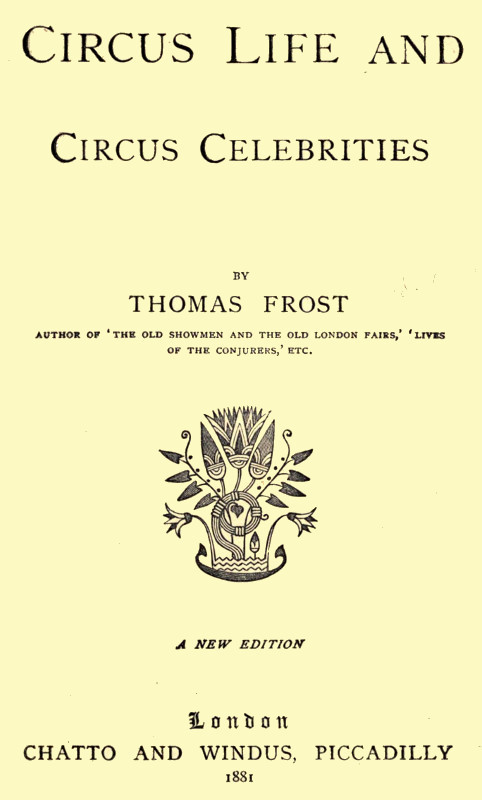 Circus Life and Circus Celebrities
by Thomas Frost
Circus Life and Circus Celebrities
by Thomas Frost
 The Theatrocrat: A Tragic Play of Church and Stage
by John Davidson
The Theatrocrat: A Tragic Play of Church and Stage
by John Davidson
 Chinese pottery and porcelain; vol. 2. Ming and Ch'ing Porcelain
by R. L. Hobson
Chinese pottery and porcelain; vol. 2. Ming and Ch'ing Porcelain
by R. L. Hobson
 The Men of the Nineties
by Bernard Muddiman
The Men of the Nineties
by Bernard Muddiman