
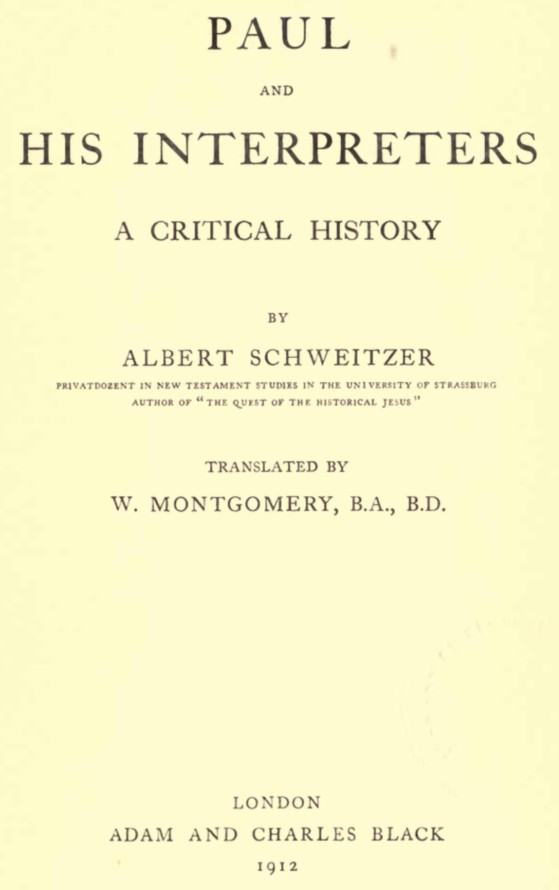
About This Book
The author continues his critical study of early Christianity by surveying how commentators and scholars have interpreted the Apostle's theology and its relation to the teaching of Jesus and the emergence of Greek theology. He critiques the disciplinary separation between studies of the life of Jesus, Paulinism, and the history of dogma, argues that Paulinism appears as an independently formed system rather than a straightforward development from Jesus, and examines attempts to explain the Hellenization of Christian thought. The book traces interpretive debates, evaluates major scholars' positions, and calls for a unified historical account that explains the transitions and discontinuities.
About the Author

More Books by This Author
6 picks
 Civilization and ethics
by Albert Schweitzer
Civilization and ethics
by Albert Schweitzer
 Das Abendmahl im Zusammenhang mit dem Leben Jesu und der Geschichte des Urchristentums / Erstes Heft. Das Abendmahlsproblem auf Grund der wissenschaftlichen Forschung des 19. Jahrhunderts und der historischen Berichte.
by Albert Schweitzer
Das Abendmahl im Zusammenhang mit dem Leben Jesu und der Geschichte des Urchristentums / Erstes Heft. Das Abendmahlsproblem auf Grund der wissenschaftlichen Forschung des 19. Jahrhunderts und der historischen Berichte.
by Albert Schweitzer
 Das Abendmahl im Zusammenhang mit dem Leben Jesu und der Geschichte des Urchristentums / Zweites Heft. Das Messianitäts- und Leidensgeheimnis. Eine Skizze des Lebens Jesu
by Albert Schweitzer
Das Abendmahl im Zusammenhang mit dem Leben Jesu und der Geschichte des Urchristentums / Zweites Heft. Das Messianitäts- und Leidensgeheimnis. Eine Skizze des Lebens Jesu
by Albert Schweitzer
 Deutsche und Französische Orgelbaukunst und Orgelkunst
by Albert Schweitzer
Deutsche und Französische Orgelbaukunst und Orgelkunst
by Albert Schweitzer
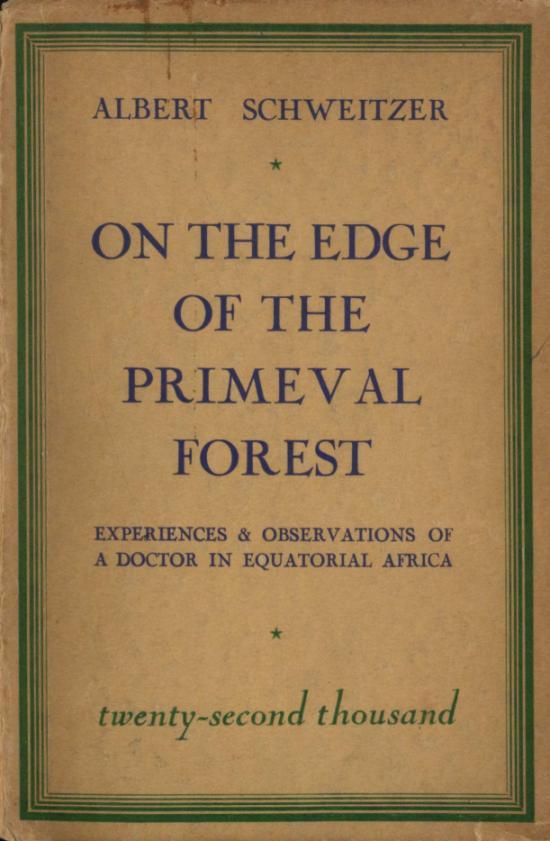 On the edge of the primeval forest
by Albert Schweitzer
On the edge of the primeval forest
by Albert Schweitzer
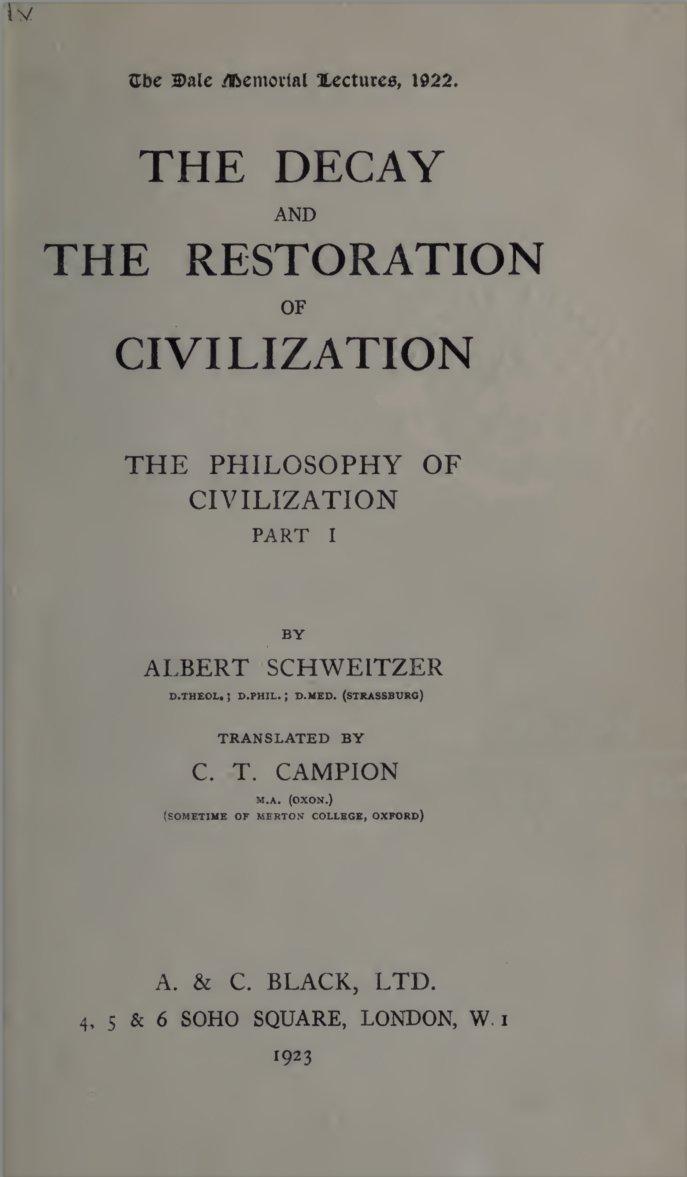 The decay and the restoration of civilization
by Albert Schweitzer
The decay and the restoration of civilization
by Albert Schweitzer
You May Also Like
6 picks
 War Inconsistent with the Religion of Jesus Christ
by David Low Dodge
War Inconsistent with the Religion of Jesus Christ
by David Low Dodge
 History of Christian names
by Charlotte M. Yonge
History of Christian names
by Charlotte M. Yonge
 The Lord of Glory / Meditations on the person, the work and glory of our Lord Jesus Christ
by Arno Clemens Gaebelein
The Lord of Glory / Meditations on the person, the work and glory of our Lord Jesus Christ
by Arno Clemens Gaebelein
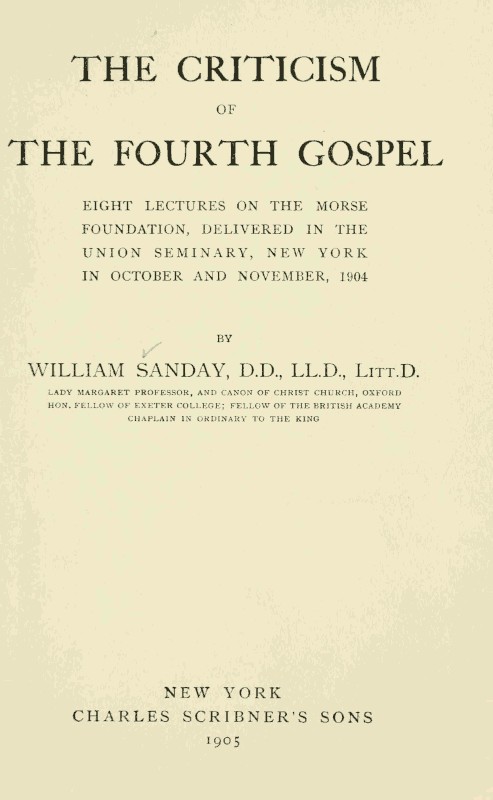 The Criticism of the Fourth Gospel / Eight Lectures on the Morse Foundation, Delivered in the Union Seminary, New York in October and November 1904
by W. Sanday
The Criticism of the Fourth Gospel / Eight Lectures on the Morse Foundation, Delivered in the Union Seminary, New York in October and November 1904
by W. Sanday
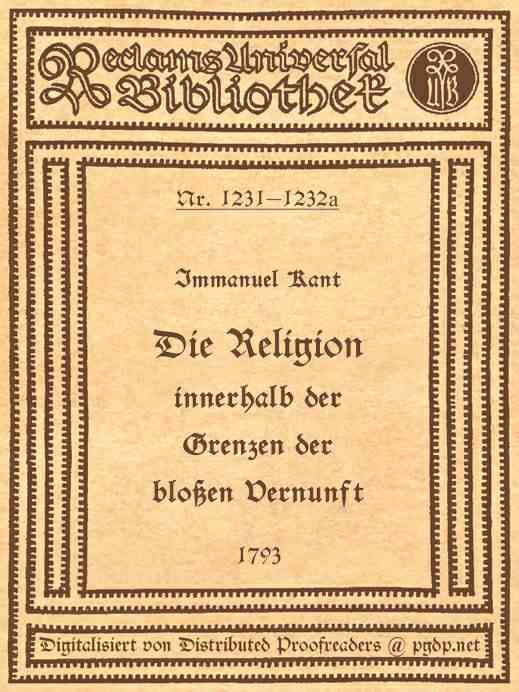 Die Religion innerhalb der Grenzen der bloßen Vernunft / Text der Ausgabe 1793, mit Beifügung der Abweichungen der Ausgabe 1794
by Immanuel Kant
Die Religion innerhalb der Grenzen der bloßen Vernunft / Text der Ausgabe 1793, mit Beifügung der Abweichungen der Ausgabe 1794
by Immanuel Kant
 The Village Sunday School, with brief sketches of three of its scholars
by John C. Symons
The Village Sunday School, with brief sketches of three of its scholars
by John C. Symons