

On the Method of Zadig / Essay #1 from "Science and Hebrew Tradition"
Explore more books like this:
About This Book
The essay explores how methodical observation and logical inference enable reconstruction of past events and the dangers of attributing prophetic or historical certainty without adequate evidence. Using the figure of Zadig as an illustrative thinker, the author contrasts close empirical study and inductive reasoning with fanciful or unverified historical claims, examines retrospective explanation as a scientific operation, and urges caution in treating traditional narratives as equivalent to scientific conclusions. The piece outlines principles for distinguishing warranted scientific inference from speculation and considers implications for how science interprets ancient accounts.
About the Author
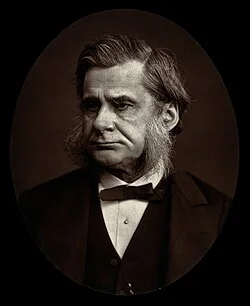
More Books by This Author
6 picks
 A Critical Examination of the Position of Mr. Darwin's Work, "On the Origin of Species," in Relation to the Complete Theory of the Causes of the Phenomena of Organic Nature / Lecture VI. (of VI.), "Lectures to Working Men", at the Museum of Practical Geology, 1863, on Darwin's Work: "Origin of Species"
by Thomas Henry Huxley
A Critical Examination of the Position of Mr. Darwin's Work, "On the Origin of Species," in Relation to the Complete Theory of the Causes of the Phenomena of Organic Nature / Lecture VI. (of VI.), "Lectures to Working Men", at the Museum of Practical Geology, 1863, on Darwin's Work: "Origin of Species"
by Thomas Henry Huxley
 American Addresses, with a Lecture on the Study of Biology
by Thomas Henry Huxley
American Addresses, with a Lecture on the Study of Biology
by Thomas Henry Huxley
 Aphorisms and Reflections from the works of T. H. Huxley
by Thomas Henry Huxley
Aphorisms and Reflections from the works of T. H. Huxley
by Thomas Henry Huxley
 Autobiography and Selected Essays
by Thomas Henry Huxley
Autobiography and Selected Essays
by Thomas Henry Huxley
 Collected Essays, Volume V / Science and Christian Tradition: Essays
by Thomas Henry Huxley
Collected Essays, Volume V / Science and Christian Tradition: Essays
by Thomas Henry Huxley
 Coral and Coral Reefs
by Thomas Henry Huxley
Coral and Coral Reefs
by Thomas Henry Huxley
You May Also Like
6 picks
 Of Walks and Walking Tours: An Attempt to find a Philosophy and a Creed
by Arnold Haultain
Of Walks and Walking Tours: An Attempt to find a Philosophy and a Creed
by Arnold Haultain
 Criticisms on "The Origin of Species" / From 'The Natural History Review', 1864
by Thomas Henry Huxley
Criticisms on "The Origin of Species" / From 'The Natural History Review', 1864
by Thomas Henry Huxley
 Fígaro (Artículos selectos)
by Mariano José de Larra
Fígaro (Artículos selectos)
by Mariano José de Larra
 Americans and Others
by Agnes Repplier
Americans and Others
by Agnes Repplier
 The North American Slime-Moulds / A Descriptive List of All Species of Myxomycetes Hitherto Reported from the Continent of North America, with Notes on Some Extra-Limital Species
by Thomas H. Macbride
The North American Slime-Moulds / A Descriptive List of All Species of Myxomycetes Hitherto Reported from the Continent of North America, with Notes on Some Extra-Limital Species
by Thomas H. Macbride
 Women: an inquiry
by Willa Muir
Women: an inquiry
by Willa Muir