

Note on the Resemblances and Differences in the Structure and the Development of the Brain in Man and Apes
Explore more books like this:
About This Book
The essay surveys a long dispute about whether ape and human brains are fundamentally different, concluding that detailed comparative anatomy reveals the same principal structures and corresponding gyri and sulci in higher apes and humans. It notes consistent quantitative differences, such as larger absolute and relative cerebral hemispheres in humans, distinctive frontal‑lobe contours, and a greater incidence of secondary convolutions, while showing that features like the temporo‑occipital fissure vary in degree rather than kind. Emphasis is placed on intra‑ and interspecific variability, including bridging convolutions and asymmetry, which weakens the taxonomic value of any single sulcal character and portrays a continuum of resemblance and difference.
About the Author
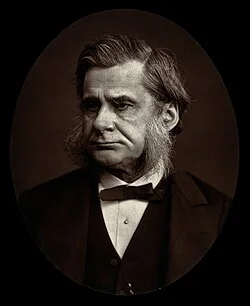
More Books by This Author
 A Critical Examination of the Position of Mr. Darwin's Work, "On the Origin of Species," in Relation to the Complete Theory of the Causes of the Phenomena of Organic Nature / Lecture VI. (of VI.), "Lectures to Working Men", at the Museum of Practical Geology, 1863, on Darwin's Work: "Origin of Species"
by Thomas Henry Huxley
A Critical Examination of the Position of Mr. Darwin's Work, "On the Origin of Species," in Relation to the Complete Theory of the Causes of the Phenomena of Organic Nature / Lecture VI. (of VI.), "Lectures to Working Men", at the Museum of Practical Geology, 1863, on Darwin's Work: "Origin of Species"
by Thomas Henry Huxley
 American Addresses, with a Lecture on the Study of Biology
by Thomas Henry Huxley
American Addresses, with a Lecture on the Study of Biology
by Thomas Henry Huxley
 Aphorisms and Reflections from the works of T. H. Huxley
by Thomas Henry Huxley
Aphorisms and Reflections from the works of T. H. Huxley
by Thomas Henry Huxley
 Autobiography and Selected Essays
by Thomas Henry Huxley
Autobiography and Selected Essays
by Thomas Henry Huxley
 Collected Essays, Volume V / Science and Christian Tradition: Essays
by Thomas Henry Huxley
Collected Essays, Volume V / Science and Christian Tradition: Essays
by Thomas Henry Huxley
 Coral and Coral Reefs
by Thomas Henry Huxley
Coral and Coral Reefs
by Thomas Henry Huxley
You May Also Like
 Van Toledo naar Granada, deel 2 / De Aarde en haar Volken, 1907
by Jane Dieulafoy
Van Toledo naar Granada, deel 2 / De Aarde en haar Volken, 1907
by Jane Dieulafoy
 Die Anthropophagie
by Richard Andree
Die Anthropophagie
by Richard Andree
 English Villages
by P. H. Ditchfield
English Villages
by P. H. Ditchfield
 La civilisation japonaise / conférences faites à l'école spéciale des langues orientales
by Léon de Rosny
La civilisation japonaise / conférences faites à l'école spéciale des langues orientales
by Léon de Rosny
 Report on the Radiolaria Collected by H.M.S. Challenger During the Years 1873-1876, Plates / Report on the Scientific Results of the Voyage of H.M.S. Challenger During the Years 1873-76, Vol. XVIII
by Ernst Haeckel
Report on the Radiolaria Collected by H.M.S. Challenger During the Years 1873-1876, Plates / Report on the Scientific Results of the Voyage of H.M.S. Challenger During the Years 1873-76, Vol. XVIII
by Ernst Haeckel
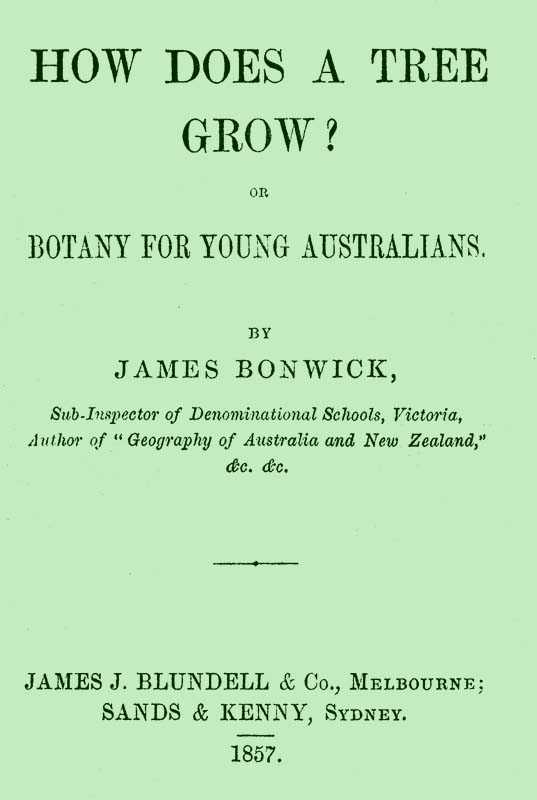 How Does a Tree Grow? Or, Botany for Young Australians
by James Bonwick
How Does a Tree Grow? Or, Botany for Young Australians
by James Bonwick