

About This Book
A varied collection of essays and lectures examines human origins, comparative anatomy, and the place of humans among other animals. It surveys man-like apes and fossil remains, evaluates evidence for species change, and outlines methods for investigating past and present organic conditions. Chapters consider hereditary transmission, variation, and the role of environmental conditions in species perpetuation, alongside critical appraisals of evolutionary theories and responses to Darwinian hypotheses. Practical reflections on zoological education and the study of persistent animal types appear with meditations on geological time and life’s continuity, blending scientific exposition, critique, and pedagogical argument into a coherent account of contemporary biological thought.
About the Author
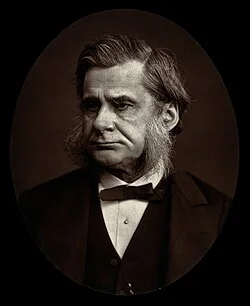
More Books by This Author
 A Critical Examination of the Position of Mr. Darwin's Work, "On the Origin of Species," in Relation to the Complete Theory of the Causes of the Phenomena of Organic Nature / Lecture VI. (of VI.), "Lectures to Working Men", at the Museum of Practical Geology, 1863, on Darwin's Work: "Origin of Species"
by Thomas Henry Huxley
A Critical Examination of the Position of Mr. Darwin's Work, "On the Origin of Species," in Relation to the Complete Theory of the Causes of the Phenomena of Organic Nature / Lecture VI. (of VI.), "Lectures to Working Men", at the Museum of Practical Geology, 1863, on Darwin's Work: "Origin of Species"
by Thomas Henry Huxley
 American Addresses, with a Lecture on the Study of Biology
by Thomas Henry Huxley
American Addresses, with a Lecture on the Study of Biology
by Thomas Henry Huxley
 Aphorisms and Reflections from the works of T. H. Huxley
by Thomas Henry Huxley
Aphorisms and Reflections from the works of T. H. Huxley
by Thomas Henry Huxley
 Autobiography and Selected Essays
by Thomas Henry Huxley
Autobiography and Selected Essays
by Thomas Henry Huxley
 Collected Essays, Volume V / Science and Christian Tradition: Essays
by Thomas Henry Huxley
Collected Essays, Volume V / Science and Christian Tradition: Essays
by Thomas Henry Huxley
 Coral and Coral Reefs
by Thomas Henry Huxley
Coral and Coral Reefs
by Thomas Henry Huxley
You May Also Like
 The Dancing Mouse: A Study in Animal Behavior
by Robert Mearns Yerkes
The Dancing Mouse: A Study in Animal Behavior
by Robert Mearns Yerkes
 Dramaturgiai dolgozatok (1. kötet, 1850-1863)
by Pál Gyulai
Dramaturgiai dolgozatok (1. kötet, 1850-1863)
by Pál Gyulai
 Text book of veterinary medicine, Volume 4 (of 5)
by James Law
Text book of veterinary medicine, Volume 4 (of 5)
by James Law
 On the Seashore / Cassell's "Eyes and No Eyes" Series, Book VII
by R. Cadwallader Smith
On the Seashore / Cassell's "Eyes and No Eyes" Series, Book VII
by R. Cadwallader Smith
 Thoughts Suggested by Mr. Froude's "Progress"
by Charles Dudley Warner
Thoughts Suggested by Mr. Froude's "Progress"
by Charles Dudley Warner
 The Lyon in Mourning, Vol. 1 / or a collection of speeches, letters, journals, etc. relative to the affairs of Prince Charles Edward Stuart
by Robert Forbes
The Lyon in Mourning, Vol. 1 / or a collection of speeches, letters, journals, etc. relative to the affairs of Prince Charles Edward Stuart
by Robert Forbes