
About This Book
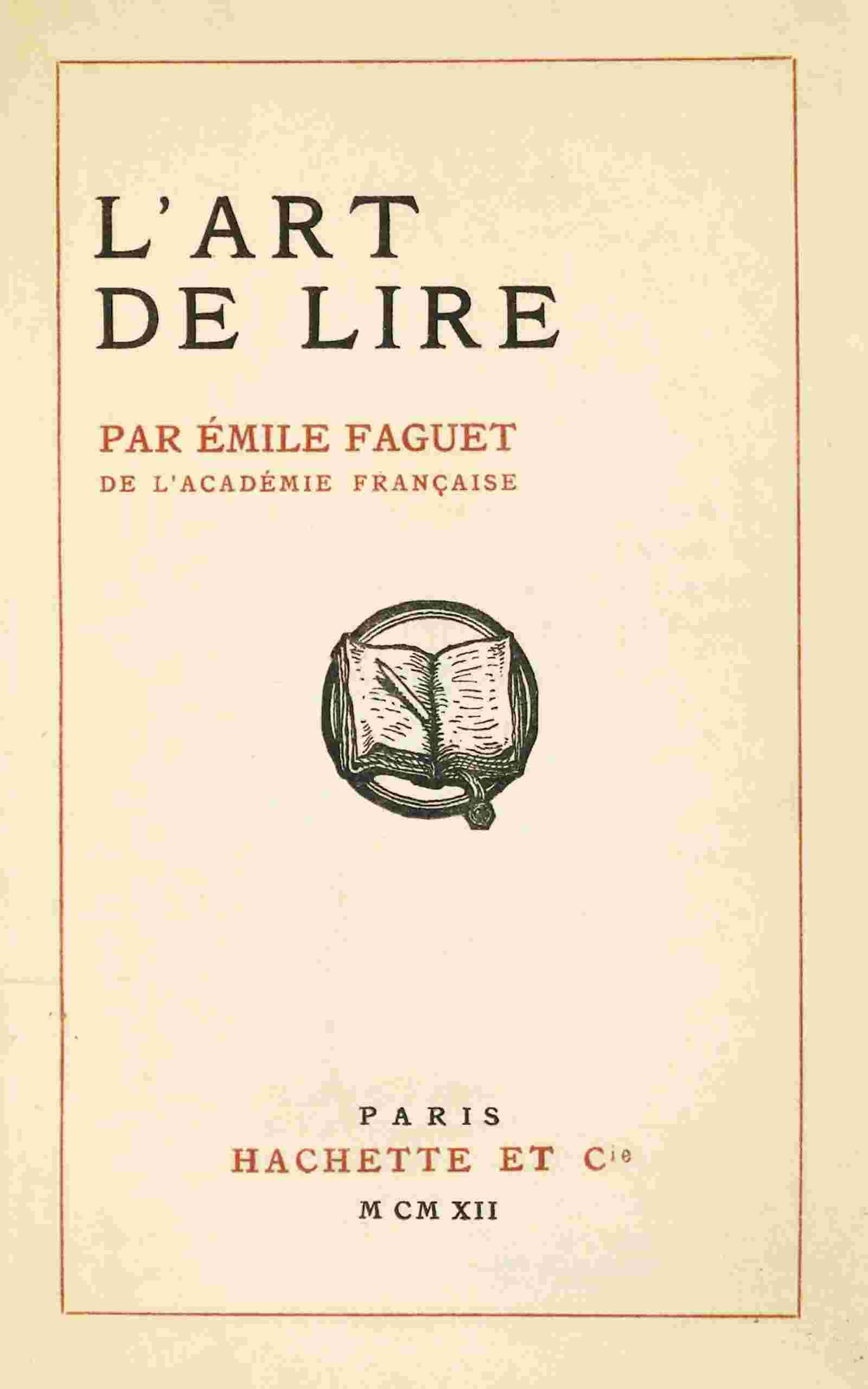
The author presents reading as a deliberate art and begins by distinguishing reasons for reading— to learn, to evaluate, or to enjoy— and shows that each purpose requires different methods. He emphasizes slow, attentive reading, careful verification of meaning, and systematic note-taking for study or criticism, while warning against skimming and impatience. Practical techniques include fiches on ideas, structure, and style, and repeated slow rereading when necessary. Subsequent chapters apply these principles to various kinds of books, offering tailored approaches rather than a single universal method.
About the Author
More Books by This Author
6 picks
 "... és a felelősségtől való rettegés"
by Émile Faguet
"... és a felelősségtől való rettegés"
by Émile Faguet
 ... Et l'horreur des responsabilités (suite au Culte de l'incompétence)
by Émile Faguet
... Et l'horreur des responsabilités (suite au Culte de l'incompétence)
by Émile Faguet
 A kontárság kultusza
by Émile Faguet
A kontárság kultusza
by Émile Faguet
 Corneille expliqué aux enfants
by Émile Faguet
Corneille expliqué aux enfants
by Émile Faguet
 Initiation into Literature
by Émile Faguet
Initiation into Literature
by Émile Faguet
 Initiation into Philosophy
by Émile Faguet
Initiation into Philosophy
by Émile Faguet
You May Also Like
6 picks
 Lectures on Painting, Delivered to the Students of the Royal Acadamy
by Edward Armitage
Lectures on Painting, Delivered to the Students of the Royal Acadamy
by Edward Armitage
 The Boy's Voice / A Book of Practical Information on The Training of Boys' Voices For Church Choirs, &c.
by J. Spencer Curwen
The Boy's Voice / A Book of Practical Information on The Training of Boys' Voices For Church Choirs, &c.
by J. Spencer Curwen
 The American Horsewoman
by Elizabeth Karr
The American Horsewoman
by Elizabeth Karr
 Every Step in Canning: The Cold-Pack Method
by Grace Viall Gray
Every Step in Canning: The Cold-Pack Method
by Grace Viall Gray
 Historical View of the Languages and Literature of the Slavic Nations / With a Sketch of Their Popular Poetry
by Talvj
Historical View of the Languages and Literature of the Slavic Nations / With a Sketch of Their Popular Poetry
by Talvj
 How It Flies; or, The Conquest of the Air / The Story of Man's Endeavors to Fly and of the Inventions by Which He Has Succeeded
by Richard Ferris
How It Flies; or, The Conquest of the Air / The Story of Man's Endeavors to Fly and of the Inventions by Which He Has Succeeded
by Richard Ferris