

About This Book
A compact intellectual biography recounts his family background, formative years, early literary and political activity, later public appointments, and work on national history, while noting personal traits and public reception. A sustained philosophical analysis presents his account of impressions and ideas, the classification of mental operations, comparisons with animal cognition, and the role of language in shaping necessary truths. The work then examines his arguments concerning miracles, the evolution of theological thought, the nature of the soul and immortality, debates over liberty and necessity, and the principles underlying moral judgment.
About the Author
More Books by This Author
6 picks
 A Critical Examination of the Position of Mr. Darwin's Work, "On the Origin of Species," in Relation to the Complete Theory of the Causes of the Phenomena of Organic Nature / Lecture VI. (of VI.), "Lectures to Working Men", at the Museum of Practical Geology, 1863, on Darwin's Work: "Origin of Species"
by Thomas Henry Huxley
A Critical Examination of the Position of Mr. Darwin's Work, "On the Origin of Species," in Relation to the Complete Theory of the Causes of the Phenomena of Organic Nature / Lecture VI. (of VI.), "Lectures to Working Men", at the Museum of Practical Geology, 1863, on Darwin's Work: "Origin of Species"
by Thomas Henry Huxley
 American Addresses, with a Lecture on the Study of Biology
by Thomas Henry Huxley
American Addresses, with a Lecture on the Study of Biology
by Thomas Henry Huxley
 Aphorisms and Reflections from the works of T. H. Huxley
by Thomas Henry Huxley
Aphorisms and Reflections from the works of T. H. Huxley
by Thomas Henry Huxley
 Autobiography and Selected Essays
by Thomas Henry Huxley
Autobiography and Selected Essays
by Thomas Henry Huxley
 Collected Essays, Volume V / Science and Christian Tradition: Essays
by Thomas Henry Huxley
Collected Essays, Volume V / Science and Christian Tradition: Essays
by Thomas Henry Huxley
 Coral and Coral Reefs
by Thomas Henry Huxley
Coral and Coral Reefs
by Thomas Henry Huxley
You May Also Like
6 picks
 淮南子
by An Liu
淮南子
by An Liu
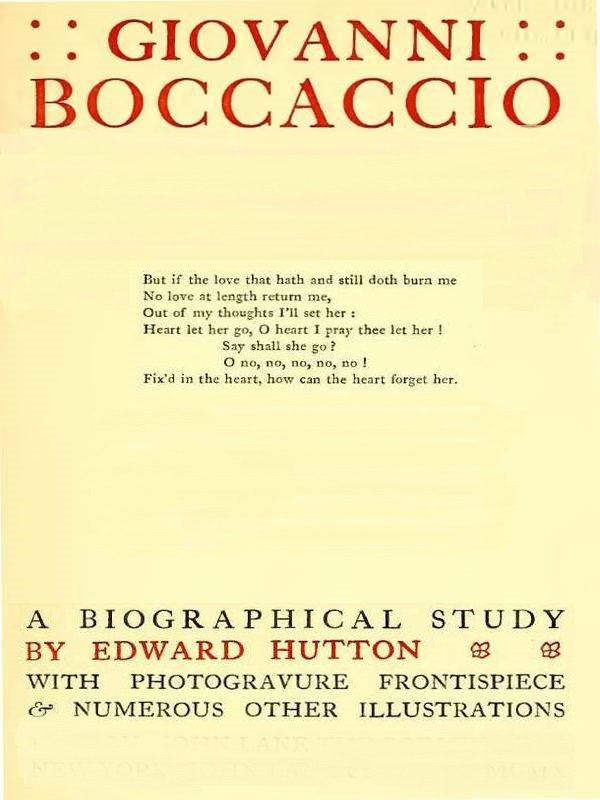 Giovanni Boccaccio, a Biographical Study
by Edward Hutton
Giovanni Boccaccio, a Biographical Study
by Edward Hutton
 Sketch of Handel and Beethoven / Two Lectures, Delivered in the Lecture Hall of the Wimbledon Village Club, on Monday Evening, Dec. 14, 1863; and Monday Evening, Jan. 11, 1864
by Thomas Hanly Ball
Sketch of Handel and Beethoven / Two Lectures, Delivered in the Lecture Hall of the Wimbledon Village Club, on Monday Evening, Dec. 14, 1863; and Monday Evening, Jan. 11, 1864
by Thomas Hanly Ball
 Daniel Webster
by Henry Cabot Lodge
Daniel Webster
by Henry Cabot Lodge
 A Vision of the Future, Based on the Application of Ethical Principles
by Jane Hume Clapperton
A Vision of the Future, Based on the Application of Ethical Principles
by Jane Hume Clapperton
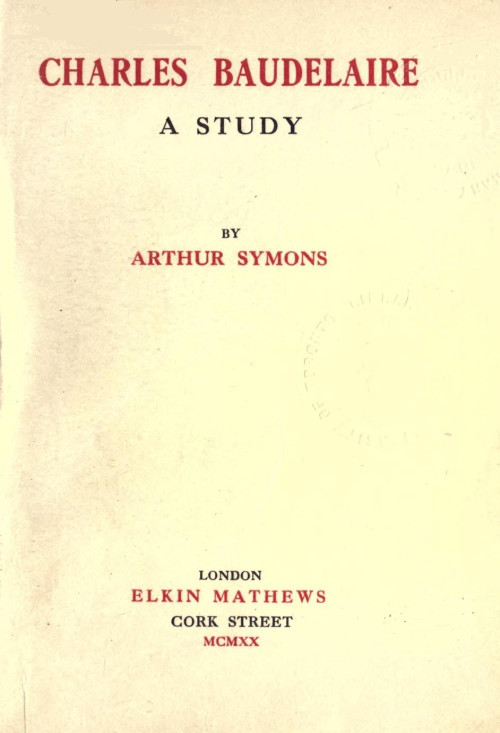 Charles Baudelaire: A Study
by Arthur Symons
Charles Baudelaire: A Study
by Arthur Symons