
Geological Contemporaneity and Persistent Types of Life
Explore more books like this:
About This Book
An extended essay reviews the achievements and limits of paleontology, arguing that fossil studies greatly expanded biological knowledge and established that different faunas occupied the same regions in succession and that succession shows widespread correspondence across localities. It critiques the loose use of contemporaneity, proposes a term like homotaxis to denote similarity of order, and questions grand reconstructions of ancient climates, origins, and linear progressions of life. The author emphasizes careful inference from fossils, recommends humility about uncertain conclusions, and calls for clearer concepts and restrained interpretation of paleontological evidence.
About the Author
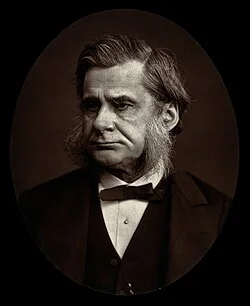
More Books by This Author
6 picks
 A Critical Examination of the Position of Mr. Darwin's Work, "On the Origin of Species," in Relation to the Complete Theory of the Causes of the Phenomena of Organic Nature / Lecture VI. (of VI.), "Lectures to Working Men", at the Museum of Practical Geology, 1863, on Darwin's Work: "Origin of Species"
by Thomas Henry Huxley
A Critical Examination of the Position of Mr. Darwin's Work, "On the Origin of Species," in Relation to the Complete Theory of the Causes of the Phenomena of Organic Nature / Lecture VI. (of VI.), "Lectures to Working Men", at the Museum of Practical Geology, 1863, on Darwin's Work: "Origin of Species"
by Thomas Henry Huxley
 American Addresses, with a Lecture on the Study of Biology
by Thomas Henry Huxley
American Addresses, with a Lecture on the Study of Biology
by Thomas Henry Huxley
 Aphorisms and Reflections from the works of T. H. Huxley
by Thomas Henry Huxley
Aphorisms and Reflections from the works of T. H. Huxley
by Thomas Henry Huxley
 Autobiography and Selected Essays
by Thomas Henry Huxley
Autobiography and Selected Essays
by Thomas Henry Huxley
 Collected Essays, Volume V / Science and Christian Tradition: Essays
by Thomas Henry Huxley
Collected Essays, Volume V / Science and Christian Tradition: Essays
by Thomas Henry Huxley
 Coral and Coral Reefs
by Thomas Henry Huxley
Coral and Coral Reefs
by Thomas Henry Huxley
You May Also Like
6 picks
 Langstroth on the Hive and the Honey-Bee: A Bee Keeper's Manual
by L. L. Langstroth
Langstroth on the Hive and the Honey-Bee: A Bee Keeper's Manual
by L. L. Langstroth
 The Thousand Buddhas / Ancient Buddhist Paintings from the Cave-Temples of Tun-huang on the Western Frontier of China
by Sir Aurel Stein
The Thousand Buddhas / Ancient Buddhist Paintings from the Cave-Temples of Tun-huang on the Western Frontier of China
by Sir Aurel Stein
 Water Reptiles of the Past and Present
by Samuel Wendell Williston
Water Reptiles of the Past and Present
by Samuel Wendell Williston
 Problems of the Libyan Desert
by John Ball
Problems of the Libyan Desert
by John Ball
 Thoughts on Religion
by George John Romanes
Thoughts on Religion
by George John Romanes
 The A B C of Mining: A Handbook for Prospectors
by Charles A. Bramble
The A B C of Mining: A Handbook for Prospectors
by Charles A. Bramble