

About This Book
The author surveys comparative anatomy, paleontology, and natural-history observations to show the anatomical and physiological continuities between humans and other primates. He compares skulls, skeletons, musculature, brain structure, development, and dentition, and discusses ape behavior and locomotion as corroborating evidence. The text evaluates taxonomic classifications and fossil remains to argue for placing humans within the same natural order as apes rather than a separate category. Throughout, empirical descriptions and scientific argumentation are used to synthesize morphological and observational data into a coherent account of human affinities with the higher primates.
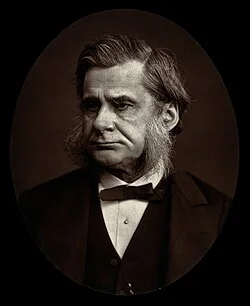
About the Author
More Books by This Author
6 picks
 A Critical Examination of the Position of Mr. Darwin's Work, "On the Origin of Species," in Relation to the Complete Theory of the Causes of the Phenomena of Organic Nature / Lecture VI. (of VI.), "Lectures to Working Men", at the Museum of Practical Geology, 1863, on Darwin's Work: "Origin of Species"
by Thomas Henry Huxley
A Critical Examination of the Position of Mr. Darwin's Work, "On the Origin of Species," in Relation to the Complete Theory of the Causes of the Phenomena of Organic Nature / Lecture VI. (of VI.), "Lectures to Working Men", at the Museum of Practical Geology, 1863, on Darwin's Work: "Origin of Species"
by Thomas Henry Huxley
 American Addresses, with a Lecture on the Study of Biology
by Thomas Henry Huxley
American Addresses, with a Lecture on the Study of Biology
by Thomas Henry Huxley
 Aphorisms and Reflections from the works of T. H. Huxley
by Thomas Henry Huxley
Aphorisms and Reflections from the works of T. H. Huxley
by Thomas Henry Huxley
 Autobiography and Selected Essays
by Thomas Henry Huxley
Autobiography and Selected Essays
by Thomas Henry Huxley
 Collected Essays, Volume V / Science and Christian Tradition: Essays
by Thomas Henry Huxley
Collected Essays, Volume V / Science and Christian Tradition: Essays
by Thomas Henry Huxley
 Coral and Coral Reefs
by Thomas Henry Huxley
Coral and Coral Reefs
by Thomas Henry Huxley
You May Also Like
6 picks
 The Making of Species
by Douglas Dewar
The Making of Species
by Douglas Dewar
 Ancient Scottish Lake-Dwellings or Crannogs / With a supplementary chapter on remains of lake-dwellings in England
by Robert Munro
Ancient Scottish Lake-Dwellings or Crannogs / With a supplementary chapter on remains of lake-dwellings in England
by Robert Munro
 North American Yellow Bats, 'Dasypterus,' and a List of the Named Kinds of the Genus Lasiurus Gray
by E. Raymond Hall
North American Yellow Bats, 'Dasypterus,' and a List of the Named Kinds of the Genus Lasiurus Gray
by E. Raymond Hall
 The Destiny of Man, Viewed in the Light of His Origin
by John Fiske
The Destiny of Man, Viewed in the Light of His Origin
by John Fiske
 The Naturalist's Repository, Volume 1 (of 5) / or Monthly Miscellany of Exotic Natural History: etc. etc.
by E. Donovan
The Naturalist's Repository, Volume 1 (of 5) / or Monthly Miscellany of Exotic Natural History: etc. etc.
by E. Donovan
 Natural History of the Ornate Box Turtle, Terrapene ornata ornata Agassiz
by John M. Legler
Natural History of the Ornate Box Turtle, Terrapene ornata ornata Agassiz
by John M. Legler