
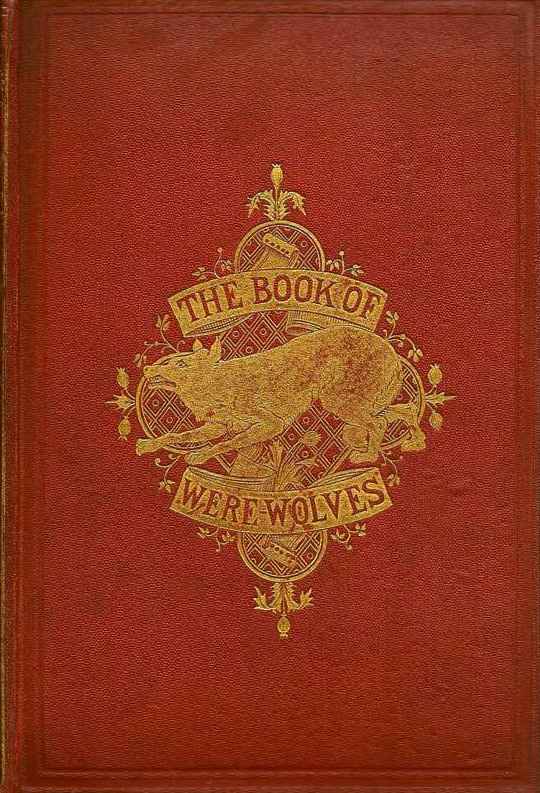
About This Book
A scholarly survey of beliefs and reports about human-to-wolf transformation, tracing references from ancient writers and Norse sagas through medieval Europe to comparative folk‑tales worldwide. The text collects trial reports, regional legends, and alleged eyewitness accounts while exploring linguistic, legal, and cultural contexts that shaped the notion of lycanthropy. It evaluates folkloric motifs and ritual practices, presents case studies and alleged crimes attributed to transformed people, and discusses natural, psychological, and mythological explanations, aiming to show how narrative traditions, social responses, and perceived phenomena combined to sustain the were‑wolf superstition.
About the Author

More Books by This Author
6 picks
 A History of Sarawak under Its Two White Rajahs 1839-1908
by S. Baring-Gould
A History of Sarawak under Its Two White Rajahs 1839-1908
by S. Baring-Gould
 An Old English Home and Its Dependencies
by S. Baring-Gould
An Old English Home and Its Dependencies
by S. Baring-Gould
 Brittany
by S. Baring-Gould
Brittany
by S. Baring-Gould
 Cheap Jack Zita
by S. Baring-Gould
Cheap Jack Zita
by S. Baring-Gould
 Cliff Castles and Cave Dwellings of Europe
by S. Baring-Gould
Cliff Castles and Cave Dwellings of Europe
by S. Baring-Gould
 Conscience and Sin: Daily Meditations for Lent, Including Week-days and Sundays
by S. Baring-Gould
Conscience and Sin: Daily Meditations for Lent, Including Week-days and Sundays
by S. Baring-Gould
You May Also Like
6 picks
 The Siberian Overland Route from Peking to Petersburg, / Through the Deserts and Steppes of Mongolia, Tartary, &c.
by Alexander Michie
The Siberian Overland Route from Peking to Petersburg, / Through the Deserts and Steppes of Mongolia, Tartary, &c.
by Alexander Michie
 The Pleasures of the Table / An Account of Gastronomy from Ancient Days to Present Times. With a History of Its Literature, Schools, and Most Distinguished Artists; Together With Some Special Recipes, and Views Concerning the Aesthetics of Dinners and Dinner-giving
by George H. Ellwanger
The Pleasures of the Table / An Account of Gastronomy from Ancient Days to Present Times. With a History of Its Literature, Schools, and Most Distinguished Artists; Together With Some Special Recipes, and Views Concerning the Aesthetics of Dinners and Dinner-giving
by George H. Ellwanger
 Los Indios, su Historia y su Civilización
by Antonio Batres Jáuregui
Los Indios, su Historia y su Civilización
by Antonio Batres Jáuregui
 Books Condemned to be Burnt
by James Anson Farrer
Books Condemned to be Burnt
by James Anson Farrer
 The Meeting-Place of Geology and History
by Sir John William Dawson
The Meeting-Place of Geology and History
by Sir John William Dawson
 A Narrative of a Nine Months' Residence in New Zealand in 1827
by Augustus Earle
A Narrative of a Nine Months' Residence in New Zealand in 1827
by Augustus Earle