

About This Book
The narrative is a first-person historical account by a landed gentleman who recalls life in a provincial coastal town during a busy horse market, offering vivid scenes of popular entertainments, street performers, and market bustle. Interlinked episodes move from public spectacle to private encounters in town houses, revealing tensions between social ranks and personal honor, and culminating in legal confrontations and witness testimony. The plot combines atmospheric description, episodic drama, and a mystery of concealed relationships and consequences, examining how reputation, justice, and the theater of public life shape characters' choices and fates.
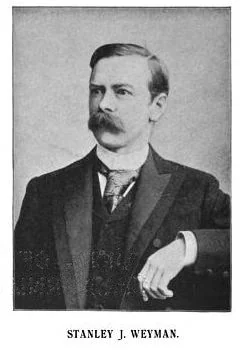
About the Author
More Books by This Author
6 picks
 "Susi": Historiallinen romaani Perttuliyön ajalta
by Stanley John Weyman
"Susi": Historiallinen romaani Perttuliyön ajalta
by Stanley John Weyman
 A Gentleman of France: Being the Memoirs of Gaston de Bonne Sieur de Marsac
by Stanley John Weyman
A Gentleman of France: Being the Memoirs of Gaston de Bonne Sieur de Marsac
by Stanley John Weyman
 A Little Wizard
by Stanley John Weyman
A Little Wizard
by Stanley John Weyman
 Chippinge Borough
by Stanley John Weyman
Chippinge Borough
by Stanley John Weyman
 Count Hannibal: A Romance of the Court of France
by Stanley John Weyman
Count Hannibal: A Romance of the Court of France
by Stanley John Weyman
 For the Cause
by Stanley John Weyman
For the Cause
by Stanley John Weyman
You May Also Like
6 picks
 Taking the Bastile; Or, Pitou the Peasant / A Historical Story of the Great French Revolution
by Alexandre Dumas
Taking the Bastile; Or, Pitou the Peasant / A Historical Story of the Great French Revolution
by Alexandre Dumas
 Histoire tragique de la princesse Phénissa / expliquée en quatre épisodes
by Remy de Gourmont
Histoire tragique de la princesse Phénissa / expliquée en quatre épisodes
by Remy de Gourmont
 The Rapin
by H. De Vere Stacpoole
The Rapin
by H. De Vere Stacpoole
 De Ellendigen (Deel 4 van 5)
by Victor Hugo
De Ellendigen (Deel 4 van 5)
by Victor Hugo
 Captain Paul
by Alexandre Dumas
Captain Paul
by Alexandre Dumas
 La mandragore
by Jean Lorrain
La mandragore
by Jean Lorrain