
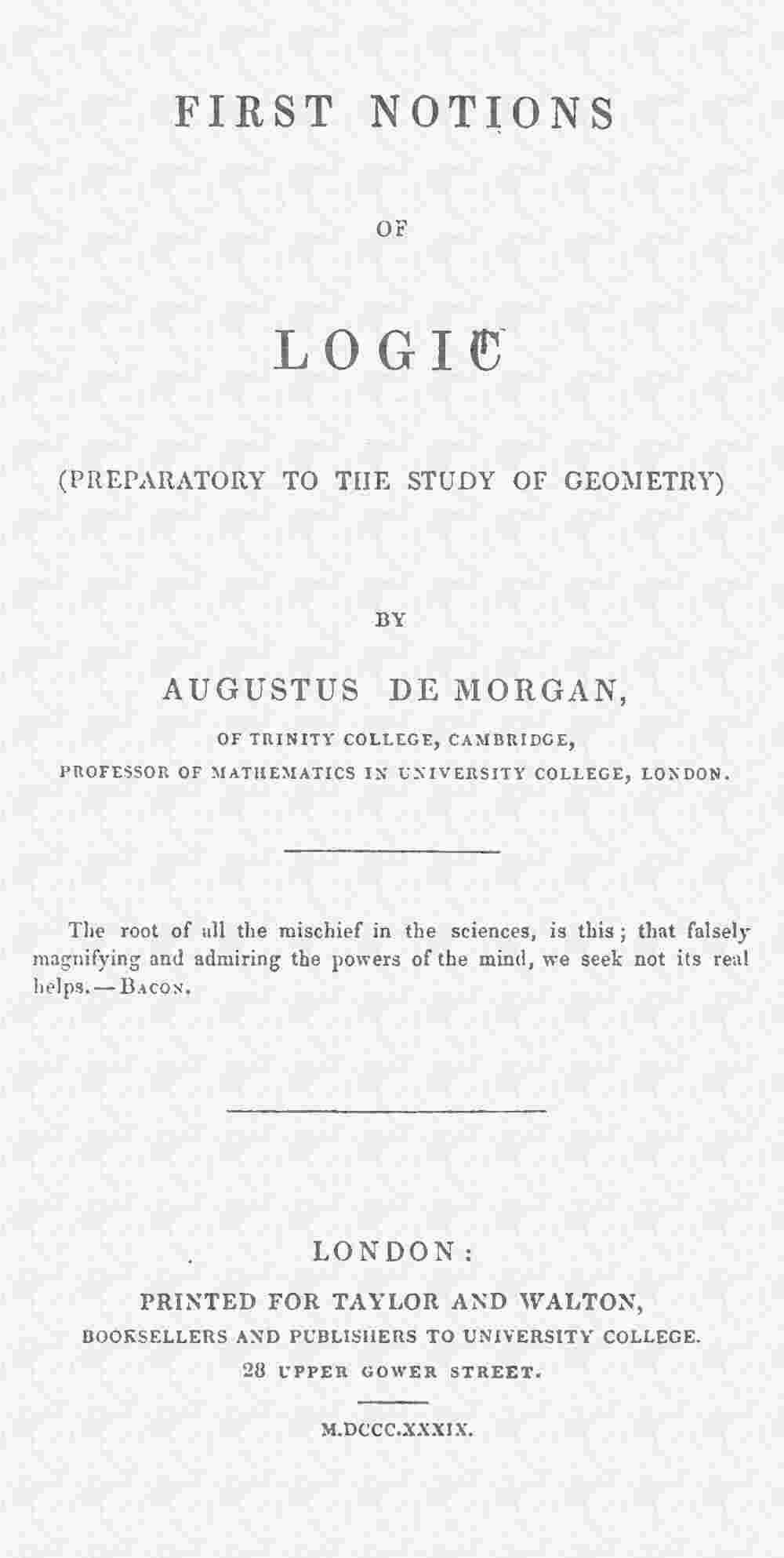
First notions of logic (preparatory to the study of geometry)
Explore more books like this:
About This Book
The tract introduces elementary formal logic aimed at students preparing for geometric study, defining logic as the study of inference form rather than factual truth. It explains propositions as affirmations or denials, shows reduction of ordinary expressions to simple A is B or A is not B forms, and distinguishes universal and particular propositions. It analyzes negation, the differing meanings of negative words, and the limits of the adage that two negatives make an affirmative. It outlines syllogistic reasoning, classifying syllogisms that yield universal conclusions and those yielding partial conclusions by weakening premises, and emphasizes careful attention to language in forming valid inferences.
About the Author
More Books by This Author
1 picks
You May Also Like
6 picks
 A History of Freedom of Thought
by J. B. Bury
A History of Freedom of Thought
by J. B. Bury
 The Ignatian Epistles Entirely Spurious: A Reply to the Right Rev. Dr. Lightfoot
by W. D. Killen
The Ignatian Epistles Entirely Spurious: A Reply to the Right Rev. Dr. Lightfoot
by W. D. Killen
 Phänomenologie des Geistes
by Georg Wilhelm Friedrich Hegel
Phänomenologie des Geistes
by Georg Wilhelm Friedrich Hegel
 Joseph Priestley
by T. E. Thorpe
Joseph Priestley
by T. E. Thorpe
 Les femmes et le langage
by Remy de Gourmont
Les femmes et le langage
by Remy de Gourmont
 Motherhood and the Relationships of the Sexes
by C. Gasquoine Hartley
Motherhood and the Relationships of the Sexes
by C. Gasquoine Hartley