

About This Book
The author separates observable scientific facts from the theories that interpret them, arguing that once facts are made clear the lay reader may legitimately evaluate proposed explanations. He affirms phenomena such as growth, heritable variation shaped by environment, and gradual progression, but questions whether these observations suffice to prove the broader claim that species arise solely by natural transformation. Using common-sense argument and appeal to scriptural accounts of ordered creation, the essay urges caution in extending empirical findings into comprehensive theories and maintains that alternative interpretations of the same facts remain open to reasoned debate.
About the Author
More Books by This Author
6 picks
 "Nothing Between" / The Special Doctrines Vindicated at the Reformation as Bearing upon the Spiritual Life of the Church
by Edward Hoare
"Nothing Between" / The Special Doctrines Vindicated at the Reformation as Bearing upon the Spiritual Life of the Church
by Edward Hoare
 A Sermon Preached in York Minister, on St. Bartholomew's Day, Friday, August 24, 1877 / on the Occasion of the Consecration of the Right Rev. Rowley Hill, Lord Bishop of Sodor and Man
by Edward Hoare
A Sermon Preached in York Minister, on St. Bartholomew's Day, Friday, August 24, 1877 / on the Occasion of the Consecration of the Right Rev. Rowley Hill, Lord Bishop of Sodor and Man
by Edward Hoare
 Baptism as taught in the Bible and the Prayer Book
by Edward Hoare
Baptism as taught in the Bible and the Prayer Book
by Edward Hoare
 Clerical Subscription and the Act of Uniformity
by Edward Hoare
Clerical Subscription and the Act of Uniformity
by Edward Hoare
 Conformity to the World
by Edward Hoare
Conformity to the World
by Edward Hoare
 Edward Hoare, M.A.: A record of his life based upon a brief autobiography
by Edward Hoare
Edward Hoare, M.A.: A record of his life based upon a brief autobiography
by Edward Hoare
You May Also Like
6 picks
 The Golden Rule Cook Book: Six hundred recipes for meatless dishes
by M. R. L. Sharpe
The Golden Rule Cook Book: Six hundred recipes for meatless dishes
by M. R. L. Sharpe
 The Lay-Man's Sermon upon the Late Storm / Held forth at an Honest Coffee-House-Conventicle
by Daniel Defoe
The Lay-Man's Sermon upon the Late Storm / Held forth at an Honest Coffee-House-Conventicle
by Daniel Defoe
 The Breadth, Freeness, and Yet Exclusiveness of the Gospel
by Edward Hoare
The Breadth, Freeness, and Yet Exclusiveness of the Gospel
by Edward Hoare
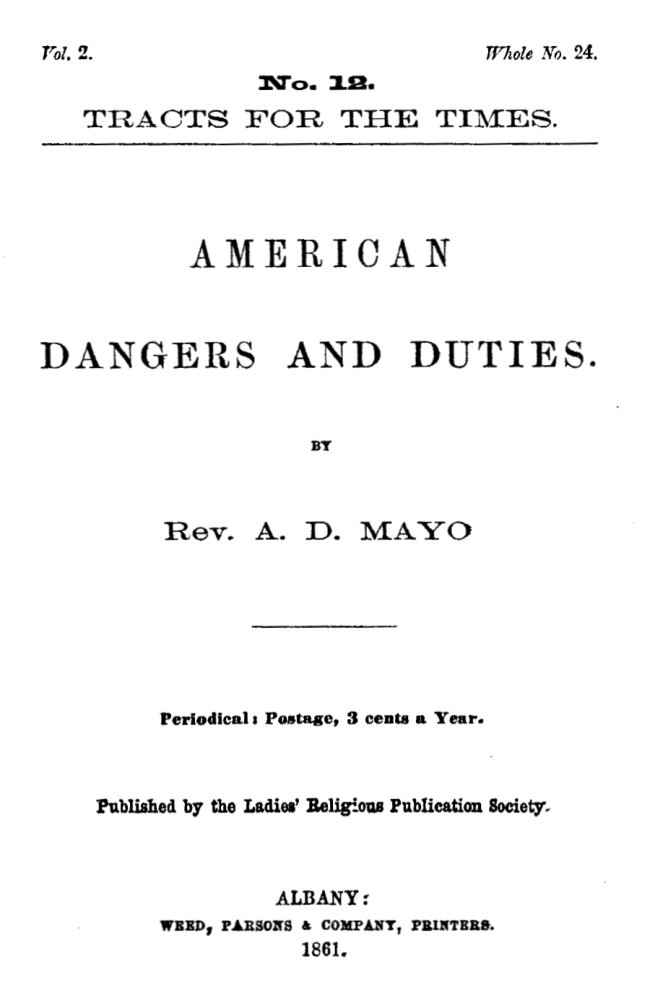 American Dangers and Duties
by A. D. Mayo
American Dangers and Duties
by A. D. Mayo
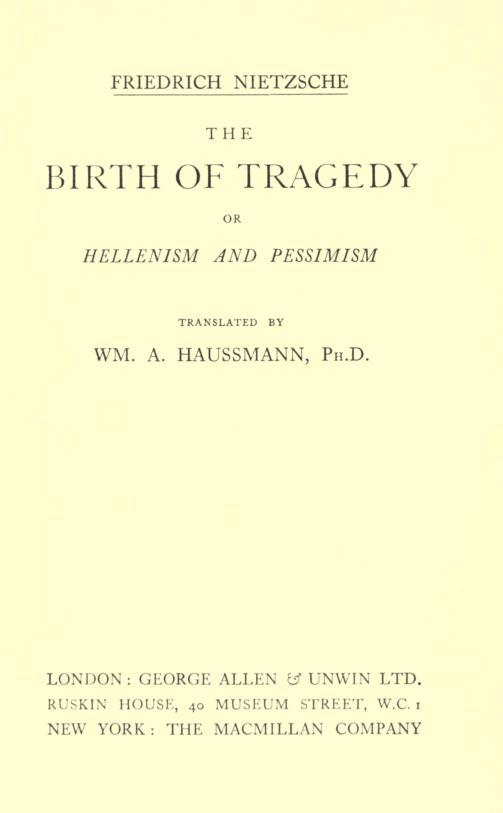 The Birth of Tragedy; or, Hellenism and Pessimism
by Friedrich Wilhelm Nietzsche
The Birth of Tragedy; or, Hellenism and Pessimism
by Friedrich Wilhelm Nietzsche
 Thoughts on the Necessity of Improving the Condition of the Slaves in the British Colonies / With a View to Their Ultimate Emancipation; and on the Practicability, the Safety, and the Advantages of the Latter Measure.
by Thomas Clarkson
Thoughts on the Necessity of Improving the Condition of the Slaves in the British Colonies / With a View to Their Ultimate Emancipation; and on the Practicability, the Safety, and the Advantages of the Latter Measure.
by Thomas Clarkson