

About This Book
The dialogue offers a sustained defense of old age, arguing that bodily decline need not entail misery because wisdom, virtue, and a philosophic disposition preserve dignity and purpose. It distinguishes transient physical losses from lasting mental goods, counsels active engagement of the mind, and rejects fear of death as irrational. Speakers invoke illustrative figures to show how experience and self-discipline enable continued usefulness and serene retirement. Practical counsel on adapting to aging combines with reflections on memory, reputation, and leisure to present an ethical and consoling view of life’s final stage.
About the Author

More Books by This Author
6 picks
 Academica
by Marcus Tullius Cicero
Academica
by Marcus Tullius Cicero
 Cicero's Brutus or History of Famous Orators; also His Orator, or Accomplished Speaker.
by Marcus Tullius Cicero
Cicero's Brutus or History of Famous Orators; also His Orator, or Accomplished Speaker.
by Marcus Tullius Cicero
 Cicero's Orations
by Marcus Tullius Cicero
Cicero's Orations
by Marcus Tullius Cicero
 Cicero's Tusculan Disputations / Also, Treatises On The Nature Of The Gods, And On The Commonwealth
by Marcus Tullius Cicero
Cicero's Tusculan Disputations / Also, Treatises On The Nature Of The Gods, And On The Commonwealth
by Marcus Tullius Cicero
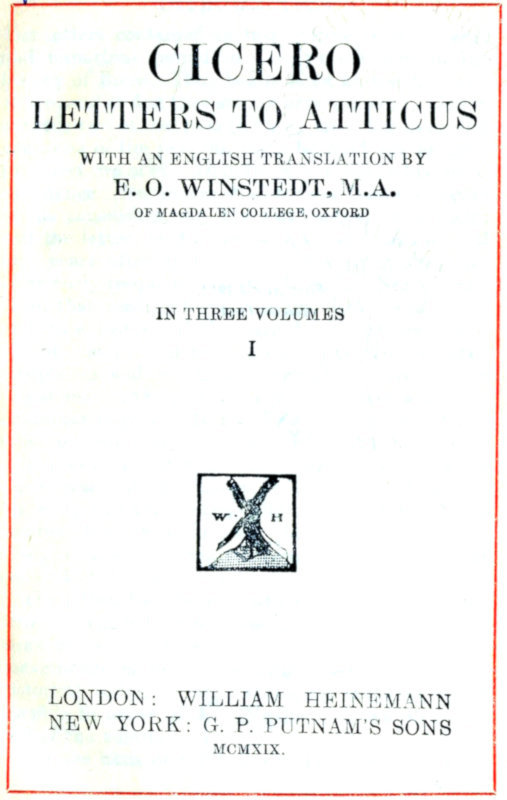 Cicero: Letters to Atticus, Vol. 1 of 3
by Marcus Tullius Cicero
Cicero: Letters to Atticus, Vol. 1 of 3
by Marcus Tullius Cicero
 De Amicitia, Scipio's Dream
by Marcus Tullius Cicero
De Amicitia, Scipio's Dream
by Marcus Tullius Cicero
You May Also Like
6 picks
 Christianity and Islam
by Carl Heinrich Becker
Christianity and Islam
by Carl Heinrich Becker
 Sosialistisen filosofian juuret
by Friedrich Engels
Sosialistisen filosofian juuret
by Friedrich Engels
 Thoughts on Life and Religion / An Aftermath from the Writings of The Right Honourable Professor Max Müller
by F. Max Müller
Thoughts on Life and Religion / An Aftermath from the Writings of The Right Honourable Professor Max Müller
by F. Max Müller
 Power Through Repose
by Annie Payson Call
Power Through Repose
by Annie Payson Call
 Thomas Carlyle
by Hector Macpherson
Thomas Carlyle
by Hector Macpherson
 Moral Principles in Education
by John Dewey
Moral Principles in Education
by John Dewey