
About This Book
This essay outlines the evolution of Buddhism in China and the emergence of Zen as a practice prioritizing direct insight over scripture and ritual. It recounts early teachings that identify an immanent Buddha-nature discoverable through meditation, contrasts conservative, devotional, and meditative schools, and traces how later teachers codified postures and progressive exercises. The author then links Zen principles—immediacy, simplicity, and the negation of conceptual elaboration—to aesthetic tendencies in painting, poetry, calligraphy, garden design, and related arts, explaining how spiritual practice informed forms, techniques, and aesthetic ideals.
About the Author
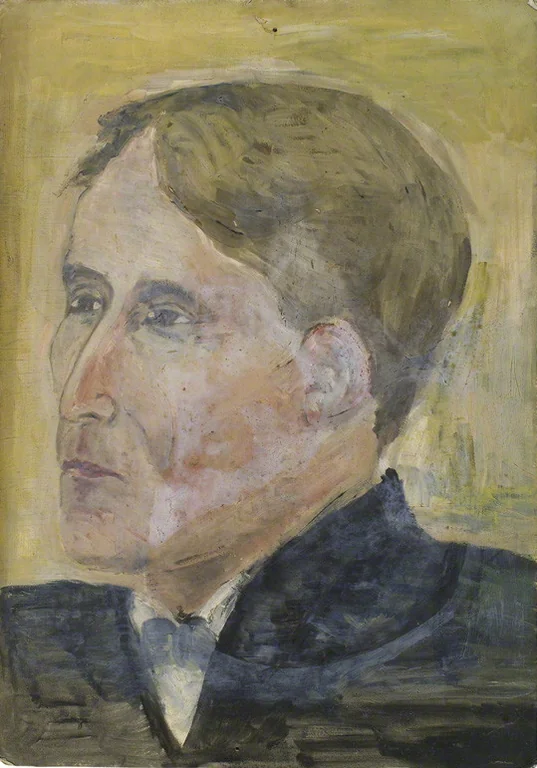
More Books by This Author
2 picks

You May Also Like
6 picks
 The Substance of a Journal During a Residence at the Red River Colony, British North America / and Frequent Excursions Among the North-West American / Indians, In the Years 1820, 1821, 1822, 1823.
by John West
The Substance of a Journal During a Residence at the Red River Colony, British North America / and Frequent Excursions Among the North-West American / Indians, In the Years 1820, 1821, 1822, 1823.
by John West
 When a Man Comes to Himself
by Woodrow Wilson
When a Man Comes to Himself
by Woodrow Wilson
 The Art & Practice of Typography / A Manual of American Printing, Including a Brief History up to the Twentieth Century, with Reproductions of the Work of Early Masters of the Craft, and a Practical Discussion and an Extensive Demonstration of the Modern Use of Type-faces and Methods of Arrangement
by Edmund G. Gress
The Art & Practice of Typography / A Manual of American Printing, Including a Brief History up to the Twentieth Century, with Reproductions of the Work of Early Masters of the Craft, and a Practical Discussion and an Extensive Demonstration of the Modern Use of Type-faces and Methods of Arrangement
by Edmund G. Gress
 Jenseits von Gut und Böse
by Friedrich Wilhelm Nietzsche
Jenseits von Gut und Böse
by Friedrich Wilhelm Nietzsche
 The Gist of Swedenborg
by Emanuel Swedenborg
The Gist of Swedenborg
by Emanuel Swedenborg
 Raphael / A Collection of Fifteen Pictures and a Portrait of the Painter with Introduction and Interpretation
by Estelle M. Hurll
Raphael / A Collection of Fifteen Pictures and a Portrait of the Painter with Introduction and Interpretation
by Estelle M. Hurll