
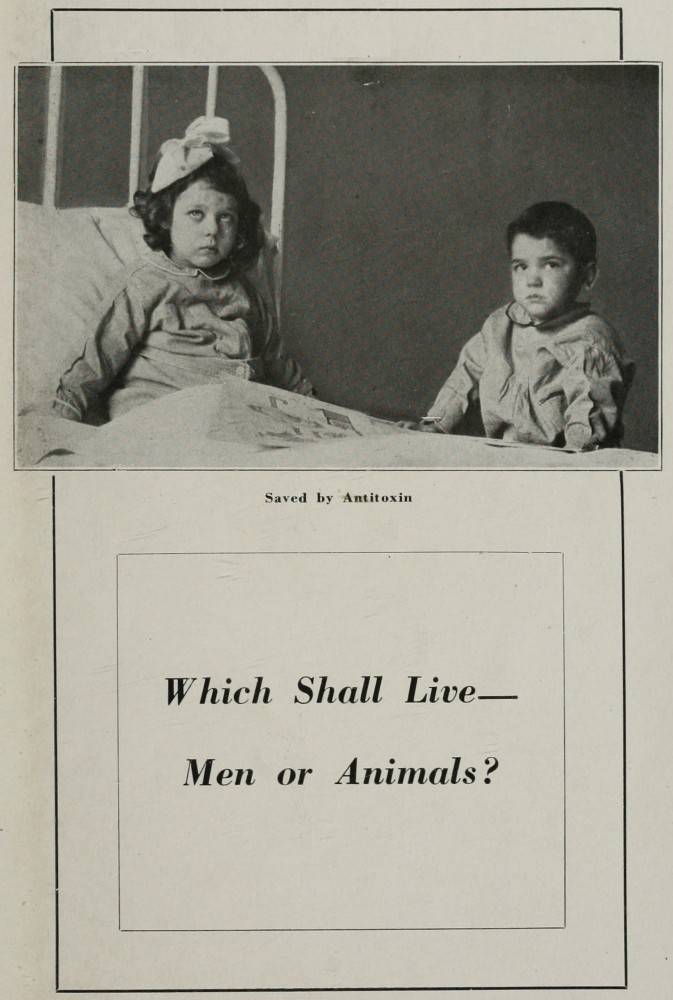
About This Book
The essay examines the role of experiments on mammals in medical progress, arguing that controlled animal studies revealed the transmission of bubonic plague and enabled practical public-health measures. It outlines categories of research, from pure bacteriological investigations that identified new zoonoses to surgical experimentation and training that developed operative techniques and increased practitioner skill. The author describes how laboratory work on rats, guinea pigs, monkeys, and dogs clarified disease transmission, refined operative methods under anesthesia, and informed prevention programs such as rodent and flea control. Ethical tensions are acknowledged through consideration of necessity, suffering minimization, and the public benefits of such research.
About the Author

You May Also Like
 Biographies of distinguished scientific men. First series
by F. Arago
Biographies of distinguished scientific men. First series
by F. Arago
 A Lie Never Justifiable: A Study in Ethics
by H. Clay Trumbull
A Lie Never Justifiable: A Study in Ethics
by H. Clay Trumbull
 Journal 02, 1850-September 15, 1851 / The Writings of Henry David Thoreau, Volume 08 (of 20)
by Henry David Thoreau
Journal 02, 1850-September 15, 1851 / The Writings of Henry David Thoreau, Volume 08 (of 20)
by Henry David Thoreau
 La jeune Inde
by Mahatma Gandhi
La jeune Inde
by Mahatma Gandhi
 Emanuel Swedenborg's Investigations in Natural Science and the Basis for His Statements Concerning the Functions of the Brain
by Martin Ramström
Emanuel Swedenborg's Investigations in Natural Science and the Basis for His Statements Concerning the Functions of the Brain
by Martin Ramström
 A Historical Account of Useful Inventions and Scientific Discoveries / Being a manual of instruction and entertainment.
by George Grant
A Historical Account of Useful Inventions and Scientific Discoveries / Being a manual of instruction and entertainment.
by George Grant