

About This Book
A nobleman, tormented by a failing marriage and his own conscience, abandons his household and stages his own death to free his wife to marry another. His disappearance triggers social and legal turmoil as relatives, suitors, friends, and officials clash over morality, divorce, and reputation. The action shifts from salons and family rooms to taverns, gypsy encampments, and courtrooms, exposing hypocrisy, compassion, and the pressures of social convention. The escalating dilemmas force the protagonist and those around him to confront identity, duty, and the tragic costs of trying to escape personal guilt.
About the Author

More Books by This Author
6 picks
 "Bethink Yourselves!"
by graf Leo Tolstoy
"Bethink Yourselves!"
by graf Leo Tolstoy
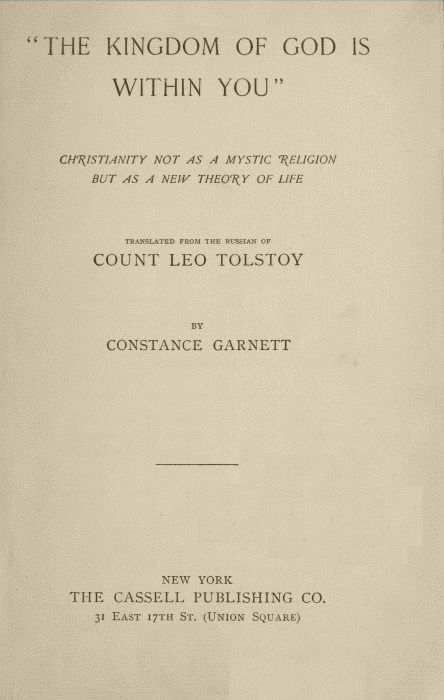 "The Kingdom of God Is Within You" / Christianity Not as a Mystic Religion but as a New Theory of Life
by graf Leo Tolstoy
"The Kingdom of God Is Within You" / Christianity Not as a Mystic Religion but as a New Theory of Life
by graf Leo Tolstoy
 A Letter to a Hindu
by graf Leo Tolstoy
A Letter to a Hindu
by graf Leo Tolstoy
 A Russian Proprietor, and Other Stories
by graf Leo Tolstoy
A Russian Proprietor, and Other Stories
by graf Leo Tolstoy
 Anna Karenina
by graf Leo Tolstoy
Anna Karenina
by graf Leo Tolstoy
 Anna Karénine, Tome I
by graf Leo Tolstoy
Anna Karénine, Tome I
by graf Leo Tolstoy
You May Also Like
6 picks
 The Post Office
by Rabindranath Tagore
The Post Office
by Rabindranath Tagore
 Byliny Book: Hero Tales of Russia
by Marion Chilton Harrison
Byliny Book: Hero Tales of Russia
by Marion Chilton Harrison
 Varastettu polkupyörä
by Annikki Virvatuli
Varastettu polkupyörä
by Annikki Virvatuli
 The First Distiller
by graf Leo Tolstoy
The First Distiller
by graf Leo Tolstoy
 Sacountala (1858) / ballet-pantomime en deux actes / tiré du drame indien de Calidasâ
by Théophile Gautier
Sacountala (1858) / ballet-pantomime en deux actes / tiré du drame indien de Calidasâ
by Théophile Gautier
 Edipo rey; Edipo en Colona; Antígona
by Sophocles
Edipo rey; Edipo en Colona; Antígona
by Sophocles