
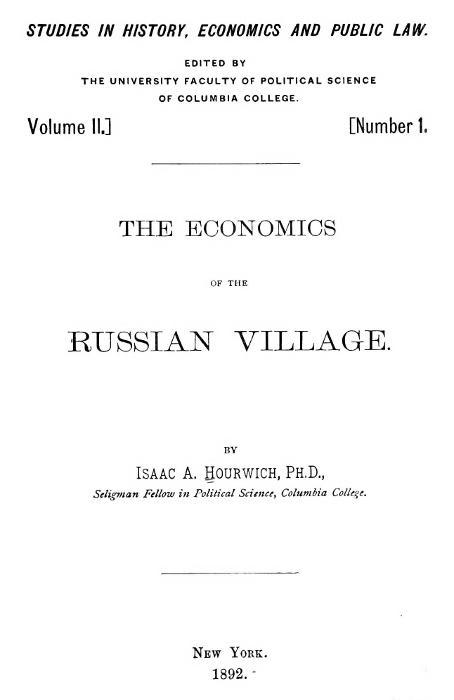
About This Book
A systematic study traces the historical evolution of rural landholding and community institutions, explaining how communal tenure and inherited shares grew out of earlier forms of fee and patrimonial tenure and changes associated with emancipation. It describes varieties of village land organization, the subdivision and communal use of arable land, meadow and pasture, and the development of agrarian communism alongside hereditary allotments. It assesses peasant productive forces and household economics — farm size, livestock, fuel and fodder shortages, soil exhaustion, yields and budgets — and analyzes fiscal burdens, including redemption and per-capita taxation, arrears, and their effects on village life.
About the Author

You May Also Like
6 picks
 The Aeroplane in War
by Claude Grahame-White
The Aeroplane in War
by Claude Grahame-White
 Secret Diplomacy: How Far Can It Be Eliminated?
by Paul S. Reinsch
Secret Diplomacy: How Far Can It Be Eliminated?
by Paul S. Reinsch
 The Far North: Exploration in the Arctic Regions
by Elisha Kent Kane
The Far North: Exploration in the Arctic Regions
by Elisha Kent Kane
 Origin and Early History of the Fashion Plate
by J. L. Nevinson
Origin and Early History of the Fashion Plate
by J. L. Nevinson
 The cycles of speculation
by Thomas Gibson
The cycles of speculation
by Thomas Gibson
 The Anglo-French Entente in the Seventeenth Century
by Charles Bastide
The Anglo-French Entente in the Seventeenth Century
by Charles Bastide