
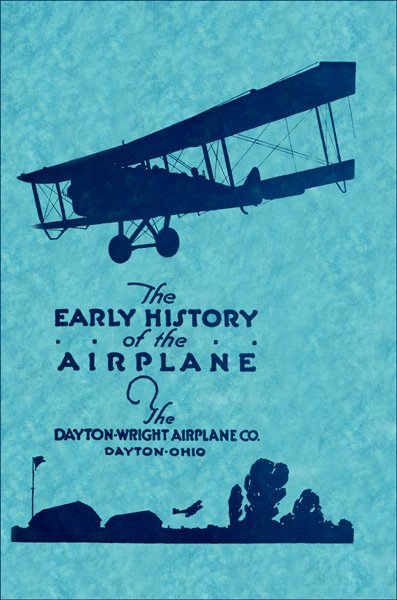
About This Book
Two brothers trace their lifelong pursuit of heavier-than-air flight, describing early experiments, study of prior investigators, and the three central engineering problems: sustaining lift, producing power, and achieving controllable balance and steering. They explain why they rejected passive dihedral stability and developed deliberately neutral wing forms combined with active controls, notably wing-warping and adjustable rudders, and they detail iterative kite and glider trials used to test these ideas. The account blends technical explanation, practical trial-and-error, and reflection on contemporaneous successes and failures to show how control systems, rather than brute power alone, shaped their approach toward powered flight.
About the Author

You May Also Like
6 picks
 Bridge Disasters in America: The Cause and the Remedy
by George L. Vose
Bridge Disasters in America: The Cause and the Remedy
by George L. Vose
 Four Early Pamphlets
by William Godwin
Four Early Pamphlets
by William Godwin
 Bernardin de St. Pierre
by Arvède Barine
Bernardin de St. Pierre
by Arvède Barine
 A Practical Treatise on Gas-light / Exhibiting a Summary Description of the Apparatus and Machinery Best Calculated for Illuminating Streets, Houses, and Manufactories, with Carburetted Hydrogen, or Coal-Gas, with Remarks on the Utility, Safety, and General Nature of this new Branch of Civil Economy.
by Friedrich Christian Accum
A Practical Treatise on Gas-light / Exhibiting a Summary Description of the Apparatus and Machinery Best Calculated for Illuminating Streets, Houses, and Manufactories, with Carburetted Hydrogen, or Coal-Gas, with Remarks on the Utility, Safety, and General Nature of this new Branch of Civil Economy.
by Friedrich Christian Accum
 The Workers: An Experiment in Reality. The West
by Walter A. Wyckoff
The Workers: An Experiment in Reality. The West
by Walter A. Wyckoff
 Biographia Scoticana (Scots Worthies) / A Brief Historical Account of the Lives, Characters, and Memorable Transactions of the Most Eminent Scots Worthies
by John Howie
Biographia Scoticana (Scots Worthies) / A Brief Historical Account of the Lives, Characters, and Memorable Transactions of the Most Eminent Scots Worthies
by John Howie