
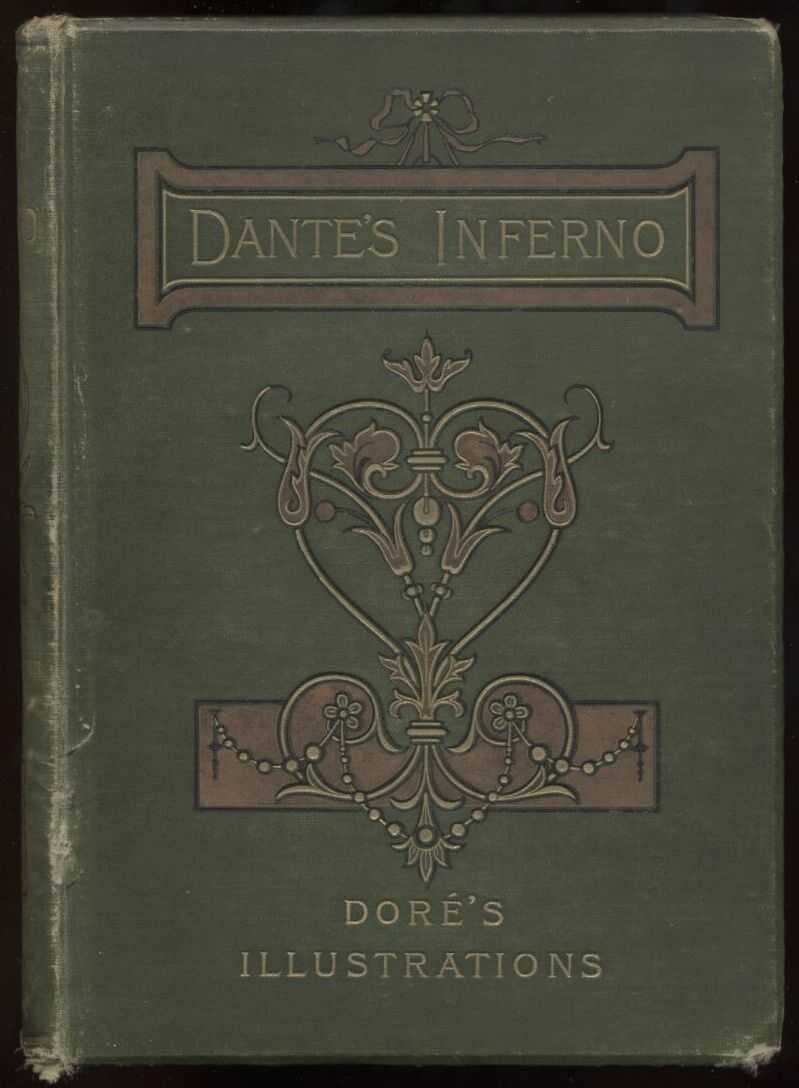
The Divine Comedy by Dante, Illustrated, Hell, Volume 06
The poem recounts a pilgrim's visionary journey through three realms of the afterlife— a realm of culpatory punishments, a mountain of purification, and a shining heaven—traversed in sequence to portray the soul's progress toward God. Guided first by a classical poet and later by a spiritual figure representing divine love, the narrator encounters souls who exemplify particular vices or virtues, each punished or rewarded in fittingly symbolic ways. The work interweaves theological reflection, moral judgment, classical and biblical allusion, and striking imaginative imagery, using a tightly ordered cantica-and-canto structure to explore justice, repentance, and the ordering of the cosmos.
About This Book
The poem recounts a pilgrim's visionary journey through three realms of the afterlife— a realm of culpatory punishments, a mountain of purification, and a shining heaven—traversed in sequence to portray the soul's progress toward God. Guided first by a classical poet and later by a spiritual figure representing divine love, the narrator encounters souls who exemplify particular vices or virtues, each punished or rewarded in fittingly symbolic ways. The work interweaves theological reflection, moral judgment, classical and biblical allusion, and striking imaginative imagery, using a tightly ordered cantica-and-canto structure to explore justice, repentance, and the ordering of the cosmos.
About the Author
More Books by This Author
 Dante's Hel / In proza overgebracht en met een inleiding voorzien
by Dante Alighieri
Dante's Hel / In proza overgebracht en met een inleiding voorzien
by Dante Alighieri
 Dante's Louteringsberg / in proza overgebracht
by Dante Alighieri
Dante's Louteringsberg / in proza overgebracht
by Dante Alighieri
 Die Göttliche Komödie
by Dante Alighieri
Die Göttliche Komödie
by Dante Alighieri
 Divina Commedia di Dante: Inferno
by Dante Alighieri
Divina Commedia di Dante: Inferno
by Dante Alighieri
 Divina Commedia di Dante: Paradiso
by Dante Alighieri
Divina Commedia di Dante: Paradiso
by Dante Alighieri
 Divina Commedia di Dante: Purgatorio
by Dante Alighieri
Divina Commedia di Dante: Purgatorio
by Dante Alighieri
You May Also Like
 "Old Scrooge": A Christmas Carol in Five Staves. / Dramatized from Charles Dickens' Celebrated Christmas Story.
by Charles Augustus Scott
"Old Scrooge": A Christmas Carol in Five Staves. / Dramatized from Charles Dickens' Celebrated Christmas Story.
by Charles Augustus Scott
 20.000 Mijlen onder Zee: Oostelijk Halfrond
by Jules Verne
20.000 Mijlen onder Zee: Oostelijk Halfrond
by Jules Verne
 20.000 Mijlen onder Zee: Westelijk Halfrond
by Jules Verne
20.000 Mijlen onder Zee: Westelijk Halfrond
by Jules Verne
 A Child's Garden of Verses
by Robert Louis Stevenson
A Child's Garden of Verses
by Robert Louis Stevenson
 A Child's Garden of Verses
by Robert Louis Stevenson
A Child's Garden of Verses
by Robert Louis Stevenson
 A Child's Garden of Verses
by Robert Louis Stevenson
A Child's Garden of Verses
by Robert Louis Stevenson